The list of challenges facing transit agencies like the Southeastern Pennsylvania Transportation Authority is long. The list of feasible projects that can deliver solutions is much shorter.


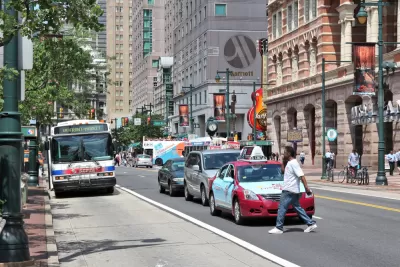
"Bus riders continued bailing on SEPTA in 2018, bringing it to its worst ridership numbers in nearly 20 years," reports Jason Laughlin.
This is the fourth consecutive year that SEPTA has lost riders, according to data from the Federal Transit Administration. "The transit agency lost 14 million bus trips from 2017 to 2018, the data showed, an 8 percent decline," writes Laughlin.
Transit ridership is declining comes even as the population of the city is increasing.
The other angle of the story worth noting is the palpable pessimism about the prospects that the trends will change anytime soon, or that the system will be able to deliver improvements designed to win back riders..
"SEPTA has promised a bus network redesign to provide faster and more reliable service, but it will be years before it happens," reports Laughlin. SEPTA has also "been advised to eliminate transfer fees to boost ridership, but it will be another year before SEPTA decides its transfer fee policy," for another example.
Read the full story: SEPTA keeps bleeding bus riders. It may take years to stanch the losses.

SEPTA to Cut 1/5 of Service Starting Aug 24
The Philadelphia transit agency is eliminating 32 bus lines and slashing service on dozens of others after the state legislature failed to come to an agreement over funding.
Philadelphia Could Lose Free Transit Program
The city’s upcoming budget doesn’t include the Zero Fare program, which offers free SEPTA fare to more than 24,000 residents.
Why Philly’s SEPTA Faces a ‘Death Spiral’
The state has not offered a sustainable source of funding to meet the transit agency’s $240 million budget gap.

Planetizen Federal Action Tracker
A weekly monitor of how Trump’s orders and actions are impacting planners and planning in America.

The state-sanctioned urbicide of Austin
People don’t kill cities. Freeways do.

US to reduce Colorado River water deliveries to Mexico
A new Colorado Treaty amendment reduces Mexico’s Colorado River water allocation by 250,000 acre feet.

Nation's most wind-powered state turns to coal as data centers increase energy demand
For the first time in decades, Iowa has increased its generation of coal power.

NYC cools commuters with city's first rain garden above a bus stop
New York City officials say the plants in the rain garden can absorb 16 gallons of rainwater during heavy storms.

Brightline West’s future may rely on $6 billion federal loan
The company has until Nov. 2 to make a $400 million equity investment into its proposed high-speed rail line.

FREE Course: Walkable City 1: Why Walkability?
After describing his path towards focusing on walkability as the essence of good planning, Jeff Speck marches through his five principal reasons for making more walkable places.
Reinventing Malls: Planning Alchemy—Turning Gray Fields Into Gold
The course focuses on the opportunities and imperatives that shape reinvention of mall sites.

Eagle County Government
Harvard University Graduate School of Design
Nashville Planning Department
The Architects Foundation
University of Cincinnati Online
The Pocatello Development Authority
The Urban Renewal Agency of the City of Pocatello
Journal of the American Planning Association