Analysis and policy recommendations from Bay Area-based think tank SPUR focuses on how poorly designed inclusionary zoning the exact opposite of the desired effect.


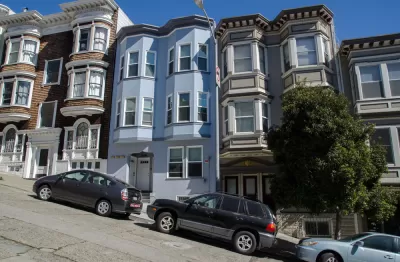
"San Francisco is running out of funds to build affordable housing, and the city will need to make changes quickly to fix the problem," according to an article by Adhi Nagraj.
One question that must be asked in response to this reality: How did a city riding an economic boom get so short on funding to solve one of its most visible and morally troubling challenges? And another question: What can the city do about it?
To explain how the city got to this point, Nagraj has this to say: "Many factors are at play, but a look at data from the city indicates that a combination of rising construction costs and new requirements is slowing down new development and curtailing incoming funds from development fees.
And as for what to do about it, Nagraj shares five immediate suggestions endorsed by SPUR, including:
- Audit the building code to reduce costs.
- Support pre-fab construction outside of San Francisco.
- Set new inclusionary requirements.
- Allow more density bonuses.
- Pause increased inclusionary requirements.
The article includes a lot more detail on the how of San Francisco's funding shortage, as well as more detail on each of the five recommendations for what to do about it.
FULL STORY: How Has San Francisco Run Out of Money for Affordable Housing?

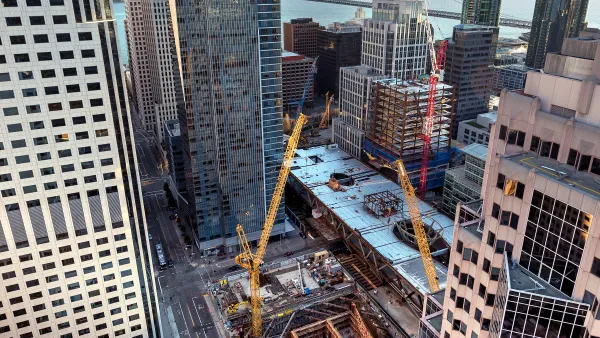
San Francisco Housing Construction Far Slower Than Other Tech Hubs
Experts blame high land and construction costs and restrictive regulations for San Francisco’s dismal rate of housing construction, which lags behind other fast-growing cities like Austin and Seattle.
San Francisco to Reconsider Inclusionary Zoning as Development Slows to a Crawl
Critics of inclusionary zoning frequently point to San Francisco as an example of what not to do. A sluggish year of development has some local politicians ready to reconsider the city’s program.

Navigating California's Housing Insanity
One person’s return to the San Francisco Bay Area meant facing the dystopian realities of the rental market.

The state-sanctioned urbicide of Austin
People don’t kill cities. Freeways do.

US to reduce Colorado River water deliveries to Mexico
A new Colorado Treaty amendment reduces Mexico’s Colorado River water allocation by 250,000 acre feet.

New Jersey’s second-largest city bans standalone data centers
Jersey City will continue to allow co-location facilities, such as those meant for research institutions that store their own data.

Amtrak not solely to blame for New Jersey commuter rail's unreliability, report finds
A new study from the Garden State Initiative found that NJ Transit’s budget grew 20% across a 4 year period, but reliability declined significantly over the same period.

EPA erases limits on planet-warming pollution from power plants
Under Monday’s plan, power plants would still have some limits on how much mercury, arsenic and other contaminants they can emit.

Phoenix announces new on-demand transit service, more frequent RAPID buses
Both new services will launch in October, and are part of Phoenix's Project Effective Access Solutions for Easing Congestion.

FREE Course: Walkable City 1: Why Walkability?
After describing his path towards focusing on walkability as the essence of good planning, Jeff Speck marches through his five principal reasons for making more walkable places.
Reinventing Malls: Planning Alchemy—Turning Gray Fields Into Gold
The course focuses on the opportunities and imperatives that shape reinvention of mall sites.

Eagle County Government
Harvard University Graduate School of Design
Nashville Planning Department
The Architects Foundation
University of Cincinnati Online
The Pocatello Development Authority
The Urban Renewal Agency of the City of Pocatello
Journal of the American Planning Association