Environmentalists are up in arms after the loss of thousands of trees to make room for new developments in Nashville. Now a new affordable housing project could be the demise of the city's largest tree.



Mike Reicher reports: "Every year the Nashville Tree Foundation awards the 'Big Old Tree' prize for the largest tree nominated in Davidson County. This year's winner sits in the path of a major construction project."
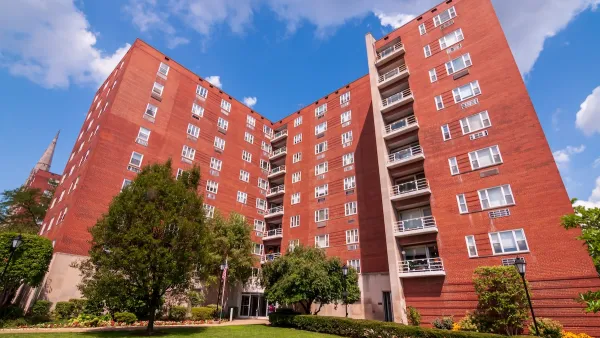
"The 92-foot tall cherrybark oak towers over the James Cayce public housing complex, much of which is being demolished to make way for modern affordable apartments," explains Reicher.
The future of the tree is in limbo, because the Metropolitan Development and Housing Agency hasn't yet released its plans for the Envision Cayce (the name of the aforementioned affordable housing project). However, "[t]he agency does not have to follow new city tree regulations, which are designed to save mature trees during Nashville’s expansive development boom."
According to Reicher, the looming clash between affordable housing advocates and environmentalists is likely to be exacerbated by the political climate created by the city's development market. "In the past, a public housing project’s landscape might not have generated as much controversy, but today the stakes are higher. Nashville developers have cut down thousands of trees in recent years to clear land for buildings and parking lots — a scale of loss that has galvanized tree lovers and prompted action at City Hall." Housing prices in Nashville are climbing to crisis levels despite all the new construction.
Read the full story: Some of Nashville's largest trees in path of development for Cayce Homes affordable housing

Study: Clarifying California’s Vague Definition of Transit Stops Could Make 1.3M Acres Eligible for Density Bonuses
According to researchers, no California jurisdictions are using the broadest possible definition of a transit stop.
Pittsburgh Lawsuit Threatens Affordable Housing Requirement
A suit brought by a developers’ group calls the cost burden of the city’s inclusionary zoning law ‘unconstitutional.’

San Diego County Picks Housing Over Wildfire Safety
The county’s planning commission approved a 453-unit housing development that neighbors worry could become a trap for residents during a fire evacuation.

Planetizen Federal Action Tracker
A weekly monitor of how Trump’s orders and actions are impacting planners and planning in America.

California plans to bury El Niño’s downpour
If the state plays its cards right, it may be able to store a billion acre-feet of El Niño’s water in aquifers.

Desperate measures: Advocates weigh draining Lake Powell to fill Colorado River
Draining the reservoir could reduce evaporation losses by a couple hundred thousand acre-feet.

Mamdani’s pied-à-terre tax survives legal challenge
A panel of judges found that the plaintiffs failed to demonstrate injury as a result of New York City's implementation of the tax.

Eastern Nebraska is running out of electricity
Data centers and electrification are straining eastern Nebraska’s grid, throttling economic development.

Seattle passes record-breaking transit services expansion
Proposition 1 will double the city’s transit tax to add 95,000 more bus trips and preserve 180,000 bus trips annually.

FREE Course: Walkable City 1: Why Walkability?
After describing his path towards focusing on walkability as the essence of good planning, Jeff Speck marches through his five principal reasons for making more walkable places.
Reinventing Malls: Planning Alchemy—Turning Gray Fields Into Gold
The course focuses on the opportunities and imperatives that shape reinvention of mall sites.

City of Rosemead
Rutgers University, Edward J. Bloustein School of Planning and Public Policy
One Hundred Miles
University of Michigan School for Environment and Sustainability (SEAS)
Hunter College, City University of New York (CUNY)
The Architects Foundation
City of Cambridge
Montrose County
The Pocatello Development Authority