The Central SoMa Plan, which sets development goals for a key swath of Downtown San Francisco, got bigger as it moved through a lengthy approval process.


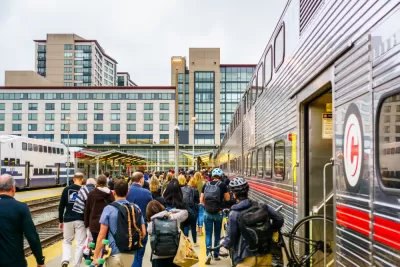
San Francisco has granted preliminary approval for the Central SoMa Plan, culminating years of planning and making space for 8,800 housing units and 31,000 jobs.
"A portion of downtown San Francisco will change dramatically with thousands of housing units, jobs — and even a public swimming pool — under a plan finally approved Tuesday by the Board of Supervisors after eight years of hearings, amendments and negotiations," reports Trisha Thadani.
San Francisco Supervisor Jane Kim is quoted in the article saying the Central SoMa Plan is "the biggest area plan the city has passed."
"The rezoning of Central SoMa was initially about creating the large-floor-plate office buildings coveted by tech companies. It originally envisioned about 7,000 housing units and space for about 39,000 jobs. But as the city’s housing crisis worsened over the years, city planners and supervisors pushed to increase the amount of housing," according to Thadani.
The article includes a lot more details about provisions in the plan for affordable housing, past opposition to the plan, and next steps.
FULL STORY: Plan to transform much of SoMa adopted after 8 years

San Francisco's Massive 'Central SoMa Plan' Faces Litigation
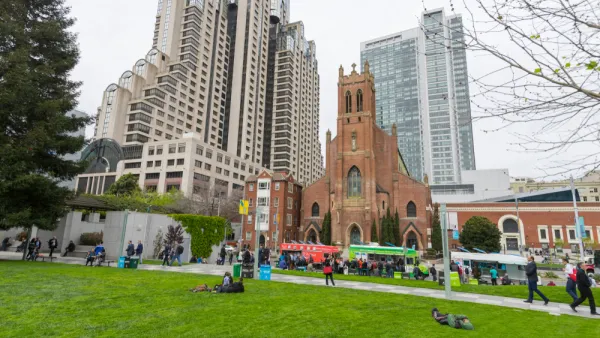
The Central SoMa Plan took more than seven years of planning and debate to approve. A new lawsuit, expected to be just the first of many, threatens to erase all that work.
New Neighborhood Plan in San Francisco Pitches the Public Benefits of Density
Central SoMa ("South of Market") in San Francisco will soon have a new neighborhood plan. Planners hope zoning changes will reap rewards in property values and public benefits.

Sioux Falls Multi-Family Development Outpaces Transportation Improvements
Sioux Falls, South Dakota is undergoing a multi-family development boom. Residents are increasingly concerned about the traffic the development brings, according to local news reports.

Planetizen Federal Action Tracker
A weekly monitor of how Trump’s orders and actions are impacting planners and planning in America.

The state-sanctioned urbicide of Austin
People don’t kill cities. Freeways do.

US to reduce Colorado River water deliveries to Mexico
A new Colorado Treaty amendment reduces Mexico’s Colorado River water allocation by 250,000 acre feet.

5 New England states march closer to 800 megawatt wind energy project
Securing federal approval for the project may be complicated under the Trump administration, which has historically been hostile towards domestic wind power.

Baltimore to break ground on $50 million Transit Priority Project
The project will bring faster bus trips, safer streets and better bike connections to Baltimore.

Airbnb launches $250 million 'last-dollar financing' housing accelerator, makes first investment in Austin
The company will put $6.4 million towards affordable housing development in Texas’ capital.

FREE Course: Walkable City 1: Why Walkability?
After describing his path towards focusing on walkability as the essence of good planning, Jeff Speck marches through his five principal reasons for making more walkable places.
Reinventing Malls: Planning Alchemy—Turning Gray Fields Into Gold
The course focuses on the opportunities and imperatives that shape reinvention of mall sites.

Eagle County Government
Harvard University Graduate School of Design
Nashville Planning Department
The Architects Foundation
University of Cincinnati Online
The Pocatello Development Authority
The Urban Renewal Agency of the City of Pocatello
Journal of the American Planning Association