With very little of its residential population or employment centers accessible by public transit, Birmingham is looking to microtransit to potentially reduce single-occupancy vehicles use in the city.



"The city of Birmingham, AL is looking to begin an on-demand microtransit pilot program," reports Chris Teale.
That news comes by way of a request for proposals issued by the city on November 8. "In the RFP, Birmingham officials note the unique challenges of a city that is still heavily reliant on cars but also struggling with a widening poverty gap," according to Teale.
"The RFP says 62% of households are underserved [by bus and paratransit systems], and less than half of the 163,000 jobs in the city are accessible by transit," adds Teale. "Meanwhile, only 28% of workers live within a half-mile of a transit station."
FULL STORY: Birmingham, AL to launch microtransit pilot program

Poor Returns for L.A.'s Transit on Demand Pilot
Similar to microtransit on demand programs in other cities, Los Angeles' ongoing experiment is proving to be very expensive (for the public) for the benefit of very few riders.
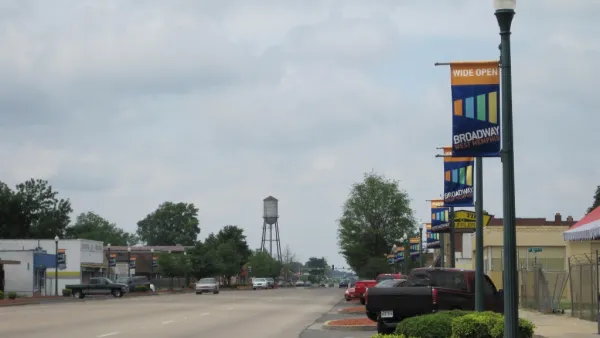
West Memphis to launch new transit system
The city across the Mississippi River from Memphis, Tennessee will soon begin service on its own, on-demand transit system.

Alabama DOT wants to fill wetlands for interstate project
The Birmingham Northern Beltline would run roughly 52 miles through forests and wetlands that are home to multiple endangered species.

Planetizen Federal Action Tracker
A weekly monitor of how Trump’s orders and actions are impacting planners and planning in America.

The state-sanctioned urbicide of Austin
People don’t kill cities. Freeways do.

US to reduce Colorado River water deliveries to Mexico
A new Colorado Treaty amendment reduces Mexico’s Colorado River water allocation by 250,000 acre feet.

Mamdani overhauls NYC's Vision Zero plan with 100 new policy goals
The overhaul aims to reduce traffic deaths and make streets safer for pedestrians, cyclists and drivers through lower speed limits, new safety infrastructure and more.

Amtrak not solely to blame for New Jersey commuter rail's unreliability, report finds
A new study from the Garden State Initiative found that NJ Transit’s budget grew 20% across a 4 year period, but reliability declined significantly over the same period.

EPA erases limits on planet-warming pollution from power plants
Under Monday’s plan, power plants would still have some limits on how much mercury, arsenic and other contaminants they can emit.

FREE Course: Walkable City 1: Why Walkability?
After describing his path towards focusing on walkability as the essence of good planning, Jeff Speck marches through his five principal reasons for making more walkable places.
Reinventing Malls: Planning Alchemy—Turning Gray Fields Into Gold
The course focuses on the opportunities and imperatives that shape reinvention of mall sites.

Eagle County Government
Harvard University Graduate School of Design
Nashville Planning Department
The Architects Foundation
University of Cincinnati Online
The Pocatello Development Authority
The Urban Renewal Agency of the City of Pocatello
Journal of the American Planning Association