The city of Columbus, Ohio is sharing some of what it has learned about becoming a smart city.


"Columbus, OH has unveiled a playbook for other cities to learn how to become a smart city," reports Katie Pyzyk.
"In the Smart Columbus Playbook, the city offers articles, contracts, webinars, case studies and data for other city leaders to leverage and learn from when jumpstarting smart programs and initiatives," adds Pyzyk.
The city of Columbus won $50 million in highly competitive grant money from the U.S. Department of Transportation’s Smart City Challenge in 2016. Since then, the city has faced criticisms and changed its plans, but has also begun to roll out deliverables, like an operating system, its first hardware (in the form of solar equipment at Ohio Dominican University), and this week's playbook. The article has more details and links to more of Columbus' smart city plans.
FULL STORY: Columbus, OH unveils playbook on becoming a smart city


Five Years Later, 'Smart Cities Challenge' Promise Unfulfilled
The "Smart Cities Challenge" paid Columbus, Ohio $50 million to kick start a revolution of urban technology. The revolution never arrived, according to a recent assessment by Wired writer Aarian Marshall.

'Smart Columbus Operation System' Looking for Developers
"Smart City" plans for the city of Columbus are taking shape.
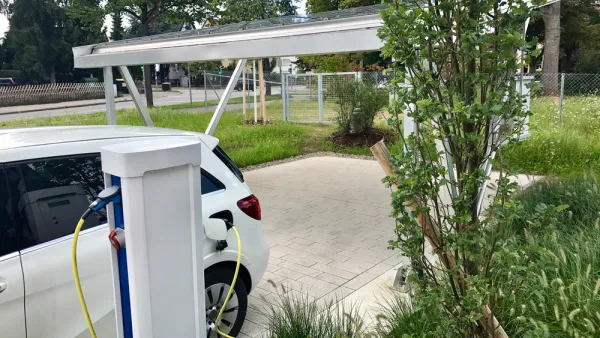
First 'Smart Cities' Grant-Enabled Hardware Online in Columbus
Columbus has spent the first year since its selection as the $50 million Smart Cities Challenge grant recipient devoted to planning and research. The grant has also proven a very enticing fundraising tool.

Planetizen Federal Action Tracker
A weekly monitor of how Trump’s orders and actions are impacting planners and planning in America.

The state-sanctioned urbicide of Austin
People don’t kill cities. Freeways do.

US to reduce Colorado River water deliveries to Mexico
A new Colorado Treaty amendment reduces Mexico’s Colorado River water allocation by 250,000 acre feet.

LA Metro’s ultimatum: no extra buses for LA28 if federal funding isn’t imminently secured
If Metro does not provide additional buses, LA28 organizers will have to find a new way to manage Olympic traffic. LA28’s budget does not include a line item for transit.

Colorado’s Largest Data Center Could Rise Next to Homes — Without a Public Hearing
The proposed campus would consume 11 times the power of Denver International Airport; as it has across the country, opposition mounts.

5 New England states march closer to 800 megawatt wind energy project
Securing federal approval for the project may be complicated under the Trump administration, which has historically been hostile towards domestic wind power.

FREE Course: Walkable City 1: Why Walkability?
After describing his path towards focusing on walkability as the essence of good planning, Jeff Speck marches through his five principal reasons for making more walkable places.
Reinventing Malls: Planning Alchemy—Turning Gray Fields Into Gold
The course focuses on the opportunities and imperatives that shape reinvention of mall sites.

Eagle County Government
Harvard University Graduate School of Design
Nashville Planning Department
The Architects Foundation
University of Cincinnati Online
The Pocatello Development Authority
The Urban Renewal Agency of the City of Pocatello
Journal of the American Planning Association