New offshore windmills are taller and bigger than their predecessors, and they will produce more power.


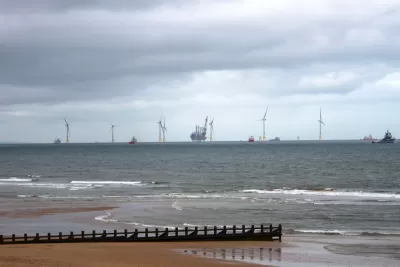
Windmills are getting bigger. In Europe where there's more political will to move to clean energy, huge off shore windmills will be able to produce more power on a more regular basis, "… with bigger rotors and blades to cover a wider area. That increases the capacity of the turbine, i.e., its total potential production," David Roberts reports for Vox. Besides being bigger, these windmills are also taller. The Haliade-X from GE will stand 853 feet high, for reference the Eiffel tower stands 1056 feet high. Higher elevations offer more steady wind so there's less variability in the energy produced.
Building taller, bigger windmills presents some engineering challenges. If turbines are not strong enough, they can break, and the longer the turbines are the more torque they have to withstand. So bigger windmills need to be built to withstand higher windspeeds. By making wind power less variable, these huge turbines will bring the price of wind power down. Because it will need less back up and have an extended time of power generation, making it more likely to be creating power during peak demand.
Read the full story: These huge new wind turbines are a marvel. They’re also the future.
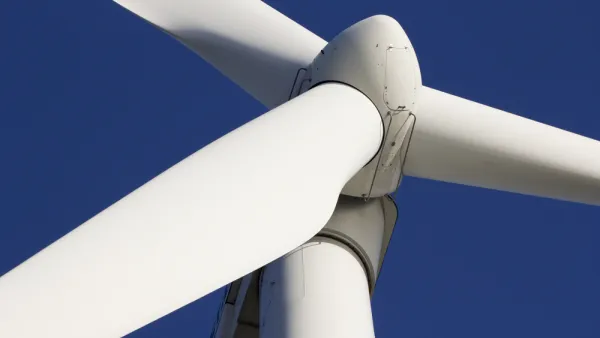
Despite Trump Administration Policies, Wind Power Still Growing
Technological improvements and market demand have buoyed the sector against the Trump adminsitration’s attacks.
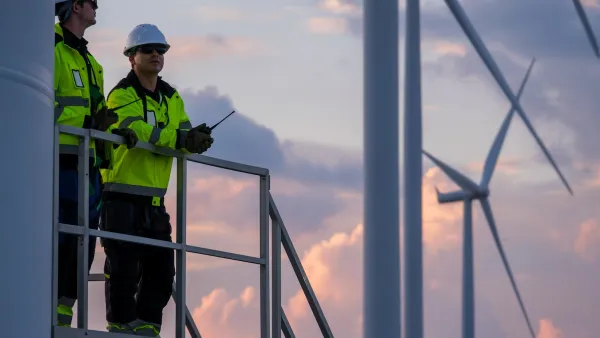
Despite court ruling, Trump is keeping nearly all wind projects in the US on hold
At least 110 wind energy projects have not heard from the government since a federal judge ruled that the Trump administration's freeze on wind turbine clearances was likely illegal.
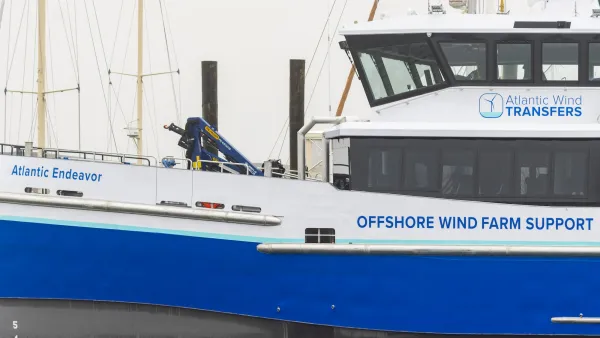
Nation’s Largest Offshore Wind Project, Suspended by Trump, Restarts Construction
A judge issued a temporary restraining order against the Trump administration’s suspension of five East Coast offshore wind projects.

Desperate measures: Advocates weigh draining Lake Powell to fill Colorado River
Draining the reservoir could reduce evaporation losses by a couple hundred thousand acre-feet.

Eastern Nebraska is running out of electricity
Data centers and electrification are straining eastern Nebraska’s grid, throttling economic development.

Malls are becoming the midtowns of the future
Mall and office park redevelopments are a generational opportunity to create new nodes of urbanity.

NYC breaks ground on anti-flooding infrastructure project
New York City's new system will reduce stormwater flows to local sewers by 90%.

One Kentucky town’s secret to affordable housing
The Smoketown Community Land Trust has already built seven affordable homes for community members.

Houston gains petal-shaped cooling infrastructure to make streets more ‘delightful’
The city has installed the pavilions along 15 blocks in Houston.

FREE Course: Walkable City 1: Why Walkability?
After describing his path towards focusing on walkability as the essence of good planning, Jeff Speck marches through his five principal reasons for making more walkable places.
Reinventing Malls: Planning Alchemy—Turning Gray Fields Into Gold
The course focuses on the opportunities and imperatives that shape reinvention of mall sites.

City of Rosemead
Rutgers University, Edward J. Bloustein School of Planning and Public Policy
One Hundred Miles
University of Michigan School for Environment and Sustainability (SEAS)
Hunter College, City University of New York (CUNY)
The Architects Foundation
City of Cambridge
Montrose County
The Pocatello Development Authority