The city plans to use a different approach to tackle its longstanding flood problems.


Beau Evans reports on efforts in New Orleans to address flood threats by shifting away from pumping water to retaining it. “Doing so would ease the burden placed on pumps and underground drainage pipes during storms, and more water stored over time would help replenish the city's groundwater levels to counteract the sinking effects of subsidence,” says Evans.
The 2013 Urban Water Plan described the many challenges New Orleans faces in dealing with stormwater. “Perhaps more concisely than any other document, it dissects the combined influences of the city's low-lying topography, subsidence, impervious surfaces and the constant threat of heavy rains that often overwhelm the drainage system,” reports Evans.
Evans says the city has been slow in getting projects off the ground that use the retention-hold approach, with a backlog of about $250 million in projects when Mayor LaToya Cantrell came on board in the spring. A series of green infrastructure projects to contain water are planned for the next several months, including construction of retention ponds, rain gardens, and permeable pavement.
FULL STORY: New Orleans dips its toes into living with water

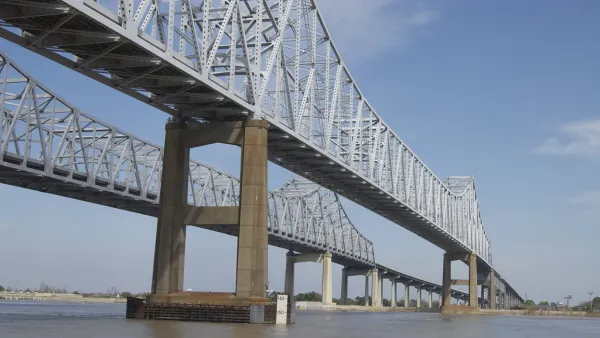
As the Mississippi River Rises, So Does the Threat to New Orleans
Climate change and channelization have made high water levels the norm along the river. But low-lying New Orleans lies in its path, and the consequences could be monumental.

As Temperatures Increase, Maps Show Sea-Level Rise Will Devastate Cities
Data visualizations illustrate the catastrophic consequences of single-digit global temperature increases.
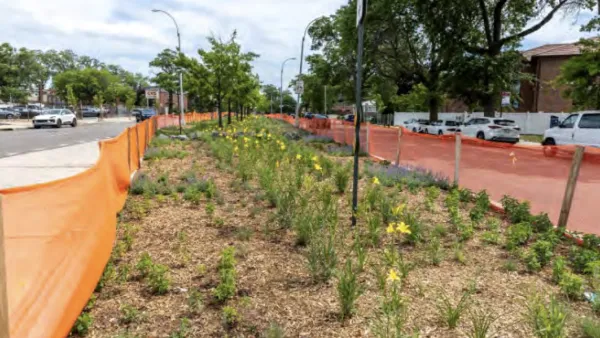
New NYC ‘sponge’ medians will absorb 5 million gallons of stormwater per year
The project will turn three medians in Queens into green infrastructure designed to absorb stormwater.

Planetizen Federal Action Tracker
A weekly monitor of how Trump’s orders and actions are impacting planners and planning in America.

The state-sanctioned urbicide of Austin
People don’t kill cities. Freeways do.

US to reduce Colorado River water deliveries to Mexico
A new Colorado Treaty amendment reduces Mexico’s Colorado River water allocation by 250,000 acre feet.

Mamdani overhauls NYC's Vision Zero plan with 100 new policy goals
The overhaul aims to reduce traffic deaths and make streets safer for pedestrians, cyclists and drivers through lower speed limits, new safety infrastructure and more.

Amtrak not solely to blame for New Jersey commuter rail's unreliability, report finds
A new study from the Garden State Initiative found that NJ Transit’s budget grew 20% across a 4 year period, but reliability declined significantly over the same period.

EPA erases limits on planet-warming pollution from power plants
Under Monday’s plan, power plants would still have some limits on how much mercury, arsenic and other contaminants they can emit.

FREE Course: Walkable City 1: Why Walkability?
After describing his path towards focusing on walkability as the essence of good planning, Jeff Speck marches through his five principal reasons for making more walkable places.
Reinventing Malls: Planning Alchemy—Turning Gray Fields Into Gold
The course focuses on the opportunities and imperatives that shape reinvention of mall sites.

Eagle County Government
Harvard University Graduate School of Design
Nashville Planning Department
The Architects Foundation
University of Cincinnati Online
The Pocatello Development Authority
The Urban Renewal Agency of the City of Pocatello
Journal of the American Planning Association