From high-rises to townhouses, the suburban multi-family market is growing fast.


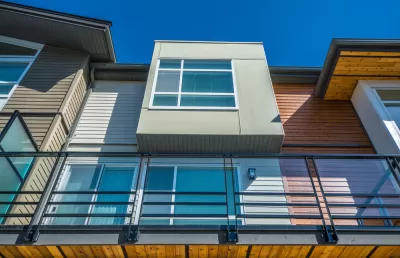
Half of apartments built in the Minneapolis-St. Paul area this year will be in the suburbs—a share that will rise to three-quarters in 2019. And the Twin Cities region isn't alone: Suburbs around the country are experiencing a boom in apartment development.
Alan Greenblatt reports in Governing that new apartments outside city centers are locating near freeways and light rail lines, often in converted office parks and retail centers. While high-rises are certainly part of the trend, much of the new construction is on the smaller end of multi-family, ranging from townhouses to five-story buildings.
Suburban communities have traditionally resisted apartment construction—and in many places, that still holds true. But the new development is also welcomed by a growing segment of the population looking for multi-family rental options outside of major cities.
Households are getting smaller, with single-member households growing fastest of all. At the same time, not everyone can afford to live in a center city, where costs have risen sharply over the past decade. Add these factors together and the result is lots of new apartments going up in suburbs.
FULL STORY: Suburbs See Apartment-Building Boom

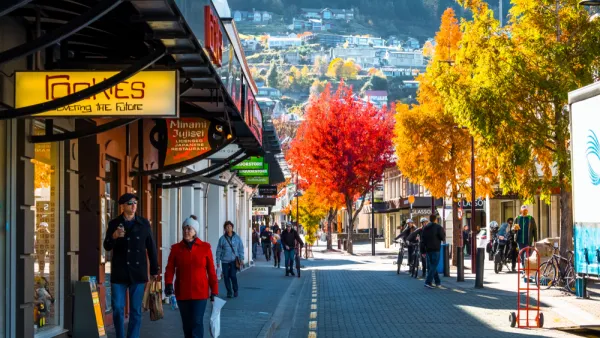
Zoning Reform: Lessons From New Zealand
The island nation is mandating mid-density zoning requirements and transit-oriented development in an effort to increase housing affordability and encourage compact development.
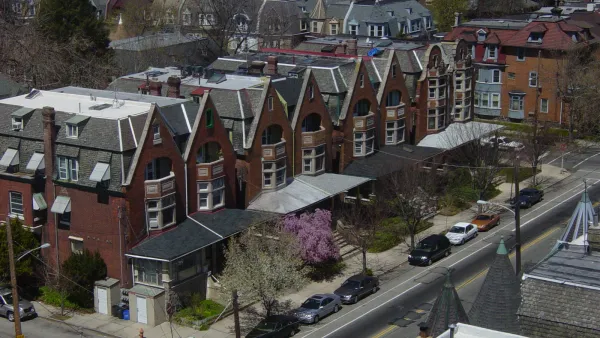
Philadelphia on Track to Build Record Number of Apartments in 2022
A researcher from the Lindy Institute for Urban Innovation at Drexel University tells a tale of two housing markets—rental and for-sale—in the City of Brotherly Love.
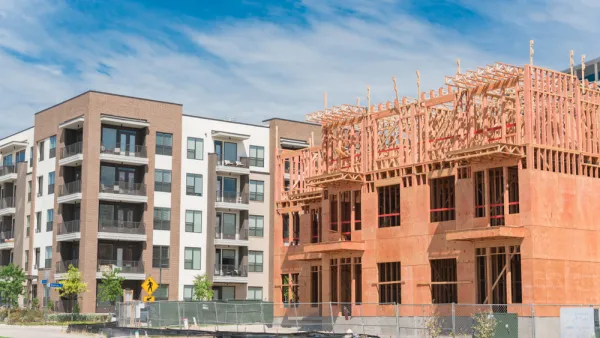
Apartment Construction Ramps Up to Meet New Demand
It's unclear if or when the supply of entry level rental housing options will catch up with the demand, but some cities are building quickly.

The state-sanctioned urbicide of Austin
People don’t kill cities. Freeways do.

US to reduce Colorado River water deliveries to Mexico
A new Colorado Treaty amendment reduces Mexico’s Colorado River water allocation by 250,000 acre feet.

New Jersey’s second-largest city bans standalone data centers
Jersey City will continue to allow co-location facilities, such as those meant for research institutions that store their own data.

Amtrak not solely to blame for New Jersey commuter rail's unreliability, report finds
A new study from the Garden State Initiative found that NJ Transit’s budget grew 20% across a 4 year period, but reliability declined significantly over the same period.

EPA erases limits on planet-warming pollution from power plants
Under Monday’s plan, power plants would still have some limits on how much mercury, arsenic and other contaminants they can emit.

Phoenix announces new on-demand transit service, more frequent RAPID buses
Both new services will launch in October, and are part of Phoenix's Project Effective Access Solutions for Easing Congestion.

FREE Course: Walkable City 1: Why Walkability?
After describing his path towards focusing on walkability as the essence of good planning, Jeff Speck marches through his five principal reasons for making more walkable places.
Reinventing Malls: Planning Alchemy—Turning Gray Fields Into Gold
The course focuses on the opportunities and imperatives that shape reinvention of mall sites.

Eagle County Government
Harvard University Graduate School of Design
Nashville Planning Department
The Architects Foundation
University of Cincinnati Online
The Pocatello Development Authority
The Urban Renewal Agency of the City of Pocatello
Journal of the American Planning Association