Planners behind a new 17-mile light rail system that will connect the cities and employers in the Research Triangle in North Carolina overcame a change of funding plans by the state.


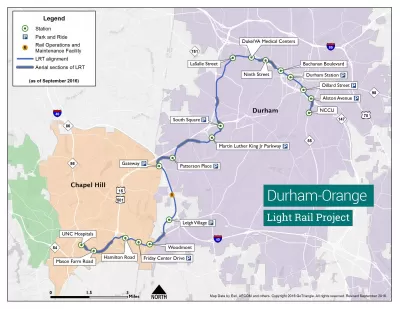
"Durham County now says it can fill a $57.6 million state funding gap for the Durham-Orange light rail project," reports Dawn Baumgartner Vaughan.
"The Durham-Orange Light Rail Transit project is an 18-stop, 17.7-mile line that will run from UNC Hospitals in Chapel Hill to N.C. Central University in Durham, with stops along the way including Duke University and downtown Durham," adds Baumgartner Vaughan.
The county is stepping up to fill a gap in funding for the project "after the N.C. General Assembly changed the funding makeup," according to the article. More coverage of the funding allocation change by the state is available in an article by Tammy Grub and Lauren Horsch from June 2018. The county located the necessary funding in its dedicated local transit revenue.
FULL STORY: NC left Durham-Orange Light Rail with a $57M gap. Now Durham says it can fill it.

Research Triangle Commuter Rail Studied
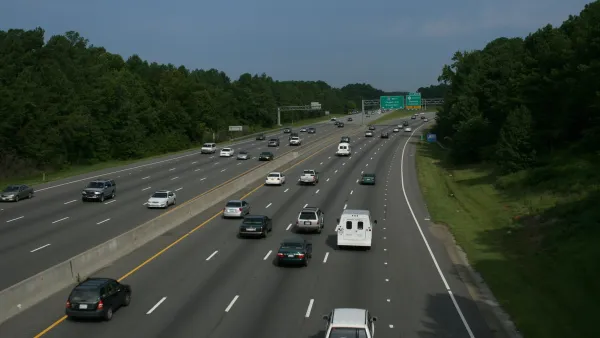
A 37-mile commuter rail line under study in North Carolina could connect cities Raleigh, Cary, and Durham in North Carolina, but the system will cost a pretty penny, and it will have to succeed where light rail previously failed.
Duke Faculty Support N.C. Rail Project; University Opposes It
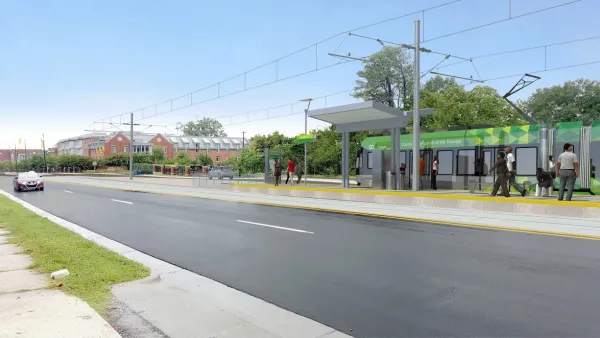
Duke University will not sign an agreement for a regional rail project that has widespread support from the campus community.
Residents Dig Into North Carolina Triangle Light Rail Planning
Ahead of a February 2016 deadline for an environmental impact statement, residents are making their opinions known about the potential routes for a proposed light rail line connecting Durham and Chapel Hill.

Planetizen Federal Action Tracker
A weekly monitor of how Trump’s orders and actions are impacting planners and planning in America.

The state-sanctioned urbicide of Austin
People don’t kill cities. Freeways do.

US to reduce Colorado River water deliveries to Mexico
A new Colorado Treaty amendment reduces Mexico’s Colorado River water allocation by 250,000 acre feet.

Guerilla urbanists are building DIY bus stop benches in Chicago
A before-and-after of one of the bus stops with a new bench. The new benches are not officially sanctioned or permitted, but the residents who placed them hope they will be the start of a network of DIY benches across the city.

Mamdani overhauls NYC's Vision Zero plan with 100 new policy goals
The overhaul aims to reduce traffic deaths and make streets safer for pedestrians, cyclists and drivers through lower speed limits, new safety infrastructure and more.

Amtrak not solely to blame for New Jersey commuter rail's unreliability, report finds
A new study from the Garden State Initiative found that NJ Transit’s budget grew 20% across a 4 year period, but reliability declined significantly over the same period.

FREE Course: Walkable City 1: Why Walkability?
After describing his path towards focusing on walkability as the essence of good planning, Jeff Speck marches through his five principal reasons for making more walkable places.
Reinventing Malls: Planning Alchemy—Turning Gray Fields Into Gold
The course focuses on the opportunities and imperatives that shape reinvention of mall sites.

Eagle County Government
Harvard University Graduate School of Design
Nashville Planning Department
The Architects Foundation
University of Cincinnati Online
The Pocatello Development Authority
The Urban Renewal Agency of the City of Pocatello
Journal of the American Planning Association