The Daily Source of Urban Planning News

Low Car Traffic Enables Accelerated Subway Construction in Southern California
The city of Beverly Hills, long an opponent of the project, is now taking advantage of a lack of car traffic to drastically speed up construction on the Purple Line subway extension.

Drive-Through Coronavirus Testing Promises Not Yet Fulfilled
The number of drive-through testing sites across the country is still low. With continued supply shortages, when and if the situation will change are unclear.

Fiscal Effects of the Pandemic Depend on Tax Structures
Cities that rely on sales and income tax revenues to fund vital local services can expect immediate fiscal consequences from the coronavirus pandemic.

As Coronavirus Spreads, Air Pollution Plummets
More people are driving less and staying at home. The result is significant improvements in air quality in cities across the country.

Urban Forestry Plans Obstructed by Urban Development Plans in D.C.
Growth and development are the biggest obstacles to Washington, D.C.'s plans to add more than 10,000 trees every year over the next 25 years.
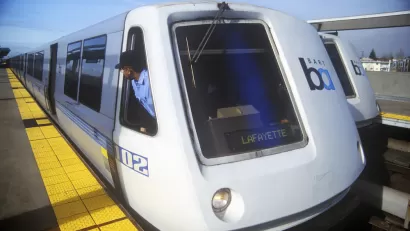
BART San Jose Extension Faces Delays and Ballooning Costs
The extension to downtown is a complex and ambitious project facing many challenges and questions about feasibility.
Multifamily Housing Industry Reacts to Congressional COVID-19 Package
The National Multifamily Housing Council (NMHC) and the National Apartment Association (NAA) on the law's impact on multifamily housing.

BLOG POST
COVID-19 Appreciation Day
April Fool's Day is a good day to consider life from a virus's perspective. Our tiny friends have many positive attributes.

Community Development Is Crucial in This Moment
The pandemic is highlighting the crucial necessity of community developers’ work. Here’s what the field will need to play its part in the recovery.

FEATURE
The Dots of Connectivity and Broken Cultural Links
Connectivity is not just a question of geometry, according to this article by Fanis Grammenos. It's critical to consider what people connect for and how.

How Coronavirus Will Change Cities, From Public to Private Lives
Changes are coming, but they don't have to be anti-urban, and they could mean a more resilient world for cities and communities of all shapes and sizes.

BLOG POST
Will Infrastructure Planners Become Responsible for Facial Recognition Systems?
Facial recognition offers both benefits and risks. Planners can have a role in ensuring more of the former than the latter.

Applying the Lessons of COVID-19 to Climate Change
Now that everyone understands what an exponential curve looks like, how it works, and how it brings life-threatening risk to their lives, it might be time to re-examine the realities of climate change, too.

How Cities and Communities Can Rebound From the Pandemic
An interview with Michael Berkowitz, former executive director of 100 Resilient Cities, finds a path to the light at the end of the tunnel.

HUD Urged to Make Tenant Income Adjustments Automatic by April 1
Preventing catastrophe when eviction moratoriums lift requires major waivers and changes of policy—but ones advocates say are fully within HUD's power.

Suppression or Mitigation? The Language of Coronavirus Containment
A report from Imperial College London, viewed as the "gold standard" by British leaders, was instrumental in compelling the U.S. and the U.K. to enact stronger policies to contain COVID-19. But was it too late?

The Disruption of 'Safer at Home' for L.A.'s Unhoused
Alisa Orduña shares her insight on Santa Monica's COVID-19 response and the pandemic's disruption both on the lives of L.A.'s unhoused and the approach cities take towards crises of public health, safety, and wellbeing, going forward.

The Pandemic Offers a Chance to Rethink the Mobility Priorities of Cities
Cities have an opportunity to make bold changes that would give pedestrians and cyclists the space on streets that they deserve.

Traffic Patterns Are Going to Change Drastically
While some bike-sharing systems are being shut off to reduce mobility, others are experiencing a sudden increase of demand as people avoid mass transit.

N.Y.C. Density and Spread of Coronavirus
The densest city in the country is struggling with the rapid spread of the virus, and close proximity is likely a primary factor.
City of Thousand Oaks
City of Wisconsin Rapids
Harvard University Graduate School of Design
The Architects Foundation
University of Cincinnati Online
Northern Illinois Transit Authority (NITA)
The Pocatello Development Authority
The Urban Renewal Agency of the City of Pocatello

FREE Course: Walkable City 1: Why Walkability?
After describing his path towards focusing on walkability as the essence of good planning, Jeff Speck marches through his five principal reasons for making more walkable places.
Reinventing Malls: Planning Alchemy—Turning Gray Fields Into Gold
The course focuses on the opportunities and imperatives that shape reinvention of mall sites.