The Daily Source of Urban Planning News

Bird Scooters Now Automatically Slow in High-Activity Areas
Years after cities first started trying to regulate electric scooters with geofences and designated parking areas, Bird will begin automatically lowering scooter speeds in pedestrian-dense areas like school zones and hospitals.

Activists Urge Action to Reduce Arizona's Bike and Pedestrian Deaths
The state ranks as the seventh most dangerous for pedestrians, with more than 100 pedestrian and cyclist deaths every year.

Why a 'Marginally Useful' Minneapolis Freeway Segment Should Be Removed
Two ramps that have minimal impact on traffic could make way for apartments, commercial spaces, or much-needed parks.

Study: Recreational Trails Program Underfunded by Over $200 Million
FHA research shows that multi-use trail users contribute three times as much in gas taxes as the program to build and maintain them receives.

How Cities Can Manage Drought Risk and Conserve Water
As climate change and population growth strain fresh water resources, tactics from around the world provide universal lessons for building water-smart cities.
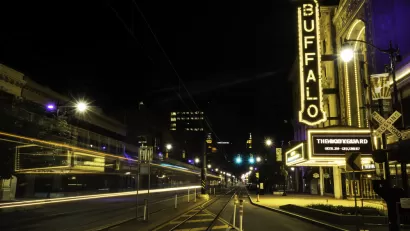
How Downtown Public Space Investments Impact Equity
Efforts to revitalize declining downtowns have, in some cases, become catalysts for supporting small, minority-owned, local businesses.
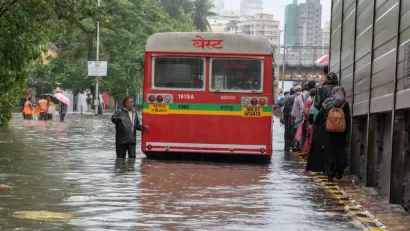
Over 80 Million People Live in Flood Zones
New research shows a 24% increase in people living in flood-prone areas since 2000, prompting calls for increased adaptation measures.

Changes for Amtrak in the New Infrastructure Bill
While the agency is receiving less funding than advocates say is needed, it will also have a new mandate that prioritizes public service over profitability.

Norfolk's 'Missing Middle Pattern Book' Aims to Streamline Permitting for Multi-Family Housing
Acknowledging the region's dire need for more diverse housing stock, city leaders hope the pre-approved designs, along with necessary zoning reforms, will encourage more construction of 'missing middle housing.'

Houston's Pedestrian Death Problem, Explained
The city's roadways were built to prioritize fast-moving traffic, not safety. With a new Vision Zero plan, that could change.

The Problem with Tree Planting Programs
Ambitious campaigns to plant trees in urban areas often don't take into account the complexities of growing and maintaining effective urban forests.

Lake Powell's Houseboat Launches Running Dry
Record low water levels are sinking Lake Powell's houseboat industry as climate change threatens water supplies in the West.

Mapping Informal Neighborhoods
New mapping tools are helping cities around the world map and understand their poorest communities.

What California Would Lose if the Infrastructure Plan Fails
The state is poised to gain nearly $1 billion from the federal plan for projects ranging from electric vehicle charging stations to bike lanes and zero-emission bus fleets.

This Washington City Quietly Eliminated Single-Family Zoning
Walla Walla's 2018 zoning reforms included adaptive reuse, reduced parking requirements, and more relaxed rules for accessory dwelling units.

How Extreme Heat Threatens the Electrical Grid
Higher demand for electricity and lower capacity for production due to more intense heat waves are straining the power grid and causing concern for future energy production.

San Diego Bike Advocates Demand Safer Infrastructure
After 12 people were killed this year biking on San Diego County roads, local advocates are calling for more protected bike lanes and safer bike facilities.

El Paso Streetcar Returns With Free Fares
The historic streetcars will connect uptown and downtown amenities in a 4.8-mile loop.

Study: More SUVs Lead to More Pedestrian Deaths
Larger vehicles are proving deadlier for pedestrians–and are more popular than ever.

To Protect Pedestrians, Install More Bollards
Roadway designs protect drivers and construction workers with robust barriers. Why don't we protect pedestrians in the same way?
City of Thousand Oaks
City of Wisconsin Rapids
Harvard University Graduate School of Design
The Architects Foundation
University of Cincinnati Online
Northern Illinois Transit Authority (NITA)
The Pocatello Development Authority
The Urban Renewal Agency of the City of Pocatello

FREE Course: Walkable City 1: Why Walkability?
After describing his path towards focusing on walkability as the essence of good planning, Jeff Speck marches through his five principal reasons for making more walkable places.
Reinventing Malls: Planning Alchemy—Turning Gray Fields Into Gold
The course focuses on the opportunities and imperatives that shape reinvention of mall sites.