The Daily Source of Urban Planning News

House Tax Reform Bill Would Devastate Affordable Housing
The House tax reform bill threats to drastically reduce the number of affordable housing units developed.

Chicago Needs Congestion Pricing
The Chicago Tribune's editorial board argues that congestion pricing will not only decrease congestion, but also make the city more attractive to people and businesses.

Raising Speed Limits in the Name of Traffic Safety
Business Insider offers a platform for an argument favored by the National Motorists Association and a particularly vocal Michigan state police officer: that speed limits are too slow to be safe.

Election Day Roundup: Land Use, Development, and Infrastructure Measures
Planetizen rounded up all the pertinent results from local and state elections on November 8, 2017. The main theme of the day: voters continue to support local and state sources of infrastructure funding.

Portland, ME, Voters Reject 'Neighbor Veto' of Zoning Changes
In a close vote, Portland (Maine) residents voted not to allow immediate abutters to reject zoning changes approved by the City Council. The referendum was initiated by neighbors opposed to a cluster subdivision proposed instea dof a conventional one
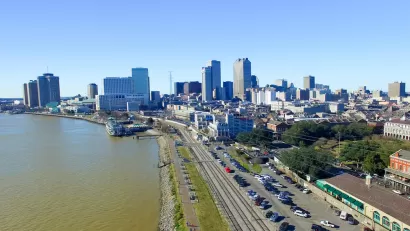
New Orleans Closes Gap in Historic Riverfront Park Plan
New Orleans could create the largest stretch of public riverfront in the U.S., thanks to a public land swap.

FEATURE
Houston Planning Director Dispels Myths About the Effects of Harvey
An interview with Houston Planning Director Patrick Walsh, conducted after Hurricane Harvey ravaged the city and reduced its planning and infrastructure to a talking point for pundits. It's time to let the locals do the talking.

A Form-Based Code Arrives in St. Louis
The Forest Park Southeast neighborhood in St. Louis has completed a years-long planning process—the result is a new form-based code.
A Silver Lining for Detroit's Failed Soccer Stadium Plan
The renaissance of Downtown Detroit will not include a new soccer stadium, but don't call it a setback.

New York Puts on its Dancing Shoes After Repeal of the 1927 Cabaret Law
For 91 years, dancing was practically illegal in New York City. The city is getting footloose, after the City Council repealed the 1927 Cabaret Law intended to control speakeasies.

Waymo Announces Self-Driving Car Breakthrough
The conversation about the future of self-driving cars took an unexpected leap forward today, as Waymo announced its use of fully automated rides—with no human driver present.

San Francisco's Vision for Seismic and Social Resilience
The progressive city hopes to integrate economic, community, and climate resiliency measures in future projects.

Editorial: Expand Bus Service in Dallas
An Dallas Morning News editorial suggests DART spending should favor bus service over train service to make more efficient use of its funds.

Richard Florida: Urban Land Values Reflect Spatial Inequality
Overall, the value of American land is strikingly high. But it's the differences between and within cities that concern Florida.

P3 101: Comparing Infrastructure Procurement Models
Already a common means of delivering infrastructure in many countries, public-private partnerships are growing in importance in the United States, but how do they compare to other procurement models?

BLOG POST
The Great Transportation Wormhole: Are We Ready for Autonomous Vehicles?
Transportation planners are on to something big and, for the most part, they are keeping it to themselves. The future is a relatively small fleet of shared, electric, self driving vehicles, and it's coming fast. Are we ready?

San Diego Inclusionary Zoning Program Makes Headway
San Diego's Affordable Homes Bonus Program (AHBP), launched in mid-2016, increases incentives for projects that incorporate more affordable units. Developers are taking notice.

Lyft to Take Phoenix Bus Riders Home from Bus Stops
Phoenix voters approved the city's Transportation 2050 plan, a package which includes more frequent bus service, road improvements, eventual light rail service and subsidizes Lyft rides: Lyft for public transit riders going to or coming from a stop.
Bikeway Terrorism Was Both Foreseeable and Preventable
The horrific carnage caused by a terrorist on Halloween, killing eight cyclists and injuring 12, was preceded by a similar, though unintentional, bike fatality in 2006 on the same bikeway.

The New 'Public Life Data Protocol' Aims to Revolutionize Public Life
The Gehl Institute, working with several public sector partners, has released an open source "Public Life Data Protocol."
City of Thousand Oaks
City of Wisconsin Rapids
Harvard University Graduate School of Design
The Architects Foundation
University of Cincinnati Online
Northern Illinois Transit Authority (NITA)
The Pocatello Development Authority
The Urban Renewal Agency of the City of Pocatello

FREE Course: Walkable City 1: Why Walkability?
After describing his path towards focusing on walkability as the essence of good planning, Jeff Speck marches through his five principal reasons for making more walkable places.
Reinventing Malls: Planning Alchemy—Turning Gray Fields Into Gold
The course focuses on the opportunities and imperatives that shape reinvention of mall sites.