Overall, the value of American land is strikingly high. But it's the differences between and within cities that concern Florida.


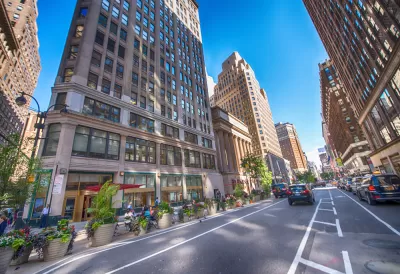
In CityLab, Richard Florida unpacks a study finding that the total value of urban land in the United States is over $25 trillion—"more than double the nation's total economic output or GDP in 2006." And nearly half that value is concentrated in just five major metropolitan areas: New York, Los Angeles, San Francisco, D.C., and Chicago.
As Florida notes, central land is more valuable than "average" land within a city—a gap that is significantly wider in the top five cities. In other words, "central land tends to grow more valuable in larger metros," perhaps because "the high price of central urban land is a byproduct of the clustering of economic activity that defines the urban revival."
There's more detail at CityLab. The bottom line, for Florida, is that "the study confirms something that is becoming increasingly obvious: Economic inequality is bad, but spatial inequality is even worse."
FULL STORY: The Staggering Value of Urban Land

'The New Urban Crisis' and the High Line
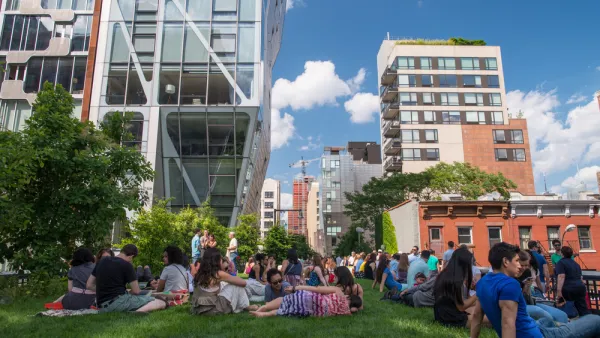
A PBS NewsHour two-fer: an interview of urbanologist Richard Florida conducted in a walking tour of New York's famed High Line in the gentrifying West Chelsea neighborhood, a fitting backdrop for his new book, "The New Urban Crisis."
An Uncertain Future: America's Urban Middle Class
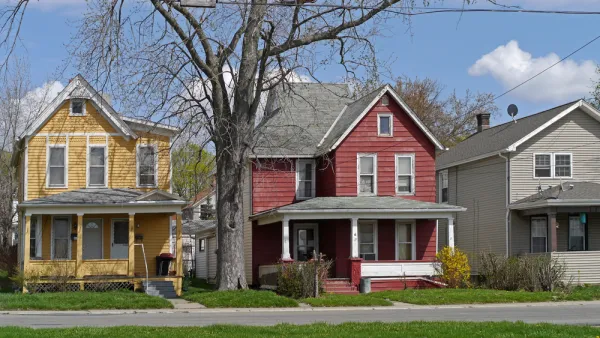
In the election's wake, Richard Florida compiles some telling statistics on the nation's threatened middle class. It's on the decline, yes, but it's also becoming more segregated into certain cities, often in the Sunbelt and Rust Belt.
What the ‘Walk Score’ Misses
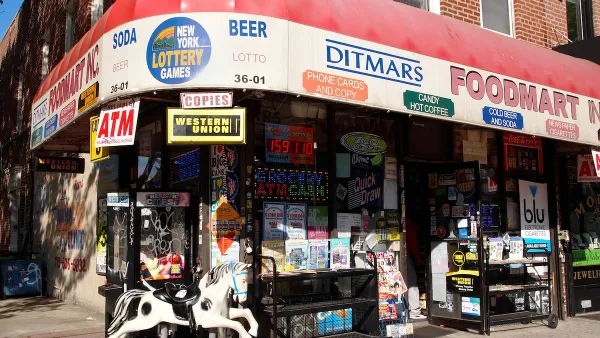
A popular walkability assessment omits key factors that impact different demographics and can direct development resources to already wealthy neighborhoods.

Planetizen Federal Action Tracker
A weekly monitor of how Trump’s orders and actions are impacting planners and planning in America.

The state-sanctioned urbicide of Austin
People don’t kill cities. Freeways do.

US to reduce Colorado River water deliveries to Mexico
A new Colorado Treaty amendment reduces Mexico’s Colorado River water allocation by 250,000 acre feet.

5 New England states march closer to 800 megawatt wind energy project
Securing federal approval for the project may be complicated under the Trump administration, which has historically been hostile towards domestic wind power.

Baltimore to break ground on $50 million Transit Priority Project
The project will bring faster bus trips, safer streets and better bike connections to Baltimore.

Airbnb launches $250 million 'last-dollar financing' housing accelerator, makes first investment in Austin
The company will put $6.4 million towards affordable housing development in Texas’ capital.

FREE Course: Walkable City 1: Why Walkability?
After describing his path towards focusing on walkability as the essence of good planning, Jeff Speck marches through his five principal reasons for making more walkable places.
Reinventing Malls: Planning Alchemy—Turning Gray Fields Into Gold
The course focuses on the opportunities and imperatives that shape reinvention of mall sites.


Eagle County Government
Harvard University Graduate School of Design
Nashville Planning Department
The Architects Foundation
University of Cincinnati Online
The Pocatello Development Authority
The Urban Renewal Agency of the City of Pocatello
Journal of the American Planning Association