The Daily Source of Urban Planning News

Property Appraisal Caps Unlikely to Pass in Texas
Critics of a proposal to limit property value increases to reduce homeowners’ property tax burden say the measure would destabilize the housing market and cause cities to raise other taxes to compensate.

Hawaii State Bills Could Limit or Expand Affordable Housing Law
Some legislators see a law that provides a zoning exemption to affordable housing builders as a necessary way to alleviate the housing crisis, while others worry about the impact of fast-tracked development on land zoned for conservation.

Cleveland: The Nation’s Most Equitably Walkable City
A new study assesses which cities have the broadest access to walkable neighborhoods.

Conspiracy Theorists Discover the 15-Minute City
USA Today debunks the false claim that the United Nations’ call for enabling 15-minute cities is a coded plan to institute ‘climate change lockdowns.’

HUD Grants Total $315 Million for Continuum of Care for the Unhoused
An unprecedented federal grant program, announced earlier this month, will support continuum of care for the unhoused in unsheltered and rural settings.
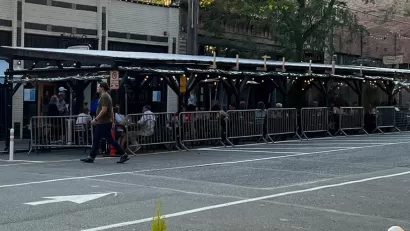
Seattle Historic District Could Remove Street Dining
Despite the popularity of Ballard Avenue’s outdoor dining pergolas, some district board members argue the patios don’t match the district’s historic character.

South L.A. Complete Streets Project Back on Track
First proposed in 2015, the Broadway-Manchester redesign would add bike infrastructure, pedestrian improvements, trees, and other amenities.

Santa Barbara Expands ADU Program to Boost Housing
The city hopes that permitting larger ADUs and making adaptive reuse easier will help it meet its state-mandated goal of building over 8,000 new housing units by 2031.

Minnesota Utilities to Go Carbon-Free by 2040
If signed by the governor, a new state law would require all utilities in the state to switch to renewable energy within two decades.

‘Predatory’ Buyers Targeting Milwaukee’s Black Neighborhoods
Out-of-state investors now own almost a quarter of rental housing in majority Black wards, new research finds.

What Should Transit on the BeltLine Look Like?
Supporters of a proposed streetcar extension argue that Atlanta’s popular BeltLine corridor was always meant to include transit, making it more than just a recreational area.

New York Affordable Housing Tax Incentive Targets Suburbs
If Gov. Hochul’s proposed budget passes, the new tax abatement would incentivize affordable housing development in the state’s smaller municipalities.

Maine Housing Market Tightens as New, Younger Residents Move In
State leaders see the influx of younger residents as a boon to Maine’s economy, but this could come at the expense of affordable housing.

Alaska to Consider Carbon Offset and Sequestration Program
Alaska could follow in the footsteps of California and Europe by leveraging the state’s natural resources to create a carbon offset and sequestration program, mitigating the environmental effects of its industries and raising revenue for the state.

Exxon’s Former Houston Headquarters Could Become a Residential High Rise
The former headquarters of Humble Oil, a predecessor to Exxon, will be converted to apartments in Houston, after New York-based developers CMI Developers purchased the building with a plan for adaptive reuse.

The Water Crisis Comes Home to Roost in Arizona
Due in part to the state’s history of ‘wildcat’ real estate developments, some communities are losing access to water sources as cities and water agencies look for ways to conserve shrinking water supplies.

California Launches E-Bike Incentive Program
The state is directing $13 million to a program to help low-income Californians purchase electric and cargo bikes, but limited bike infrastructure keeps many California streets unsafe for cyclists.

How the Urban Tree Canopy Can Save Lives in a Heat Wave
New research reveals the direct link between planting more trees and a reduction in heat-related deaths.

Colorado Emissions Reduction Plan Ties Sustainable Transportation to State Funding
The state’s Greenhouse Gas Planning Standard uses tangible financial penalties to prioritize transportation projects that reduce emissions.

The Bicycle as Economic Lifeline
For many low-income households, bikes offer an affordable way to access more destinations and economic opportunities.
Greater Baltimore Committee
Eagle County Government
Harvard University Graduate School of Design
The Architects Foundation
University of Cincinnati Online
The Pocatello Development Authority
The Urban Renewal Agency of the City of Pocatello
Journal of the American Planning Association

FREE Course: Walkable City 1: Why Walkability?
After describing his path towards focusing on walkability as the essence of good planning, Jeff Speck marches through his five principal reasons for making more walkable places.
Reinventing Malls: Planning Alchemy—Turning Gray Fields Into Gold
The course focuses on the opportunities and imperatives that shape reinvention of mall sites.