New research reveals the direct link between planting more trees and a reduction in heat-related deaths.



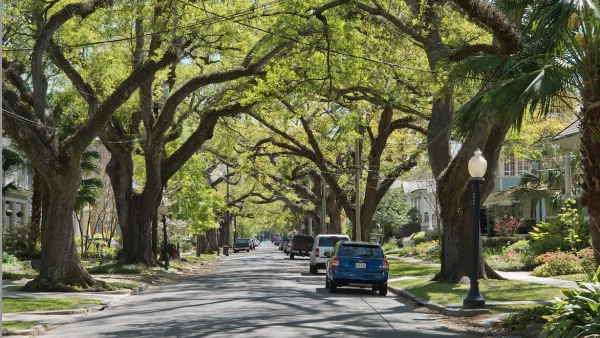
A new study published in The Lancet reveals that urban trees can have a direct impact on heat-related deaths. “Of the 6,700 premature deaths attributed to higher temperatures in 93 European cities during 2015, one third could have been prevented, according to the findings.”
“Modeling found that increasing tree cover to 30 percent would shave off 0.4 degrees Celsius (0.7 degrees Fahrenheit) locally, on average, during hot summer months.” However, the study notes that “just under 15 percent of urban environments in Europe, on average, are covered by some kind of foliage.”
As extreme heat waves become more common, cities will need to take steps to mitigate the harm and reduce the urban heat island effect. According to Laurence Wainwright of the University of Oxford's Smith School of Enterprise and the Environment, “Urban tree planting—on the right scale, in the right places, and under certain other conditions—likely leads to a modest-yet-real reduction in heat-related deaths in many urban areas.”
FULL STORY: Trees could cut urban heatwave mortality by a third: study

Art in the Shade: Confronting Climate and Equity Through Creativity
Through powerful, multisensory installations, Roots of Cool uses art to illuminate Los Angeles’ climate and shade inequities, inviting visitors to imagine a more just, tree-filled future.

How Extreme Heat Impacts Children
As summers get hotter and more dangerous, parents can take steps to protect kids from heat-related illnesses.

‘Smart Surfaces’ Policy Guide Offers Advice for Building and Maintaining Urban Tree Canopies
Healthy, robust tree canopies can reduce the impacts of extreme heat and improve air quality.

The state-sanctioned urbicide of Austin
People don’t kill cities. Freeways do.

US to reduce Colorado River water deliveries to Mexico
A new Colorado Treaty amendment reduces Mexico’s Colorado River water allocation by 250,000 acre feet.

New Jersey’s second-largest city bans standalone data centers
Jersey City will continue to allow co-location facilities, such as those meant for research institutions that store their own data.

Amtrak not solely to blame for New Jersey commuter rail's unreliability, report finds
A new study from the Garden State Initiative found that NJ Transit’s budget grew 20% across a 4 year period, but reliability declined significantly over the same period.

EPA erases limits on planet-warming pollution from power plants
Under Monday’s plan, power plants would still have some limits on how much mercury, arsenic and other contaminants they can emit.

Phoenix announces new on-demand transit service, more frequent RAPID buses
Both new services will launch in October, and are part of Phoenix's Project Effective Access Solutions for Easing Congestion.

FREE Course: Walkable City 1: Why Walkability?
After describing his path towards focusing on walkability as the essence of good planning, Jeff Speck marches through his five principal reasons for making more walkable places.
Reinventing Malls: Planning Alchemy—Turning Gray Fields Into Gold
The course focuses on the opportunities and imperatives that shape reinvention of mall sites.

Eagle County Government
Harvard University Graduate School of Design
Nashville Planning Department
The Architects Foundation
University of Cincinnati Online
The Pocatello Development Authority
The Urban Renewal Agency of the City of Pocatello
Journal of the American Planning Association