The new technology marks the Metropolitan Transit Authority's first turnstile redesign in decades.


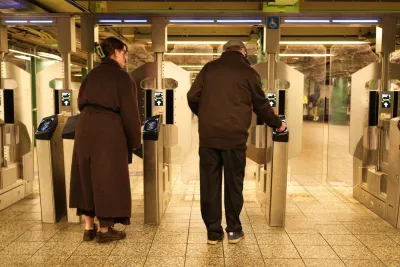
In the agency’s first turnstile redesign since the 1990s, the Metropolitan Transit Authority announced on Oct. 7 it would invest $1.1 billion in modern fare gates that have sliding doors instead of the traditional rotating arms. New York Gov. Kathy Hochul said the new technology would preserve $100 million in fares per year that passengers would otherwise never pay.
The MTA installed the new technology at 20 stations over the last year to test its effectiveness. On average, the new gates reduced fare evasion by 35% — two stations saw a 72% drop. The new gates have tall double doors and cutting-edge sensors, making them “nearly impossible” to crawl under or jump over, Hochul said.
“The MTA said the new gates will roll out to 20 more stations by the end of the year, and will eventually expand to cover 150 of the city’s busiest stations,” Ramsey Khalifeh writes for Gothamist.
Read the full story: MTA moves ahead with $1.1B plan to put modern fare gates at 150 subway stations

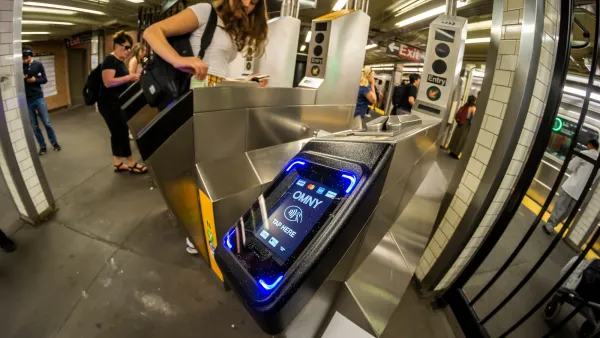
Popular transit payment system linked to Palantir could give ICE access to rider data
The tap-to-pay system is being used widely in transit systems including New York City, Boston and Chicago.
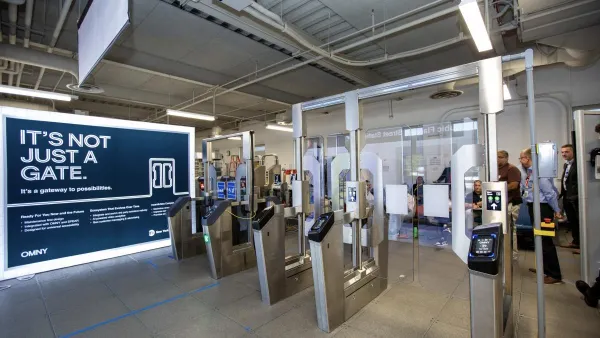
New York MTA Installs ‘Smart’ Fare Gates to Stop Turnstile Hoppers
New fare gates use sensors and higher panels to prevent people from passing without paying, but the tech had a “bumpy rollout” on its first day.
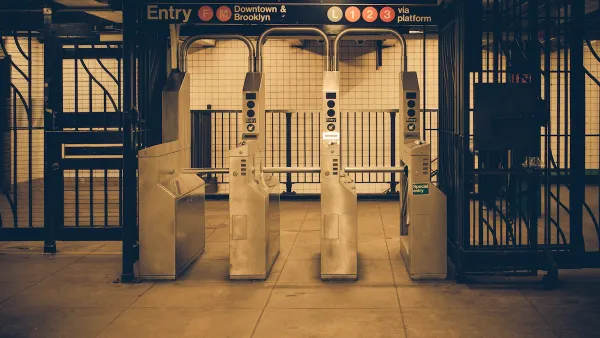
NYC Tests New Subway Gates to Limit Fare Evasion
The mayor has taken a strong interest in enforcing fare collection at the city’s transit stations.

Planetizen Federal Action Tracker
A weekly monitor of how Trump’s orders and actions are impacting planners and planning in America.

‘Going backwards:’ Baltimore mayor, students rally against state's transit funding plan
Maryland's proposed six-year plan provides no funding for Baltimore’s BMORE bus program and reduces its road maintenance funding.

Detroit to transform waterfront with $2.2 billion investment
Developers will convert about 18 acres of unused parking lot space into civic spaces.

MTA invests $1.1 billion in ‘nearly-impossible’-to-evade fare gates
The new technology marks the Metropolitan Transit Authority's first turnstile redesign in decades.

HUD modernizes 50-year-old manufactured housing framework
The Next Generation Manufactured Housing Action Plan establishes new energy-efficiency standards for manufactured homes, and new guidelines for anchoring them.

New CA housing laws tear down development red tape
Recently-signed legislation makes building starter homes and ADUs cheaper and faster in California.

FREE Course: Walkable City 1: Why Walkability?
After describing his path towards focusing on walkability as the essence of good planning, Jeff Speck marches through his five principal reasons for making more walkable places.
Reinventing Malls: Planning Alchemy—Turning Gray Fields Into Gold
The course focuses on the opportunities and imperatives that shape reinvention of mall sites.

One Hundred Miles
County of Mendocino
planning NEXT
The Architects Foundation
University of Cincinnati Online
Montrose County
Northern Illinois Transit Authority (NITA)
The Pocatello Development Authority