With cloud seeding, planes or drones release salt compounds into clouds to make them produce rain.



A Southern California startup called Rainmaker has partnered with an unnamed data center provider to stimulate rain near data centers through a process called “cloud seeding.” The partnership comes as Western America battles an ongoing drought and data centers face growing backlash over their freshwater usage.
“With cloud seeding, planes or drones release salt compounds into clouds to make them produce rain,” Rachyl Jones writes for the San Francisco Standard. Critics have condemned the practice as “playing god,” and in Florida, cloud seeding is a felony.
Cloud seeding only works in specific weather conditions and has not historically triggered large amounts of precipitation. However, a recent demonstration by Rainmaker in Alaska that produced enough precipitation over three hours to fill about 28 Olympic-size swimming pools is “promising” according to Bart Geerts, an atmospheric scientist at the University of Wyoming.
Rainfall’s partnership with the unnamed data center provider is not the first instance of data centers attempting to address their water usage. Google is investing $30 million into water conservation in Oklahoma while simultaneously planning to build a 506-acre data center in Tusla. The company’s methods of water conservation include removing 2,000 acres of cedar trees along the Arkansas River.
Read the full story: Can cloud seeding make people hate data centers less?

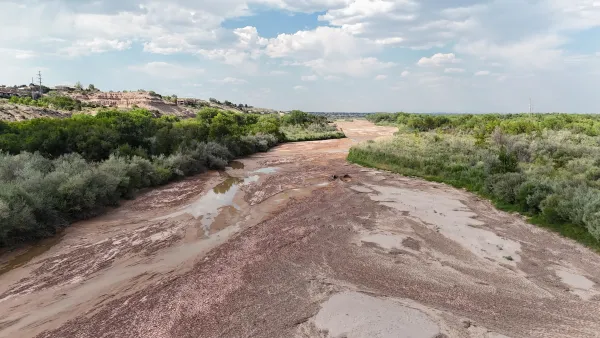
15 million people rely on the Rio Grande — in 2 years, it may run dry
The river fuels billions of dollars in agricultural production. Reducing agricultural water use may be the only way to save it.
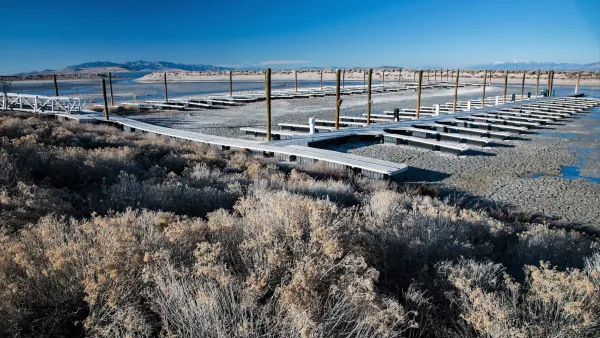
Data centers are booming near the West's fastest-shrinking lakes
Years of drought, water diversion and climate change have caused Western lakes to shrink dramatically.
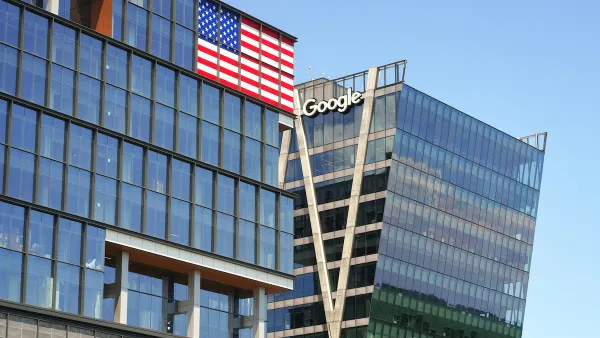
Virginia Data Centers Draining State’s Water Supply
Being the world’s largest data center hub is having a severe impact on local water resources.

Planetizen Federal Action Tracker
A weekly monitor of how Trump’s orders and actions are impacting planners and planning in America.

Data reveals that NYC’s bet on congestion pricing has paid off
After almost two years of the program, reports show positive impacts on traffic and air quality and no disruptions to parking.

Denver is solving homelessness. Why aren't the rest of us?
Since 2023, Denver's street homeless population has decreased by 64%, proving that effective tools exist to support those in need of housing.

Chicago's streets are littered with dead birds. Will the city protect them?
Chicago sits in the route of migratory birds traveling south. Its abundance of glass buildings and bright lights make it particularly disorienting for the animals.

CA city to shut down airport, transform it into utopian park
The western side of the 200-acre park will feature a dog park, nature education center and arboretum.

NYC to vote on supporting outdoor dining, streamlining bus and bike lane creation
The city has five proposed amendments to its municipal constitution on the ballot this November.

FREE Course: Walkable City 1: Why Walkability?
After describing his path towards focusing on walkability as the essence of good planning, Jeff Speck marches through his five principal reasons for making more walkable places.
Reinventing Malls: Planning Alchemy—Turning Gray Fields Into Gold
The course focuses on the opportunities and imperatives that shape reinvention of mall sites.

City of Rosemead
Rutgers University, Edward J. Bloustein School of Planning and Public Policy
One Hundred Miles
The Architects Foundation
University of Cincinnati Online
Montrose County
Northern Illinois Transit Authority (NITA)
The Pocatello Development Authority