The UN declaration calls for cutting road deaths in half by 2030.



The United Nations passed a near-unanimous resolution calling for a reduction of traffic deaths and a renewed focus on road safety, reports Christine Ro in Forbes. The sole dissenter to the resolution? The United States.
According to Ro, "The declaration reiterates a global goal: to at least halve road traffic deaths and injuries between 2021 and 2030. It also calls for governments to assign and fund a lead agency for coordinating road safety, to improve public transport systems, and to make other pledges for safer roads (48 in total)."
A U.S. representative called the resolution a "symbolic global gesture" — which could be true if countries don't invest more in road safety efforts. "Globally, over a million people were killed on roads in 2025. While 10 countries have reached the 50% reduction target early, the world as a whole is far off track." The Trump administration accused the declaration of "mission creep," charging that it's a backhanded way of enforcing climate regulations.
According to Ro, "This is no act of God. Road-traffic deaths are preventable, through strengthening of public transit, improvement of trauma care, adoption of existing technology and especially thoughtful road design, which can be as cheap and simple as narrowing lanes to reduce speeds."
Read the full story: The U.S. Alone Votes Against A Road Safety Declaration

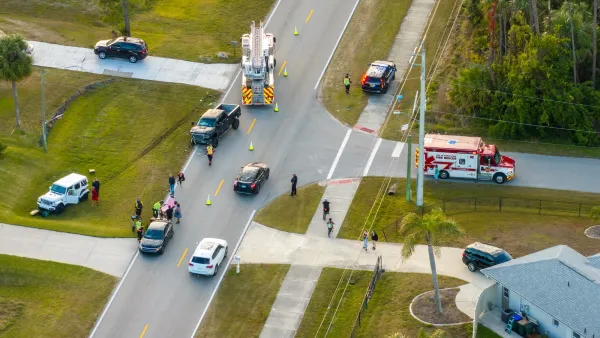
Pedestrian Deaths Fell by Largest Percentage in 15 Years, but Remain Above Pre-Pandemic Levels
After a spike in deaths during the Covid-19 years, road deaths fell to 3,024 in the first half of 2025.
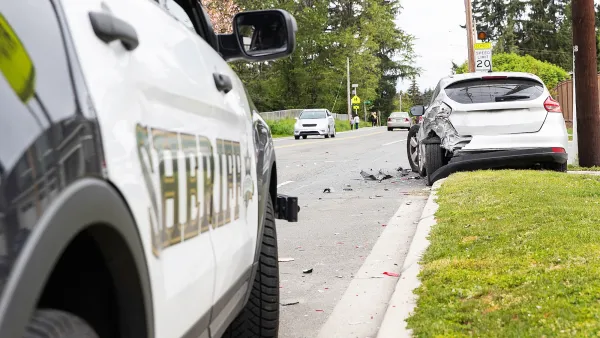
US Traffic Deaths Fell by 12% in One Year. How Did it Happen?
Biden-era investment in safe streets, shifts in travel patterns brought on by the pandemic, and increased traffic enforcement are all possible reasons why traffic deaths dropped significantly between 2024 and 2025.
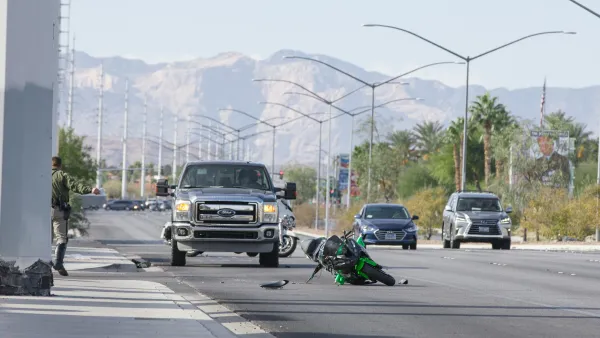
Nevada’s Highway Safety Plan Targets 35% Drop in Traffic Deaths by 2035
The 2026-2030 plan aims to reduce deaths and serious injuries with a long-term goal of eliminating traffic deaths by 2050.

Planetizen Federal Action Tracker
A weekly monitor of how Trump’s orders and actions are impacting planners and planning in America.

Chicago breaks ground on $3 billion megadevelopment
The new neighborhood, titled Foundry Park, will one day host 3,700 residences.

Denver is solving homelessness. Why aren't the rest of us?
Since 2023, Denver's street homeless population has decreased by 64%, proving that effective tools exist to support those in need of housing.

MTA kicks off six-year, $1 billion transit upgrade project
The authority is replacing the roughly 90-year-old train signals on the A and C line with modern technology.

Developers may expand largest gas pipeline network in Northwest
Pipeline giant Williams has proposed new expansions for its Northwest Pipeline from the Colorado Rockies through Idaho, Oregon and Washington.

MBTA is using AI to catch drivers who park illegally
The transit agency is working in partnership with Hayden AI, and hopes the technology will improve transit safety across its network.

FREE Course: Walkable City 1: Why Walkability?
After describing his path towards focusing on walkability as the essence of good planning, Jeff Speck marches through his five principal reasons for making more walkable places.
Reinventing Malls: Planning Alchemy—Turning Gray Fields Into Gold
The course focuses on the opportunities and imperatives that shape reinvention of mall sites.

City of Rosemead
Rutgers University, Edward J. Bloustein School of Planning and Public Policy
One Hundred Miles
The Architects Foundation
University of Cincinnati Online
Montrose County
Northern Illinois Transit Authority (NITA)
The Pocatello Development Authority