Amtrak currently operates just one trip per day between the two cities.


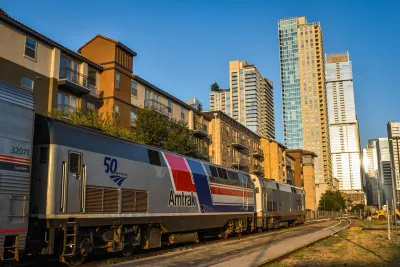
The Texas Department of Transportation issued a study that assesses opportunities adding more passenger rail service between Austin and San Antonio, reports Richard Webner in Express News.
"Yet there is a big barrier to making it happen: The owner of the tracks, Union Pacific, doesn't appear to be interested." Union Pacific did not participate in the study, and a 2024 letter from the company said they were not looking to host more passenger trains.
The study outlines infrastructure improvements which could allow for more passenger trains without impeding freight traffic. The estimated cost of the improvements is anywhere from $810 million to $1.9 billion.
The Texas Eagle, the Amtrak train that currently only runs once a day between the two cities, only arrives on time 56% of the time, Webner adds. "The study considers options for running passenger trains two times, four times and eight times a day between San Antonio and Austin, stopping in San Marcos and New Braunfels along the way."
Editor's note: This article and headline were updated on July 13, 2026 to correct that the study does not advocate for passenger rail, but merely outlines potential options for expanding service.
Read the full story: TxDOT again pushes S.A. to Austin rail, but will Union Pacific play ball?

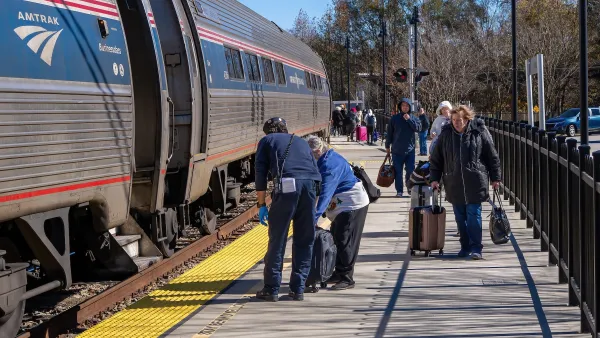
Rail advocates: BUILD America 250 Act could slash railway funding by 80%
Leaving rail funding up to annual appropriations threatens to drastically limit its reliability and effectiveness.
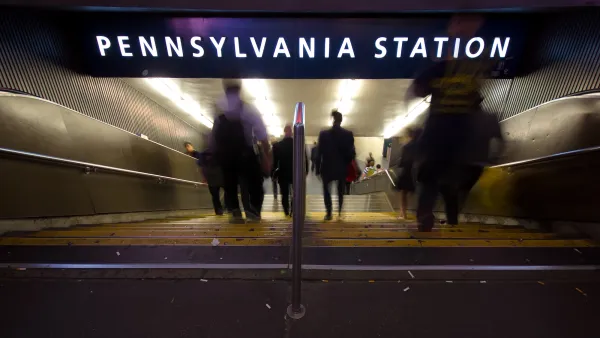
New Penn Station design won't move Madison Square Garden
Amtrak and federal officials agreed on a new plan for the station's redesign that may be largely funded by the federal government.
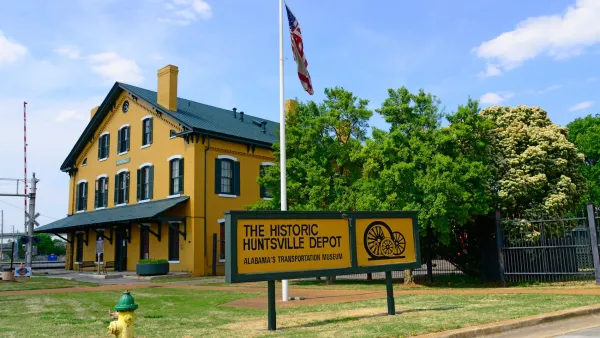
Huntsville wants to be a key Southern player in intercity rail
The Alabama city is commissioning a study to assess the potential for 'Amtrak-like' connections to Nashville, Atlanta, and other Southern cities.

Planetizen Federal Action Tracker
A weekly monitor of how Trump’s orders and actions are impacting planners and planning in America.

‘Going backwards:’ Baltimore mayor, students rally against state's transit funding plan
Maryland's proposed six-year plan provides no funding for Baltimore’s BMORE bus program and reduces its road maintenance funding.

Detroit to transform waterfront with $2.2 billion investment
Developers will convert about 18 acres of unused parking lot space into civic spaces.

After $600,000 wasted, CA high-speed rail board limits CEO’s power
Ian Choudri will no longer be able to sign, change or manage contracts.

Lithium mines leech water from surrounding communities. Soon, they’ll run dry
Researchers concluded that most lithium mines won't have enough water to meet industry demands by 2050.

El Niño takes lives, infrastructure as U.S. storm systems prove ill-prepared
About two-thirds of America's culverts are in states with outdated design standards.

FREE Course: Walkable City 1: Why Walkability?
After describing his path towards focusing on walkability as the essence of good planning, Jeff Speck marches through his five principal reasons for making more walkable places.
Reinventing Malls: Planning Alchemy—Turning Gray Fields Into Gold
The course focuses on the opportunities and imperatives that shape reinvention of mall sites.

One Hundred Miles
County of Mendocino
planning NEXT
The Architects Foundation
University of Cincinnati Online
Montrose County
Northern Illinois Transit Authority (NITA)
The Pocatello Development Authority