As gas and insurance prices rise, car commuting is becoming more unaffordable to working Americans, leaving them reliant on their local transit systems.


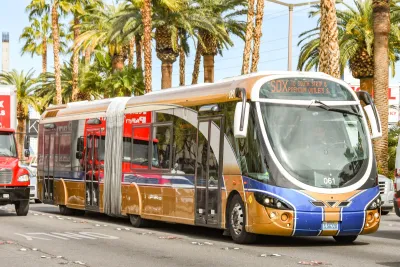
More Americans say owning a car is becoming unaffordable, reports Trey Arline for Straight Arrow News. "In Las Vegas, where driving has long been viewed as a necessity, workers are now reimagining their daily commute."
According to Arline, Nevada has the nation's highest car insurance prices and the nation's fourth-highest gas prices. Even as it faces a budget deficit, the Southern Nevada Regional Transportation Commission is seeing more Nevadans relying on its transit services. According to agency officials, RTC operates one of the busiest paratransit services in the country, and two out of three riders that use the system don't own a car.
Local officials have been eyeing further investment in Elon Musk's Vegas Loop, a limited tunnel network under the Las Vegas Strip and Convention Center that critics argue does little to add to regional transportation options and leaves out the workers that make Vegas run but don't live right next to the Strip.
Read the full story: Have we reached the end of the affordable American car commute?
Nevada transit trends being reshaped by demographic changes
Southern Nevada is one region seeing population growth, putting increased pressure on its roads and transit systems.
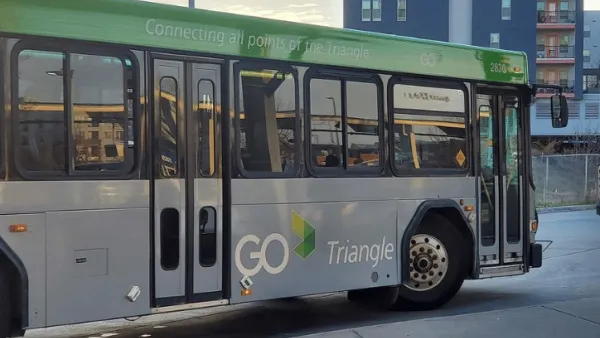
North Carolina Triangle transit ridership jumped 32% in April
Rising gas prices are prompting more Americans to consider public transit, where it's available.
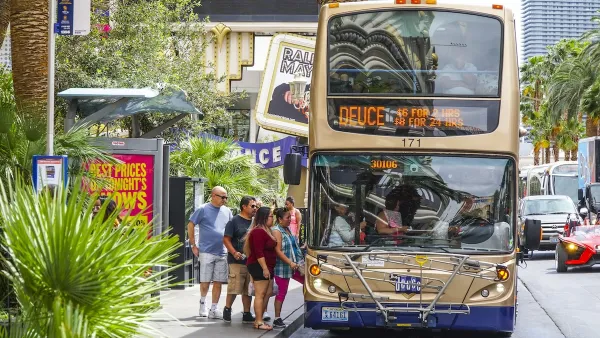
Las Vegas Heat Calls for More Buses. A Federal Rule Prohibits it.
An FTA rule bars cities from keeping more spare buses than 20% of their fleet.

Planetizen Federal Action Tracker
A weekly monitor of how Trump’s orders and actions are impacting planners and planning in America.

Eastern Nebraska is running out of electricity
Data centers and electrification are straining eastern Nebraska’s grid, throttling economic development.

Study reveals best places in the U.S. for cycling, walking
New research from Streetlight Data examines bicycle and pedestrian miles per capita in the 100 largest U.S. cities by population.

DSA members accuse Mamdani of 'abandoning values' over housing redevelopment
New York City's mayor plans to replace about 2,000 units of public housing with private, mixed-income housing.

All sides of BRT debate unhappy with CDOT’s most recent move
The Colorado Department of Transportation is no longer considering center-running bus lanes for Colorado Boulevard.

Massachusetts bogs generate both power, and cranberries
Putting solar panels above farmland is one way Massachusetts is advancing toward its goal of net-zero carbon emissions by 2050.

FREE Course: Walkable City 1: Why Walkability?
After describing his path towards focusing on walkability as the essence of good planning, Jeff Speck marches through his five principal reasons for making more walkable places.
Reinventing Malls: Planning Alchemy—Turning Gray Fields Into Gold
The course focuses on the opportunities and imperatives that shape reinvention of mall sites.

City of Rosemead
Rutgers University, Edward J. Bloustein School of Planning and Public Policy
One Hundred Miles
University of Michigan School for Environment and Sustainability (SEAS)
Hunter College, City University of New York (CUNY)
The Architects Foundation
City of Cambridge
The Pocatello Development Authority
The Urban Renewal Agency of the City of Pocatello