An FTA rule bars cities from keeping more spare buses than 20% of their fleet.


This article was originally published in Nevada Current. It has been shortened.
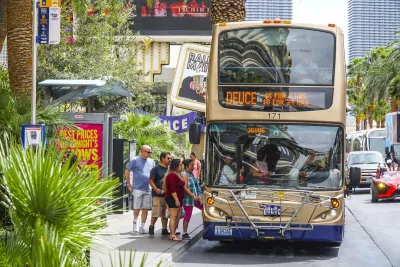
Extreme heat, long operation hours, and an influx of millions of tourists a year creates a perfect storm for bus fleets in Las Vegas, leading to rapid wear-and-tear and more service outages.
Those service outages are exacerbated by a federal rule that caps the number of spare buses a transit agency can maintain at 20% of their overall bus fleet, regardless of how many more buses a transit service needs to maintain reliable service.
Transit agencies that keep more spare buses than allowed risk losing federal funding if they aren’t granted an exemption from the Federal Transit Authority (FTA) for additional spare buses. However, the federal agency has never granted a waiver for additional buses to any state.
Southern Nevada’s congressional delegation is now asking the FTA to remove or increase its cap on the number of spare buses the Regional Transportation Commission of Southern Nevada (RTC) can maintain in Las Vegas.
Southern Nevada’s transit authority operates a fleet of over 400 buses and relies on FTA funding to purchase both active and spare buses, but federal limits on spare buses have strained operations.
In a letter Thursday Democratic U.S. Sens. Jacky Rosen and Catherine Cortez Masto – along with Reps. Susie Lee, Steven Horsford, and Dina Titus – said “transit agencies across the country face a variety of operational and environmental challenges that often require maintaining spare bus ratios above the current 20% cap.”
High transit demand and the extreme desert climate leads to rapid wear and tear on buses in Las Vegas, especially for high-mileage buses operating routes with long hours.
Unlike many other cities, tourism and a non-traditional workforce in Las Vegas creates high peak demand for transit service throughout the day, with some routes operating 24 hours daily.
Frequent special events that attract thousands of tourists at a time also complicates bus management, placing further strain on an already stretched fleet.
Southern Nevada’s transit authority said they have worked to address frequent breakdowns in their fleet by prioritizing preventative maintenance, including regularly performing cooling system checks and addressing common wear-and-tear issues like battery and alternator failures exacerbated by the intense heat.
But more flexibility on spare buses allowed in a fleet is needed so “agencies like RTC of Southern Nevada to better maintain reliable, safe, and equitable service for their communities,” reads the letter.
Read the full story: Las Vegas needs more spare buses, a federal rule prevents it


Las Vegas BRT Line Breaks Ground
The new bus project will include pedestrian and bike improvements along a 12-mile stretch of the Maryland Parkway.
BRT Hits the Las Vegas Strip
Last Thursday, Las Vegas broke ground on the ACE Green Line, a new BRT corridor that will connect downtown Las Vegas and Henderson.
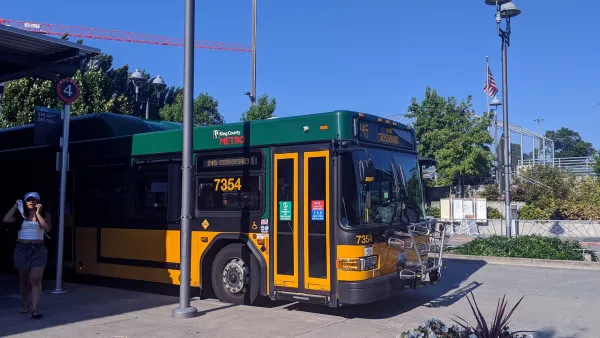
King County Metro adds 3,000 weekly bus trips, more connections to rail
King County Metro and Sound Transit are both making major adjustments to their bus networks to improve light rail connectivity across the region.

Planetizen Federal Action Tracker
A weekly monitor of how Trump’s orders and actions are impacting planners and planning in America.

Amtrak, CN end decades-long dispute with eight-year agreement
The new operating agreement establishes an updated framework for the companies to work together, including processes to resolve disputes.

Judges permit Denver to divert 77,000 acre feet from the Colorado River for reservoir expansion
Overuse and climate change have caused the Colorado River’s water levels to plummet.

Boston has spent millions making the Green Line more accessible — and there’s no end in sight
While the city has invested millions into expanding and adding platforms to the Green Line to make it more accessible, new train cars set to arrive next year will be too tall for disabled passengers to board without raising the current platforms.

Idaho may see an 18% drop in federal surface transit funding — the largest estimated cut in the US
Transit systems in rural communities are much more reliant on federal funding to provide their services.

How ‘post-disaster gentrification’ alters neighborhoods after natural calamities
After hurricanes, fires or other calamities, the original residents of a community are often replaced by younger, wealthier residents.

FREE Course: Walkable City 1: Why Walkability?
After describing his path towards focusing on walkability as the essence of good planning, Jeff Speck marches through his five principal reasons for making more walkable places.
Reinventing Malls: Planning Alchemy—Turning Gray Fields Into Gold
The course focuses on the opportunities and imperatives that shape reinvention of mall sites.

City of Wisconsin Rapids
Harvard University Graduate School of Design
KFH Group Inc.
The Architects Foundation
University of Cincinnati Online
The Pocatello Development Authority
The Urban Renewal Agency of the City of Pocatello