A Reuters investigation showed that Tesla inflated safety claims in its self-reported data to Dutch and Swedish regulators.



A Reuters investigation found that Tesla submitted inaccurate safety data to regulators in Sweden and The Netherlands as it sought approval for its Full Self-Driving mode, reports Al Landes in Gadget Review.
"Tesla policy manager Ivan Komusanac told Swedish regulators that FSD-equipped Teslas drive more than seven times farther between crashes than the average U.S. driver. A companion slide projected that widespread FSD adoption could have saved 32,000 lives and prevented 1.9 million injuries." However, a closer look at the data reveals that Tesla mismatched data — counting only severe crashes for its own cars while using a broader figure for overall crash rates — and assumes that every vehicle will be replaced by an FSD-equipped Tesla, inflating the number of potential lives saved by the technology.
According to Landes, "A Norwegian Public Roads Administration official noted Tesla’s figures are 'self-produced,' making them nearly impossible to cross-reference with official accident statistics." In documentation submitted by the company to U.S. regulator NHTSA, Tesla redacted methodology details, a move uncommon in the industry. Of 11 independent researchers that Reuters consulted about the data, 10 agreed that it was "not a serious safety analysis."
Read the full story: Tesla Allegedly Showed Misleading Data to Get Full Self-Driving Approved

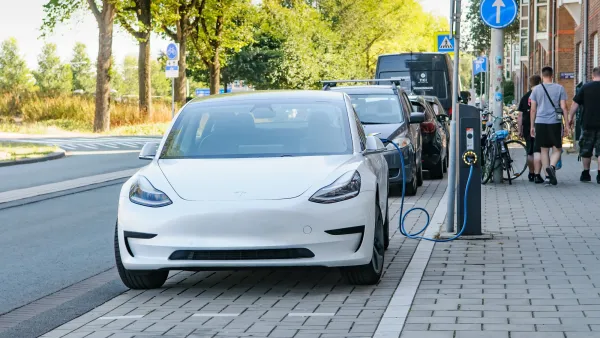
Tesla gains first European approval for 'Full Self-Driving' mode
The company will be allowed to sell cars with FSD in the Netherlands.
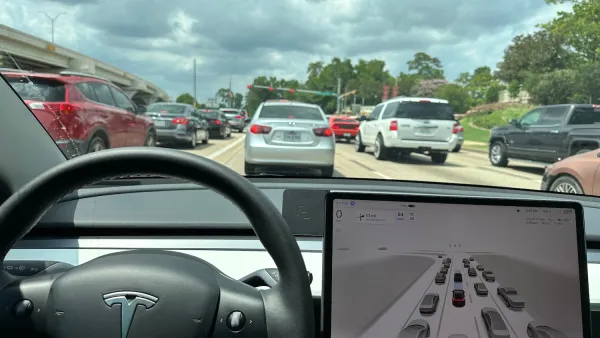
Regulators Investigate Tesla’s “Mad Max” Self-Driving Driving Mode that Intentionally Weaves, Takes Risks and Ignores Speed Limits
The company launched the mode after previously scrapping it in 2018 in response to safety concerns.

Buttigieg: Tesla ‘Autopilot’ Marketing ‘A Concern’
The USDOT secretary says marketing doesn’t fall under his department’s investigative authority, but expressed disapproval of language that implies autonomous operation.

Planetizen Federal Action Tracker
A weekly monitor of how Trump’s orders and actions are impacting planners and planning in America.

Amtrak, CN end decades-long dispute with eight-year agreement
The new operating agreement establishes an updated framework for the companies to work together, including processes to resolve disputes.

Judges permit Denver to divert 77,000 acre feet from the Colorado River for reservoir expansion
Overuse and climate change have caused the Colorado River’s water levels to plummet.

Boston has spent millions making the Green Line more accessible — and there’s no end in sight
While the city has invested millions into expanding and adding platforms to the Green Line to make it more accessible, new train cars set to arrive next year will be too tall for disabled passengers to board without raising the current platforms.

Idaho may see an 18% drop in federal surface transit funding — the largest estimated cut in the US
Transit systems in rural communities are much more reliant on federal funding to provide their services.

How ‘post-disaster gentrification’ alters neighborhoods after natural calamities
After hurricanes, fires or other calamities, the original residents of a community are often replaced by younger, wealthier residents.

FREE Course: Walkable City 1: Why Walkability?
After describing his path towards focusing on walkability as the essence of good planning, Jeff Speck marches through his five principal reasons for making more walkable places.
Reinventing Malls: Planning Alchemy—Turning Gray Fields Into Gold
The course focuses on the opportunities and imperatives that shape reinvention of mall sites.

City of Wisconsin Rapids
Harvard University Graduate School of Design
KFH Group Inc.
The Architects Foundation
University of Cincinnati Online
The Pocatello Development Authority
The Urban Renewal Agency of the City of Pocatello