The company launched the mode after previously scrapping it in 2018 in response to safety concerns.


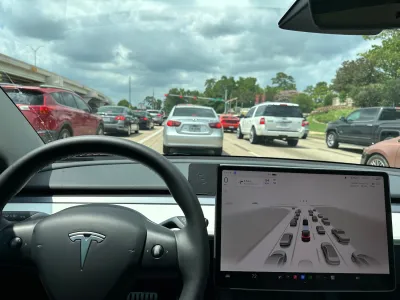
The National Highway Traffic Safety Administration (NHTSA) is asking Tesla for additional information about a new driving mode dubbed ‘Mad Max,’ which the company advertises as driving “through traffic at an incredible pace, all while still being super smooth.”
As Jonathan M. Gitlin notes in an article in Ars Technica, the company claims “It drives your car like a sports car. If you are running late, this is the mode for you.” In other words, “It speeds and swerves through traffic to get you to your destination faster,” engaging in potentially dangerous behavior.
According to an article on SiliconValley,com, the newest firmware update also took away a driver’s ability to set a top speed in full self-driving mode (FSD). “Now, your speed depends entirely on the mode you choose, and the only mode that stays within the speed limit is Sloth, a term that strikes me as derogatory, as if obeying the speed limit is sloth-like. Even Chill is likely to take you above the limit, albeit by just a couple of miles per hour. But when I put my car on Standard, a word that implies the recommended setting for typical usage, the car exceeds the speed limit by enough to trigger a ticket.”
The NHTSA recently opened another investigation into Tesla due to complaints that cars operating FSD ran stop signs or drove into oncoming traffic.
FULL STORY: Tesla’s “Mad Max” mode is now under federal scrutiny

Tesla gains first European approval for 'Full Self-Driving' mode
The company will be allowed to sell cars with FSD in the Netherlands.

Study: Driver Assistance Systems Increase Distraction, ‘False Sense of Security’
A recent crash involving the former head of Uber’s self-driving division is drawing scrutiny once more to issues with Tesla’s ‘self-driving’ mode.
Tesla Found Partly Liable in Fatal Autopilot Crash
The Miami ruling is the first to find the company partly responsible in a crash that killed one pedestrian and injured another.

Planetizen Federal Action Tracker
A weekly monitor of how Trump’s orders and actions are impacting planners and planning in America.

The state-sanctioned urbicide of Austin
People don’t kill cities. Freeways do.

US to reduce Colorado River water deliveries to Mexico
A new Colorado Treaty amendment reduces Mexico’s Colorado River water allocation by 250,000 acre feet.

5 New England states march closer to 800 megawatt wind energy project
Securing federal approval for the project may be complicated under the Trump administration, which has historically been hostile towards domestic wind power.

Baltimore to break ground on $50 million Transit Priority Project
The project will bring faster bus trips, safer streets and better bike connections to Baltimore.

Airbnb launches $250 million 'last-dollar financing' housing accelerator, makes first investment in Austin
The company will put $6.4 million towards affordable housing development in Texas’ capital.

FREE Course: Walkable City 1: Why Walkability?
After describing his path towards focusing on walkability as the essence of good planning, Jeff Speck marches through his five principal reasons for making more walkable places.
Reinventing Malls: Planning Alchemy—Turning Gray Fields Into Gold
The course focuses on the opportunities and imperatives that shape reinvention of mall sites.

Eagle County Government
Harvard University Graduate School of Design
Nashville Planning Department
The Architects Foundation
University of Cincinnati Online
The Pocatello Development Authority
The Urban Renewal Agency of the City of Pocatello
Journal of the American Planning Association