The new tech boom that's driving up rents in San Francisco could have rippling impacts on East Bay communities.


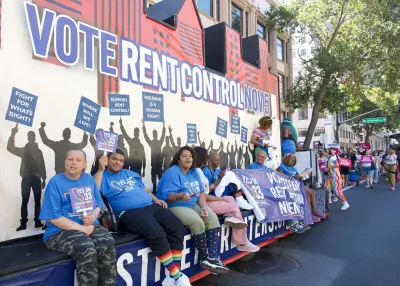
Some Oakland residents and housing analysts say the city is poised for a displacement crisis fueled in part by AI companies, reports Natalie Orenstein in The Oaklandside.
The impending boom could mirror the early 2010s, when renters priced out of San Francisco during the Silicon Valley tech boom drove up demand in Oakland and surrounding areas, leading to the displacement of long-time residents and a rise in homelessness.
However, Oakland has built over 15,000 new housing units since the early 2010s, according to city officials, and the AI industry is creating fewer jobs than the tech boom of the 2010s. "Oakland has also tightened its tenant protections in recent years, making it harder for landlords to evict households and capping price increases in rent-controlled buildings." More demand could also spur a construction boom, Orenstein notes. "More rental demand generally creates more opportunities to build, more residents walking around and spending money in the city, and more property taxes and developer fees to support desperately needed services in Oakland."
FULL STORY: Is an AI-fueled housing boom — or displacement crisis — about to hit Oakland?


In Defense of Rent Control
Rent control policies, widely panned by economists, have been shown to slow displacement and keep housing affordable.

Indianapolis rents grew by 30% since 2020
The metro area has a shortage of roughly 137,000 affordable homes for the lowest-income households.
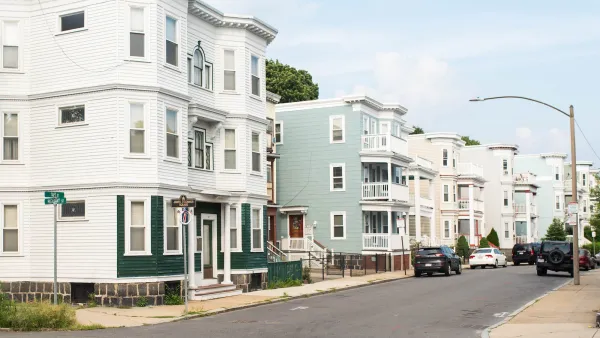
32 years after it was banned, could Massachusetts get rent control back?
In Massachusetts, the collection of more than 124,000 signatures makes it likely that a statewide rent control measure will be on the ballot in November.

Planetizen Federal Action Tracker
A weekly monitor of how Trump’s orders and actions are impacting planners and planning in America.

The state-sanctioned urbicide of Austin
People don’t kill cities. Freeways do.

US to reduce Colorado River water deliveries to Mexico
A new Colorado Treaty amendment reduces Mexico’s Colorado River water allocation by 250,000 acre feet.

Baltimore to break ground on $50 million Transit Priority Project
The project will bring faster bus trips, safer streets and better bike connections to Baltimore.

Airbnb launches $250 million 'last-dollar financing' housing accelerator, makes first investment in Austin
The company will put $6.4 million towards affordable housing development in Texas’ capital.

Guerilla urbanists are building DIY bus stop benches in Chicago
A before-and-after of one of the bus stops with a new bench. The new benches are not officially sanctioned or permitted, but the residents who placed them hope they will be the start of a network of DIY benches across the city.

FREE Course: Walkable City 1: Why Walkability?
After describing his path towards focusing on walkability as the essence of good planning, Jeff Speck marches through his five principal reasons for making more walkable places.
Reinventing Malls: Planning Alchemy—Turning Gray Fields Into Gold
The course focuses on the opportunities and imperatives that shape reinvention of mall sites.

Eagle County Government
Harvard University Graduate School of Design
Nashville Planning Department
The Architects Foundation
University of Cincinnati Online
The Pocatello Development Authority
The Urban Renewal Agency of the City of Pocatello
Journal of the American Planning Association