A malfunction of Baidu autonomous vehicles prompted the Chinese government to stop issuing new licenses to AV operators. Could the U.S. learn from their actions?


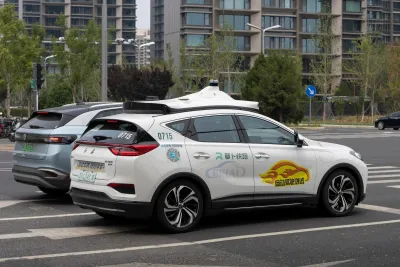
After dozens of Baidu autonomous vehicles malfunctioned earlier this year, the Chinese government stopped issuing licenses to new AVs, reports Victor Tangermann in Futurism. "As Fortune points out, a strikingly similar situation is playing out in the United States — yet federal regulations are nowhere in sight. Robotaxis from both Waymo and Tesla are still relying on human operators, stealing luggage, or colliding with objects and animals in the streets. Federal regulators are even investigating a Waymo vehicle crashing into a child outside of an elementary school."
The United States has no federal laws regarding AV safety, relying instead on a patchwork of state regulations. Meanwhile, robotaxi rides continue to increase, reaching 36 million this year. But the tide is starting to turn: In California, police officers will be able to issue traffic citations to autonomous vehicles starting in June, the first state to set such regulations.


Waymo's troubles with emergency vehicles are getting worse
In one case, first responders waited 53 minutes to reach a Waymo support representative during an emergency.
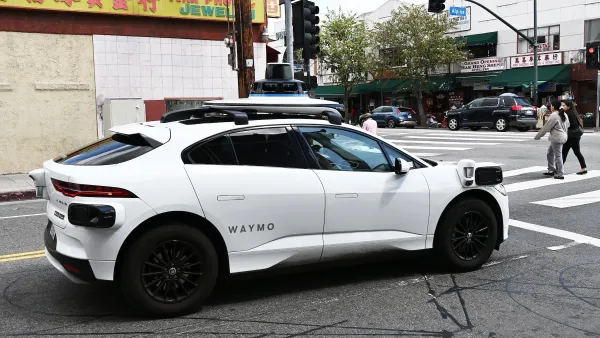
California cops will start ticketing robotaxis
The California DMV issued new guidance that allows law enforcement to give autonomous cars a "notice of noncompliance" when they break traffic laws.
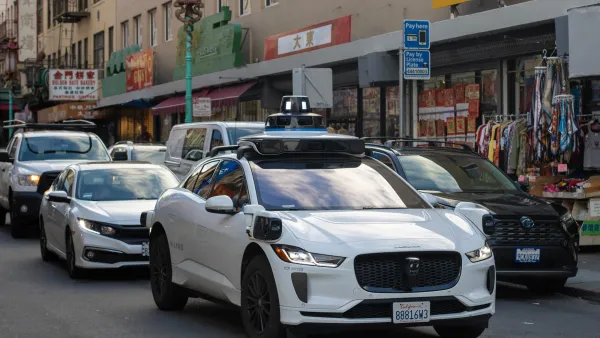
New Jersey bill would require AVs to use 3 sensing technologies — banning Tesla's robotaxi fleet
Elon Musk has been 'largely alone' in his conviction that radar and lidar sensors are not necessary for the safe operation of autonomous cars.

The state-sanctioned urbicide of Austin
People don’t kill cities. Freeways do.

US to reduce Colorado River water deliveries to Mexico
A new Colorado Treaty amendment reduces Mexico’s Colorado River water allocation by 250,000 acre feet.

New Jersey’s second-largest city bans standalone data centers
Jersey City will continue to allow co-location facilities, such as those meant for research institutions that store their own data.

Amtrak not solely to blame for New Jersey commuter rail's unreliability, report finds
A new study from the Garden State Initiative found that NJ Transit’s budget grew 20% across a 4 year period, but reliability declined significantly over the same period.

EPA erases limits on planet-warming pollution from power plants
Under Monday’s plan, power plants would still have some limits on how much mercury, arsenic and other contaminants they can emit.

Phoenix announces new on-demand transit service, more frequent RAPID buses
Both new services will launch in October, and are part of Phoenix's Project Effective Access Solutions for Easing Congestion.

FREE Course: Walkable City 1: Why Walkability?
After describing his path towards focusing on walkability as the essence of good planning, Jeff Speck marches through his five principal reasons for making more walkable places.
Reinventing Malls: Planning Alchemy—Turning Gray Fields Into Gold
The course focuses on the opportunities and imperatives that shape reinvention of mall sites.

Eagle County Government
Harvard University Graduate School of Design
Nashville Planning Department
The Architects Foundation
University of Cincinnati Online
The Pocatello Development Authority
The Urban Renewal Agency of the City of Pocatello
Journal of the American Planning Association