New York has roughly 3 million curbside parking spots.


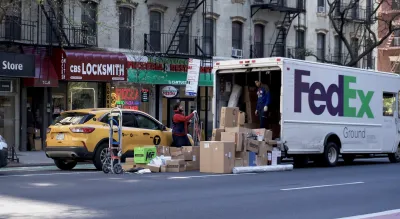
New York City announced the creation of a new Office of Curb Management tasked with organizing the city's 6,300 miles of curbside lanes, most of which are currently used for parking.
The growth of the delivery industry, the need for bike and transit infrastructure, garbage pick-up, and outdoor dining have all created steep demand for curb space, explains a Streetsblog NYC article by Devin Duggan. "The Office of Curb Management will focus on safety and consolidate several functions within the Department of Transportation to expand loading zones, designate pick-up areas, use paid meters to “promote vehicle turnover,” improve roadway outdoor dining, and continue piloting waste containerization, according to a City Hall announcement expected to be released later on Tuesday."
The Adams administration set in motion several projects related to curb space, including on-street garbage bins, but only funded a small uptown waste pilot that hasn't been expanded by the Mamdani administration.
FULL STORY: EXCLUSIVE: Mamdani Creates ‘Curb Management’ Office at DOT, Seeking Order From Chaos

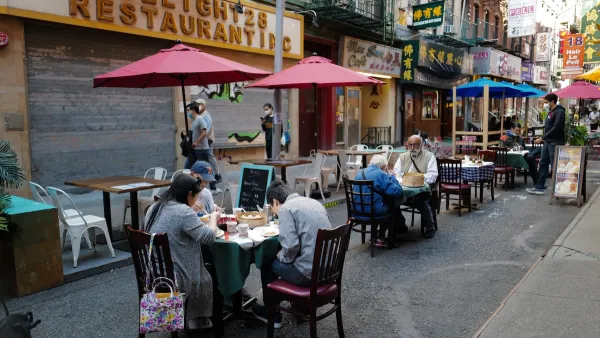
NYC Losing Many Outdoor Dining Areas Due to Expensive New Regulations
Restaurant owners say the city’s new outdoor dining program makes it too difficult and expensive to operate al fresco setups.
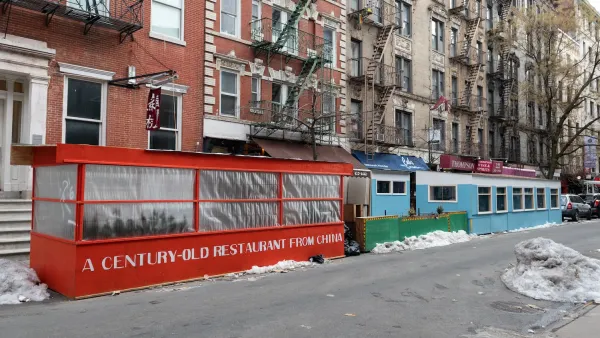
NYC Outdoor Dining Could Get a Re-Do
The city council is considering making the al fresco dining program year-round to address cost concerns from small businesses.
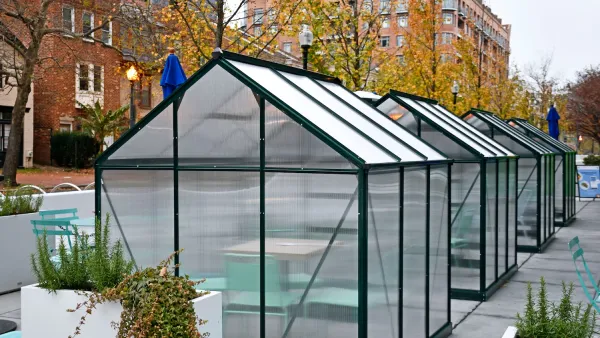
DC Extends Application Window for Outdoor Dining Permits
District restaurants will have until the end of November to apply, but businesses with permits in rush hour parking lanes must end operations on July 31.

Planetizen Federal Action Tracker
A weekly monitor of how Trump’s orders and actions are impacting planners and planning in America.

The state-sanctioned urbicide of Austin
People don’t kill cities. Freeways do.

US to reduce Colorado River water deliveries to Mexico
A new Colorado Treaty amendment reduces Mexico’s Colorado River water allocation by 250,000 acre feet.

Baltimore to break ground on $50 million Transit Priority Project
The project will bring faster bus trips, safer streets and better bike connections to Baltimore.

Airbnb launches $250 million 'last-dollar financing' housing accelerator, makes first investment in Austin
The company will put $6.4 million towards affordable housing development in Texas’ capital.

Guerilla urbanists are building DIY bus stop benches in Chicago
A before-and-after of one of the bus stops with a new bench. The new benches are not officially sanctioned or permitted, but the residents who placed them hope they will be the start of a network of DIY benches across the city.

FREE Course: Walkable City 1: Why Walkability?
After describing his path towards focusing on walkability as the essence of good planning, Jeff Speck marches through his five principal reasons for making more walkable places.
Reinventing Malls: Planning Alchemy—Turning Gray Fields Into Gold
The course focuses on the opportunities and imperatives that shape reinvention of mall sites.

Eagle County Government
Harvard University Graduate School of Design
Nashville Planning Department
The Architects Foundation
University of Cincinnati Online
The Pocatello Development Authority
The Urban Renewal Agency of the City of Pocatello
Journal of the American Planning Association