Locally owned restaurants affordable to middle-income families are disappearing or being forced to raise prices as costs grow.


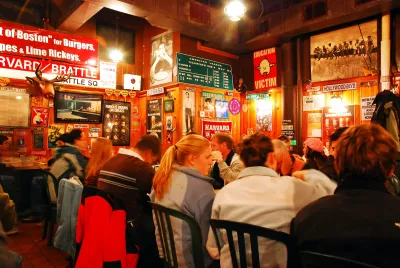
Like the ‘missing middle’ often described in the housing sector, the restaurant industry is also facing the disappearance of ‘middle-class’ eateries that fill the niche between fast food and high-end restaurants. As an article from Michigan Information & Research Service Inc. explains, “The fact that eating out is becoming so unaffordable for so many people, you start losing a critical element in terms of the concept of third places, these places where you gather that are not home or church,” said Ann McBride, the James Beard Foundation's vice president of impact.
At an event moderated by the foundation, restaurant owners expressed concern about rising costs for ingredients, supplies, fuel, labor, and housing for workers. “Last year, according to the foundation's recent report, 70 percent of independent restaurant chefs increased menu prices by under 10 percent, and 11 percent of chefs increased them by 10 percent or more. During the year before that, 28 percent of chefs heightened their menu costs by 10 percent or more.” Many have been unable to give employees raises or maintain workforce housing programs.
Some attendees called on Congress to include more provisions in an updated Farm Bill to fund food policy councils and empower regional organizations to work on food security issues that affect restaurants and the broader community.
Read the full story: Is There A 'Missing Middle' Of Middle Class-Friendly Restaurants?

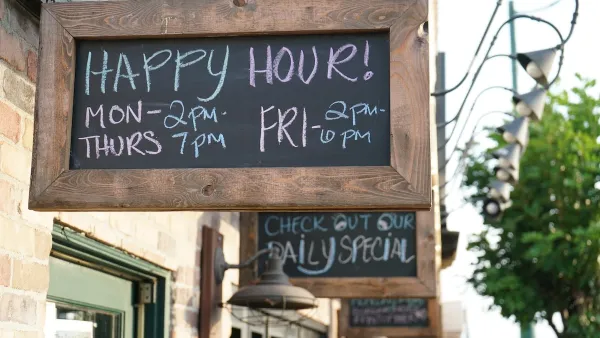
States Look to Eliminate Happy Hour Bans to Lure People Downtown
More than 20 states have laws banning or limiting happy hours at bars and restaurants. Now, some are revisiting these regulations in an effort to boost commerce in struggling downtown districts.
Uncertain Futures for U.S. Restaurants Raise Larger Concerns About City Vitality
In many American cities, restaurants are beacons of economic revitalization and social vibrancy. Calculations are still being made to determine the toll taken on the nation's eateries, and in turn, the urban economies they serve.
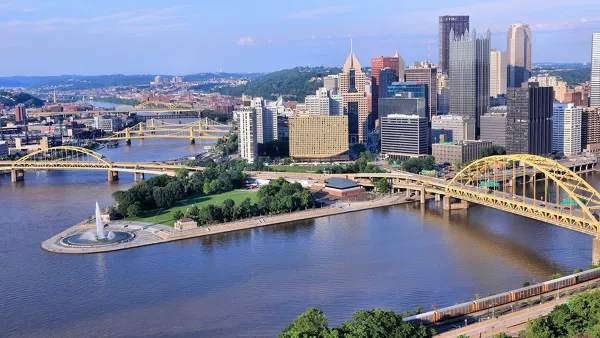
Pittsburgh-to-Cleveland Corridor Would Be Major Addition to National Trail Network
The 220-mile route would connect the two cities and could potentially boost the economies of communities along the stretch.

Planetizen Federal Action Tracker
A weekly monitor of how Trump’s orders and actions are impacting planners and planning in America.

Amtrak, CN end decades-long dispute with eight-year agreement
The new operating agreement establishes an updated framework for the companies to work together, including processes to resolve disputes.

Northwest rail fans eager for Sept. 30 debut of Amtrak’s Airo fleet
Get ready for that new train smell and more seats. But they won’t go faster or run more frequently on the Cascades route in Washington and Oregon.

LAX SkyLink opening delayed again, contractor won’t commit to new deadline
The project was supposed to open its doors to the public in 2023.

Caltrain may slash over one-third of its stations
If Bay Area voters reject two transit tax measures, Caltrain, BART and AC Transit will see steep service cuts.

A 'dangerous' precedent: North Carolina successfully pressures communities into voting for toll roads
Two mayors resigned from the Charlotte Regional Transportation Planning Organization after it voted in favor of the toll roads.

FREE Course: Walkable City 1: Why Walkability?
After describing his path towards focusing on walkability as the essence of good planning, Jeff Speck marches through his five principal reasons for making more walkable places.
Reinventing Malls: Planning Alchemy—Turning Gray Fields Into Gold
The course focuses on the opportunities and imperatives that shape reinvention of mall sites.

City of Thousand Oaks
City of Wisconsin Rapids
Harvard University Graduate School of Design
The Architects Foundation
University of Cincinnati Online
The Pocatello Development Authority
The Urban Renewal Agency of the City of Pocatello