The movement of South Carolina’s coastal salt marshes is an early harbinger of the path of future floods.



A new mapping tool funded by the National Fish and Wildlife Foundation maps South Carolina’s shifting salt marshes, which are pushing inland as seawater levels rise.
According to a Governing article by Lora Clarke and Tom Wheatley, the migration of salt marshes, while vital to local habitats, also prevents land managements and planning challenges, offering an early view into how future floods may shape up.
As Clarke and Wheatley explain, “Created under the leadership of the SCDNR and the ACE Basin NERR, the mapping tool translates theoretical projections into actionable data,” visualizing where rising waters could threaten developable land. “Through these platforms, the mapping tool transforms sea-level rise from a theoretical threat into practical guidance, helping communities make more informed decisions.”
FULL STORY: South Carolina’s Sea-Level Rise Mapping Platform Could Inspire Other States

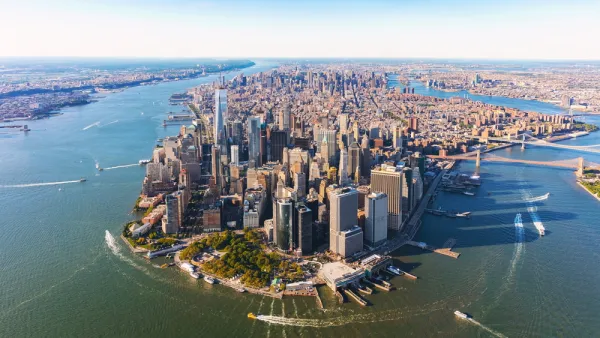
Opinion: One Solution to Manhattan's Land Shortage: Just Build It
A New York Times op-ed calls on the city to add landfill development on Manhattan's southern shoreline, claiming it would increase affordability and protect the city from rising sea levels.
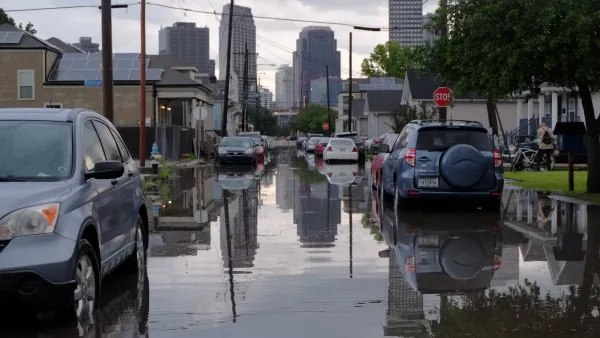
Study: New Orleans sea level rise is at 'point of no return'
Research shows that the city could be surrounded by water by the end of this century.
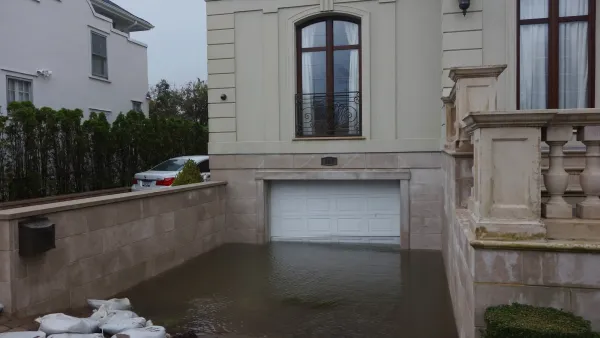
Over 500 NYC ‘Blue Zones’ at Risk of More Destructive Floods
High-risk flood zones cover roughly 20% of the city’s land.

The state-sanctioned urbicide of Austin
People don’t kill cities. Freeways do.

US to reduce Colorado River water deliveries to Mexico
A new Colorado Treaty amendment reduces Mexico’s Colorado River water allocation by 250,000 acre feet.

New Jersey’s second-largest city bans standalone data centers
Jersey City will continue to allow co-location facilities, such as those meant for research institutions that store their own data.

Amtrak not solely to blame for New Jersey commuter rail's unreliability, report finds
A new study from the Garden State Initiative found that NJ Transit’s budget grew 20% across a 4 year period, but reliability declined significantly over the same period.

EPA erases limits on planet-warming pollution from power plants
Under Monday’s plan, power plants would still have some limits on how much mercury, arsenic and other contaminants they can emit.

Phoenix announces new on-demand transit service, more frequent RAPID buses
Both new services will launch in October, and are part of Phoenix's Project Effective Access Solutions for Easing Congestion.

FREE Course: Walkable City 1: Why Walkability?
After describing his path towards focusing on walkability as the essence of good planning, Jeff Speck marches through his five principal reasons for making more walkable places.
Reinventing Malls: Planning Alchemy—Turning Gray Fields Into Gold
The course focuses on the opportunities and imperatives that shape reinvention of mall sites.

Eagle County Government
Harvard University Graduate School of Design
Nashville Planning Department
The Architects Foundation
University of Cincinnati Online
The Pocatello Development Authority
The Urban Renewal Agency of the City of Pocatello
Journal of the American Planning Association