The Congress Avenue Urban Design Initiative is bringing new pedestrian infrastructure and ‘storefront activation zones’ to the popular street.


Austin’s Department of Transportation and Public Works started work on the Congress Avenue Urban Design Initiative, a project that will bring multimodal improvements to the popular street, reports Sydney Gray for KXAN.
Austin Mayor Kirk Watson called Congress “Department of Transportation and Public Works,” noting that it was the first paved street in Austin.
The redesign will create more public spaces as well as protected bike lanes and enhanced landscaping. The first phase includes “programmable storefront activation zones” that “create permanent infrastructure allowing businesses to use the areas in front of their stores for sidewalk cafes and display racks.”
City officials say the project will not reduce vehicle lanes and that it will improve curb appeal for attracting businesses and customers to the street.
Read the full story: Congress Avenue project will make historic street more accessible

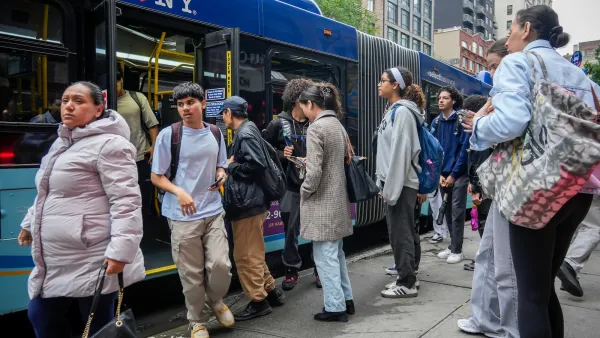
Mamdani to Revive Multiple Complete Streets Projects Killed by Adams
NYCDOT will restore several proposed bike and bus lanes.

Austin Businesses Call for Sixth Street Bike Lanes
Local business owners say bike lanes would improve safety and boost local business.

The 5 Safest Cities for Cyclists in America — and What They Have in Common
Cities with low fatality rates for people on bikes have made strong commitments to building safe, protected bike networks and supporting Complete Streets.

Planetizen Federal Action Tracker
A weekly monitor of how Trump’s orders and actions are impacting planners and planning in America.

California plans to bury El Niño’s downpour
If the state plays its cards right, it may be able to store a billion acre-feet of El Niño’s water in aquifers.

Desperate measures: Advocates weigh draining Lake Powell to fill Colorado River
Draining the reservoir could reduce evaporation losses by a couple hundred thousand acre-feet.

40 years after approval, Chicago breaks ground on new park
The park honors Jean Baptiste Point du Sable, the city’s first permanent non-native settler.

‘Hoodwinked:’ New Mexico bill aimed at microgrids paves way for data center development
In an interview with High Country News, Padilla said the legislation “ignited” New Mexico's economy.

California’s ‘unrecognizable’ water plan may go down the drain
After four years of regulatory processes, water agencies say the plan to overhaul how cities and farms take water from the Sacramento-San Joaquin Delta has changed dramatically.

FREE Course: Walkable City 1: Why Walkability?
After describing his path towards focusing on walkability as the essence of good planning, Jeff Speck marches through his five principal reasons for making more walkable places.
Reinventing Malls: Planning Alchemy—Turning Gray Fields Into Gold
The course focuses on the opportunities and imperatives that shape reinvention of mall sites.

City of Rosemead
Rutgers University, Edward J. Bloustein School of Planning and Public Policy
One Hundred Miles
Hunter College, City University of New York (CUNY)
The Architects Foundation
University of Cincinnati Online
City of Cambridge
Montrose County
The Pocatello Development Authority