Tesla’s ‘Mad Max’ mode and other self-driving systems often flout traffic laws — just like human drivers.


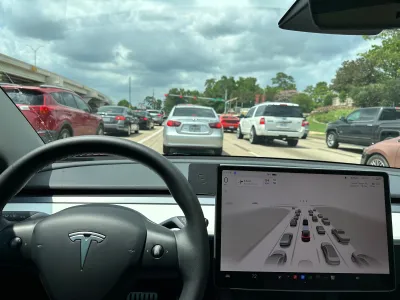
Self-driving systems like Tesla’s ‘Mad Max mode’ are modeling themselves on human behavior — sometimes the worst of it.
As David Zipper explains in a piece for Fast Company, Teslas using the company’s most aggressive self-driving mode “will roll through stop signs and blast past other vehicles on the road,” ignoring posted speed limits. And Tesla isn’t the only one programming cars to flout traffic laws.
Experts say that a robotaxi’s lack of ability to discern when breaking the law might be safe or appropriate means that they are likely to violate laws regardless of situational context. Meanwhile, most states still lack a regulatory framework for ticketing or citing driverless cars.
Read the full story: Tesla’s ‘Mad Max mode’ points to a big problem for self-driving cars
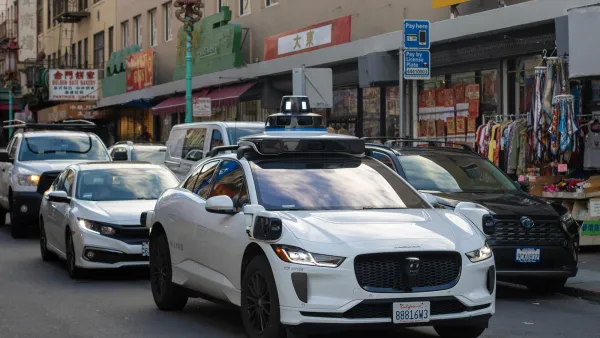
New Jersey bill would require AVs to use 3 sensing technologies — banning Tesla's robotaxi fleet
Elon Musk has been 'largely alone' in his conviction that radar and lidar sensors are not necessary for the safe operation of autonomous cars.
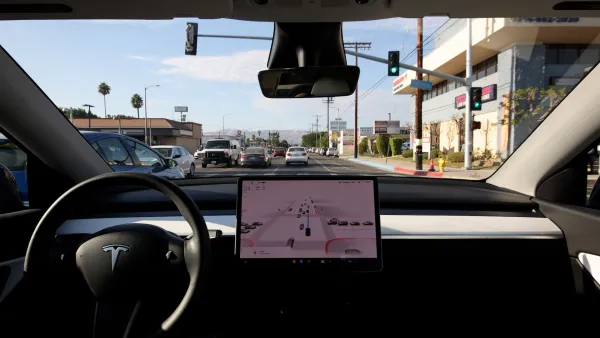
Tesla Launches Unsupervised Robotaxis in Austin
The company has been operating autonomous taxis with human safety drivers in the car in Austin since last June.
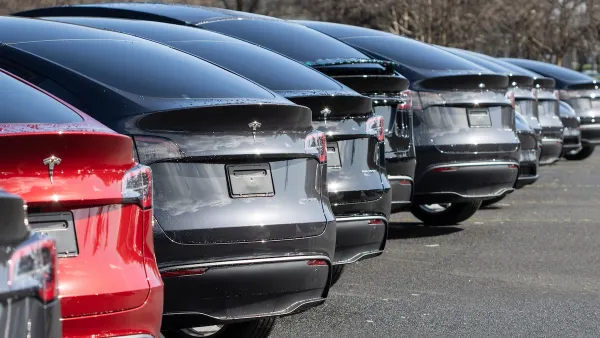
Texas Safety Advocates Raise Alarm in Advance of Tesla Robotaxi Launch
The company plans to deploy self-driving taxis in Austin with no oversight from state or local transportation agencies.

California plans to bury El Niño’s downpour
If the state plays its cards right, it may be able to store a billion acre-feet of El Niño’s water in aquifers.

Desperate measures: Advocates weigh draining Lake Powell to fill Colorado River
Draining the reservoir could reduce evaporation losses by a couple hundred thousand acre-feet.

Eastern Nebraska is running out of electricity
Data centers and electrification are straining eastern Nebraska’s grid, throttling economic development.

SpaceXAI may be fined $6 million for data center lacking water permits
A Mississippi agency also responds after a federal judge criticized the state’s Clean Air Act enforcement.

Housing is the top priority of Seattle’s sole new councilmember
Jenks campaigned on building 1,000 new units of affordable housing.

New tax cuts may slash $1.5 billion in funding for Miami transit, public parks
Amendment 3 will save Miami-Dade homeowners $2,700 in 2028.

FREE Course: Walkable City 1: Why Walkability?
After describing his path towards focusing on walkability as the essence of good planning, Jeff Speck marches through his five principal reasons for making more walkable places.
Reinventing Malls: Planning Alchemy—Turning Gray Fields Into Gold
The course focuses on the opportunities and imperatives that shape reinvention of mall sites.

City of Rosemead
Rutgers University, Edward J. Bloustein School of Planning and Public Policy
One Hundred Miles
University of Michigan School for Environment and Sustainability (SEAS)
Hunter College, City University of New York (CUNY)
The Architects Foundation
City of Cambridge
Montrose County
The Pocatello Development Authority