Residents have reported that the food delivery bots have forced people off sidewalks into busy streets and collided with bicyclists.


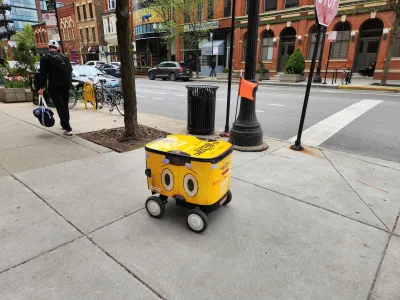
A growing number of food delivery robots are using Chicago sidewalks to transport their merchandise, sparking outrage among some residents who say that “Chicago sidewalks are for people, not delivery robots.”
As Alec Karam explains in Block Club Chicago, a petition started by a Lincoln Park resident is asking the city to release safety and accessibility information on the robots and to set clear rules on how they can use public right-of-way. The bots’ critics say they have pushed people off of sidewalks, collided with bicyclists, and deterred emergency vehicles.
City officials are taking note, too. “The offices of Alds. Angela Clay (46th) and Bennett Lawson (44th) have sent out surveys to neighbors in their respective wards asking them to describe their experiences and concerns with the bots and whether they support or oppose their presence.” One resident expressed concerns about letting corporations use sidewalks and public space.
The robots are permitted as part of a pilot program launched in 2022.
Earlier this year, DoorDash floated plans to deploy larger delivery robots in bike lanes, prompting concerns from bike advocates that they will compete with people on bikes for scarce right-of-way.
FULL STORY: Delivery Robots Take Over Chicago Sidewalks, Sparking Debate And A Petition To Hit ‘Pause’

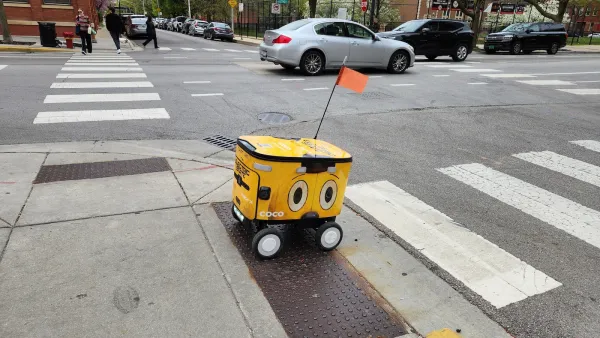
West Hollywood makes delivery robots paying road users
Cities are looking for creative ways to regulate food delivery robots, in some cases putting them to work gathering data for ADA compliance or collecting revenue for sidewalk maintenance.
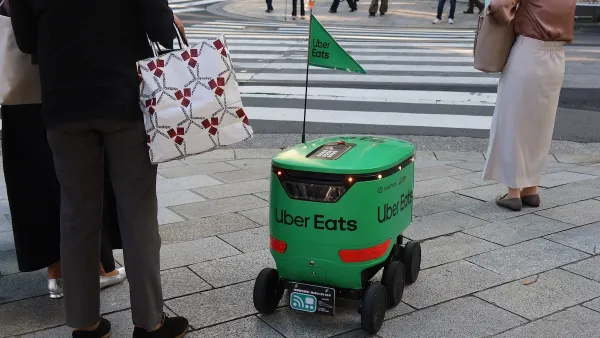
Opinion: Delivery Robots Need Regulation Now
Ride-hailing and scooter companies blindsided cities. They shouldn’t let delivery robots do the same.
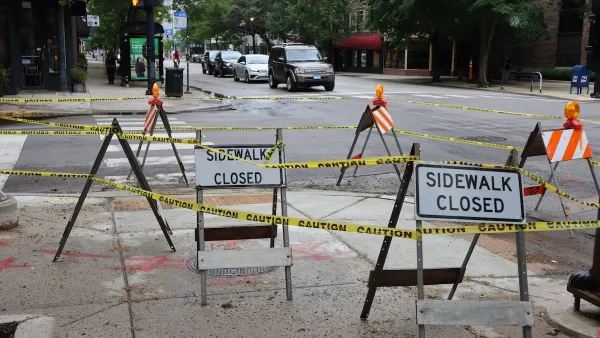
Chicago Residents Sue City Over Inaccessible Sidewalks
The suit alleges the city has failed to create a “coordinated, proactive system” for complying with ADA and ensuring accessibility on the city’s sidewalks and crosswalks.

The state-sanctioned urbicide of Austin
People don’t kill cities. Freeways do.

US to reduce Colorado River water deliveries to Mexico
A new Colorado Treaty amendment reduces Mexico’s Colorado River water allocation by 250,000 acre feet.

New Jersey’s second-largest city bans standalone data centers
Jersey City will continue to allow co-location facilities, such as those meant for research institutions that store their own data.

Amtrak not solely to blame for New Jersey commuter rail's unreliability, report finds
A new study from the Garden State Initiative found that NJ Transit’s budget grew 20% across a 4 year period, but reliability declined significantly over the same period.

EPA erases limits on planet-warming pollution from power plants
Under Monday’s plan, power plants would still have some limits on how much mercury, arsenic and other contaminants they can emit.

Phoenix announces new on-demand transit service, more frequent RAPID buses
Both new services will launch in October, and are part of Phoenix's Project Effective Access Solutions for Easing Congestion.

FREE Course: Walkable City 1: Why Walkability?
After describing his path towards focusing on walkability as the essence of good planning, Jeff Speck marches through his five principal reasons for making more walkable places.
Reinventing Malls: Planning Alchemy—Turning Gray Fields Into Gold
The course focuses on the opportunities and imperatives that shape reinvention of mall sites.

Eagle County Government
Harvard University Graduate School of Design
Nashville Planning Department
The Architects Foundation
University of Cincinnati Online
The Pocatello Development Authority
The Urban Renewal Agency of the City of Pocatello
Journal of the American Planning Association