A new generation of delivery robot is designed to make longer trips and could compete with cyclists for bike lane space.



DoorDash plans to introduce a new type of delivery robot designed for mid-range trips in suburbs, hinting that they plan to deploy them in bike lanes.
As Chris Velazco explains in The Washington Post, the robot, dubbed Dot, is “about 4½ feet tall, weighs 350 pounds and can carry deliveries of up to 30 pounds in a modular cargo space that opens and closes like a giant mouth.”
The robot, which is currently deployed in the Phoenix area, can travel at a speed of up to 20 miles per hour. “DoorDash leaders also repeatedly highlighted the way Dot robots could use bike lanes to traverse suburban roads, but at a little under three feet wide, these machines could stymie cyclists trying to use those same limited patches of asphalt.”
According to the company, “The core sensor, hardware, and software approach is similar to that of robotaxis, enabling the kind of reliable, door-to-door autonomous deliveries that customers expect and merchants rely on.” Over time, the robots are likely to incrementally replace DoorDash’s human workers. “For now, though, Dot’s limitations — it’s not fast enough to drive on freeways and not nimble enough to tackle stairs or elevators — means the human touch isn’t going anywhere.”
FULL STORY: DoorDash’s Dot delivery bots might be coming to a bike lane near you

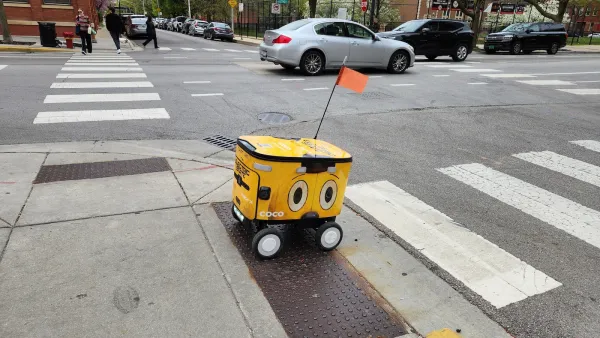
West Hollywood makes delivery robots paying road users
Cities are looking for creative ways to regulate food delivery robots, in some cases putting them to work gathering data for ADA compliance or collecting revenue for sidewalk maintenance.
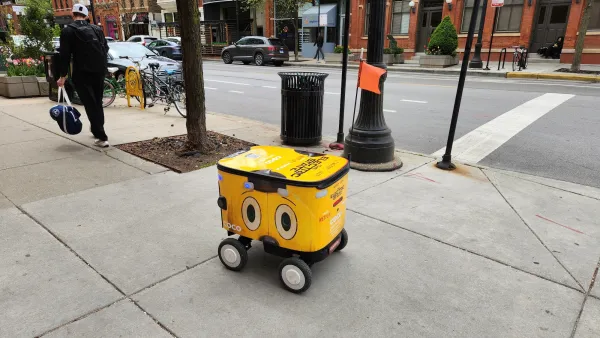
Delivery Robots are Taking Over Chicago Sidewalks, Alarming Residents
Residents have reported that the food delivery bots have forced people off sidewalks into busy streets and collided with bicyclists.
Cities Regulate Delivery App Fees to Support Ailing Restaurants
High platform fees for food delivery apps have put struggling restaurants between a rock and a hard place.

Planetizen Federal Action Tracker
A weekly monitor of how Trump’s orders and actions are impacting planners and planning in America.

The state-sanctioned urbicide of Austin
People don’t kill cities. Freeways do.

US to reduce Colorado River water deliveries to Mexico
A new Colorado Treaty amendment reduces Mexico’s Colorado River water allocation by 250,000 acre feet.

5 New England states march closer to 800 megawatt wind energy project
Securing federal approval for the project may be complicated under the Trump administration, which has historically been hostile towards domestic wind power.

Baltimore to break ground on $50 million Transit Priority Project
The project will bring faster bus trips, safer streets and better bike connections to Baltimore.

Airbnb launches $250 million 'last-dollar financing' housing accelerator, makes first investment in Austin
The company will put $6.4 million towards affordable housing development in Texas’ capital.

FREE Course: Walkable City 1: Why Walkability?
After describing his path towards focusing on walkability as the essence of good planning, Jeff Speck marches through his five principal reasons for making more walkable places.
Reinventing Malls: Planning Alchemy—Turning Gray Fields Into Gold
The course focuses on the opportunities and imperatives that shape reinvention of mall sites.

Eagle County Government
Harvard University Graduate School of Design
Nashville Planning Department
The Architects Foundation
University of Cincinnati Online
The Pocatello Development Authority
The Urban Renewal Agency of the City of Pocatello
Journal of the American Planning Association