The shuttle operates at 15 miles per hour and offers rides within Mizner Park.


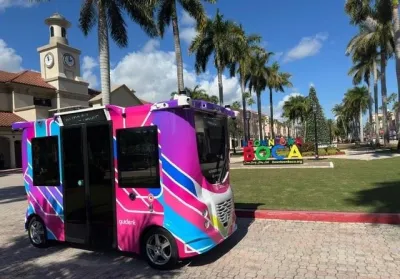
Boca Raton, Florida has launched an autonomous shuttle service in a downtown park. According to reporting by Zahra Awan in Autonomous Vehicle International, “The initial service focuses on short, predictable trips between restaurants, shops and cultural venues, giving residents and visitors a convenient way to experience autonomous mobility.” If this first deployment is successful, the city could extend the route to 2.6 miles to complement the existing BocaConnect electric shuttle network.
The electric shuttles seat eight and are limited to a top speed of 15.5 miles per hour. As Awan explains, “Seven lidar sensors and multiple cameras provide full 360° perception, critical systems are redundantly engineered to prevent single-point failures and substantial effort has gone into ensuring robust cybersecurity. Passenger-focused features include air conditioning, double doors and built-in support for teleoperation and remote monitoring.”
Read the full story: Boca Raton launches MiCa autonomous shuttle service
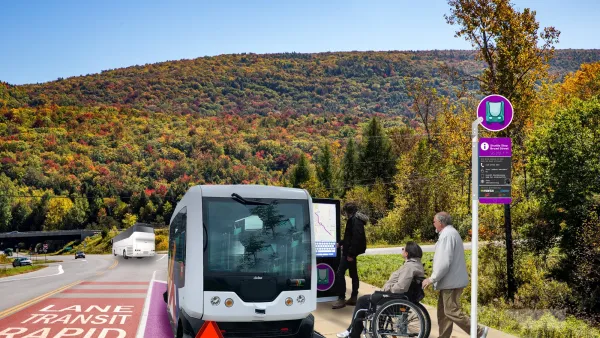
Optimism for Autonomous Shuttles Despite Recent Setbacks
Two autonomous shuttle companies closed last week, but one industry observer sees reasons for optimism for the long-term viability of the still-speculative market.
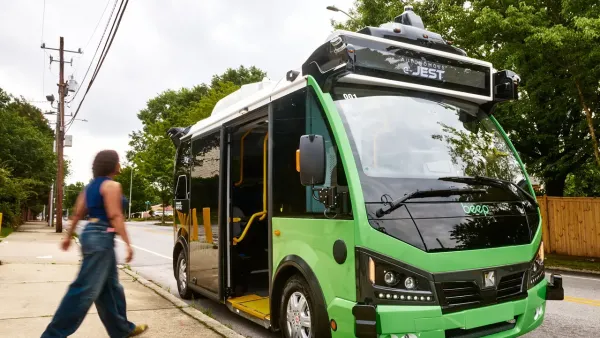
Atlanta launches autonomous Beltline shuttle
The ATL Spoke service connects the Beltline to a MARTA rail station.
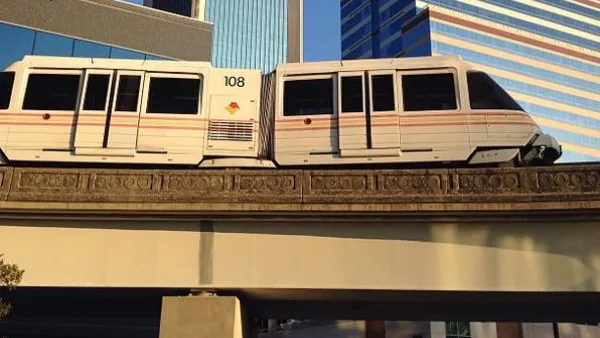
Jacksonville To Replace Monorail With Autonomous Shuttles
The city’s aging monorail system will be repurposed as part of an expanded 10-mile shuttle system.

Desperate measures: Advocates weigh draining Lake Powell to fill Colorado River
Draining the reservoir could reduce evaporation losses by a couple hundred thousand acre-feet.

Eastern Nebraska is running out of electricity
Data centers and electrification are straining eastern Nebraska’s grid, throttling economic development.

Move over, LA: St. Louis gears up for Olympics, invests millions in downtown redevelopment
The Missouri city will host the 2028 Olympic soccer group stage and knockout matches.

Mass. votes against statewide minimum lot size for single-family homes
Over 2 million residents voted on Question 7; it was decided by just over 30,000 votes.

Maryland’s $15 billion bridge project gains key approval
The Maryland Transit Authority said the project will create over 60,000 jobs and add $23 billion to the local economy.

‘No clear next steps’ for Chicago's permanent festival grounds
Eleventh Ward Ald. Nicole Lee has suggested Soldier Field as a possible location for the permanent event space.

FREE Course: Walkable City 1: Why Walkability?
After describing his path towards focusing on walkability as the essence of good planning, Jeff Speck marches through his five principal reasons for making more walkable places.
Reinventing Malls: Planning Alchemy—Turning Gray Fields Into Gold
The course focuses on the opportunities and imperatives that shape reinvention of mall sites.

City of Rosemead
Rutgers University, Edward J. Bloustein School of Planning and Public Policy
One Hundred Miles
University of Michigan School for Environment and Sustainability (SEAS)
Hunter College, City University of New York (CUNY)
The Architects Foundation
City of Cambridge
Montrose County
The Pocatello Development Authority