European cities with subway systems have a much lower share of car trips than cities with tram- or bus-based transit systems.


People living in European cities with metro systems drive significantly less than those with access to only trams or no rail-based transit systems, according to a new study from the Complexity Science Hub (CSH).
Using data from 400 cities, researcher Rafael Prieto-Curiel examined the share of car trips compared to active mobility and public transit. “In cities with a metro, the average share of car trips is 37%, compared to 50% in cities with trams only and 54% in cities without rail systems.” Residents of metro cities also use transit much more frequently.
The effect is more pronounced in larger cities, where the share of car commutes grows uto 63 percent when no metro is present. “Meanwhile, the share of car trips in metro cities remains nearly unchanged at 36%.”
Prieto-Curiel attributes the difference to the fact that trams tend to be slower and have lower passenger capacity than metros. “While trams are often seen as a cost-effective alternative to metro systems, the study shows that metro networks measurably reduce car traffic, whereas this effect cannot be observed for trams.”
FULL STORY: Metros Cut Car Use in European Cities – Trams Fall Short

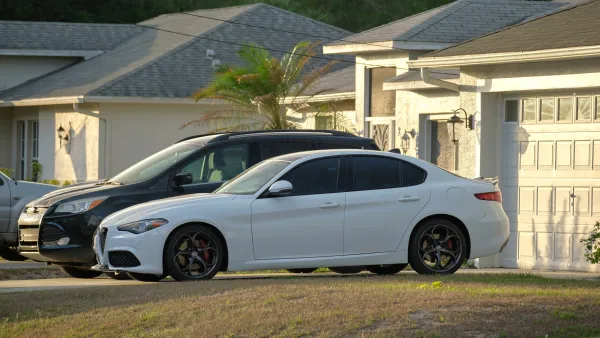
LA Metro is paying Angelenos up to $600 to leave their car at home
Metro will pay around 2,000 households to participate in a program designed to shift travel modes away from private car trips to transit, biking, walking and shared mobility.
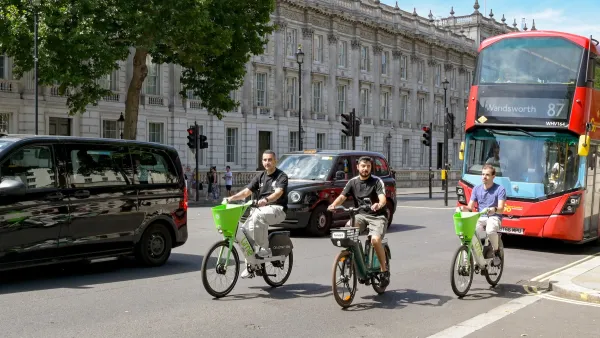
Bike use in London grew by 43% since 2019, but car use remains roughly the same
The city's efforts to reduce car use have stalled despite ambitious programs like congestion pricing and low-traffic neighborhoods.
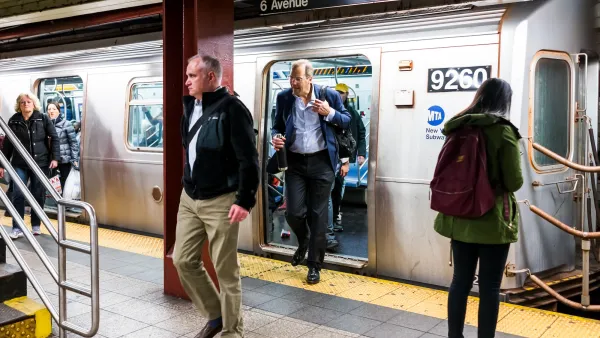
NYC to Upgrade 1/3 of its Subway Car Fleet
The MTA is seeking proposals for up to 2,390 new subway cars to upgrade its aging fleet.

Planetizen Federal Action Tracker
A weekly monitor of how Trump’s orders and actions are impacting planners and planning in America.

The state-sanctioned urbicide of Austin
People don’t kill cities. Freeways do.

US to reduce Colorado River water deliveries to Mexico
A new Colorado Treaty amendment reduces Mexico’s Colorado River water allocation by 250,000 acre feet.

Amtrak not solely to blame for New Jersey commuter rail's unreliability, report finds
A new study from the Garden State Initiative found that NJ Transit’s budget grew 20% across a 4 year period, but reliability declined significantly over the same period.

EPA erases limits on planet-warming pollution from power plants
Under Monday’s plan, power plants would still have some limits on how much mercury, arsenic and other contaminants they can emit.

Phoenix announces new on-demand transit service, more frequent RAPID buses
Both new services will launch in October, and are part of Phoenix's Project Effective Access Solutions for Easing Congestion.

FREE Course: Walkable City 1: Why Walkability?
After describing his path towards focusing on walkability as the essence of good planning, Jeff Speck marches through his five principal reasons for making more walkable places.
Reinventing Malls: Planning Alchemy—Turning Gray Fields Into Gold
The course focuses on the opportunities and imperatives that shape reinvention of mall sites.

Eagle County Government
Harvard University Graduate School of Design
Nashville Planning Department
The Architects Foundation
University of Cincinnati Online
The Pocatello Development Authority
The Urban Renewal Agency of the City of Pocatello
Journal of the American Planning Association