The law bars drivers from using steering wheel weights and other devices designed to bypass driver monitoring systems.


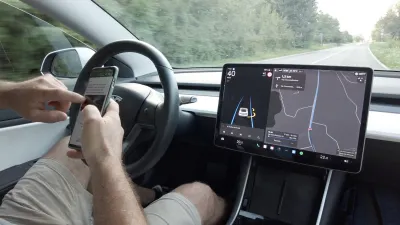
A new California law bans drivers from using “defeat devices” to trick driver assistance systems, reports Greg Poggiali for Jalopnik.
The law specifically applies to Level 2 systems like Tesla’s Autopilot and Ford’s BlueCruise. “These typically combine adaptive cruise control with lane centering all while still requiring the driver to be ready and alert to take over.” The cars use driver monitoring systems to ensure drivers are paying attention.
Defeat devices are anything from steering wheel weights to camera blockers that are meant to bypass the DMS. As Poggiali notes, “It's the technological equivalent of putting a brick on the gas pedal, but possibly with the same consequences.” The law bans any device “specifically designed for, marketed for, or being used for, neutralizing, disabling, or otherwise interfering with a driver monitoring system.”
Poggiali adds that while the law is well intentioned, it will likely be difficult to spot the devices and fine their drivers. However, the law could “change things like sentencing during other traffic violations or even crash investigations, some of which can include negligent homicide charges.”
Read the full story: California Bans 'Defeat Devices' Because Privately Owned Self-Driving Cars Are Still Not A Thing

Trump Transition Team Recommends Nixing Car Crash Reporting Rule
A rule requiring reporting of crashes involving driver assistance technology has faced strong opposition from Tesla and other automakers.
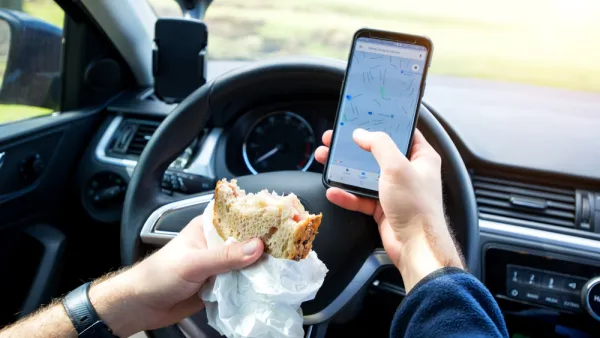
Study: Many Driver Assist Users Consider Their Cars Self-Driving
Almost half of drivers using Tesla and GMC driver assist technology report feeling comfortable treating their cars as fully autonomous.
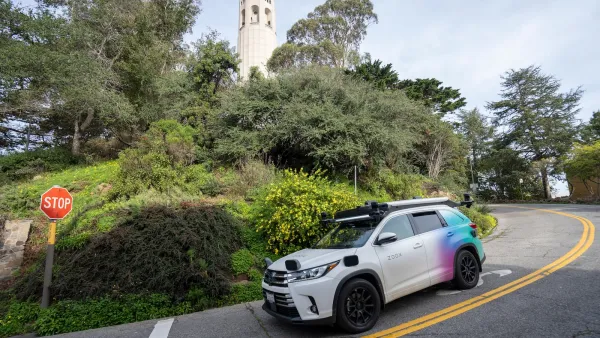
Feds want to make brake pedals optional in AVs
A proposed rule change would no longer require carmakers to include manual brake pedals or steering wheels in fully self-driving cars.

Planetizen Federal Action Tracker
A weekly monitor of how Trump’s orders and actions are impacting planners and planning in America.

California plans to bury El Niño’s downpour
If the state plays its cards right, it may be able to store a billion acre-feet of El Niño’s water in aquifers.

Desperate measures: Advocates weigh draining Lake Powell to fill Colorado River
Draining the reservoir could reduce evaporation losses by a couple hundred thousand acre-feet.

Mamdani’s pied-à-terre tax survives legal challenge
A panel of judges found that the plaintiffs failed to demonstrate injury as a result of New York City's implementation of the tax.

Eastern Nebraska is running out of electricity
Data centers and electrification are straining eastern Nebraska’s grid, throttling economic development.

Seattle passes record-breaking transit services expansion
Proposition 1 will double the city’s transit tax to add 95,000 more bus trips and preserve 180,000 bus trips annually.

FREE Course: Walkable City 1: Why Walkability?
After describing his path towards focusing on walkability as the essence of good planning, Jeff Speck marches through his five principal reasons for making more walkable places.
Reinventing Malls: Planning Alchemy—Turning Gray Fields Into Gold
The course focuses on the opportunities and imperatives that shape reinvention of mall sites.

City of Rosemead
Rutgers University, Edward J. Bloustein School of Planning and Public Policy
One Hundred Miles
University of Michigan School for Environment and Sustainability (SEAS)
Hunter College, City University of New York (CUNY)
The Architects Foundation
City of Cambridge
Montrose County
The Pocatello Development Authority