A Japanese study links commutes over 50 minutes to higher rates of insomnia and daytime sleepiness.


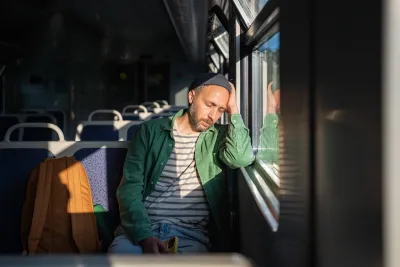
Scientists in Japan have linked long commutes and small homes to poorer sleep, with long commutes accounting for a stronger impact on sleep quality.
A team of researchers at Osaka Metropolitan University compared reported insomnia and sleepiness to commute times and the size of homes. “Data analysis revealed that even after adjusting for covariates, longer commutes predicted insomnia and daytime sleepiness, while smaller housing size predicted insomnia.”
For daily commute times of 100 minutes or more, the risk of insomnia and daytime sleepiness was 60% and 70% higher, respectively. After adjusting for education, marital status, and household income, over 50 minutes of commute time was associated with a 22-35% increased risk of insomnia and daytime sleepiness.
According to the researchers, “Long-distance commuters are more likely to exercise less, be overweight, have high blood pressure, and experience poor sleep. These individuals frequently feel more tired, stressed, and less satisfied with their lives, in addition to being more likely to experience digestive disorders, musculoskeletal pain, and overall lower levels of wellbeing.”
However, living closer to work often means living in a dense, crowded city with little access to green space, quiet, and clean air. For those living in cramped apartments, this can also impact sleep quality. Larger houses allow residents to escape from city noise and air pollution, mitigating the effects of urban noise and pollution for city dwellers.
Read the full story: Long commutes and small homes linked to insomnia in Tokyo adults

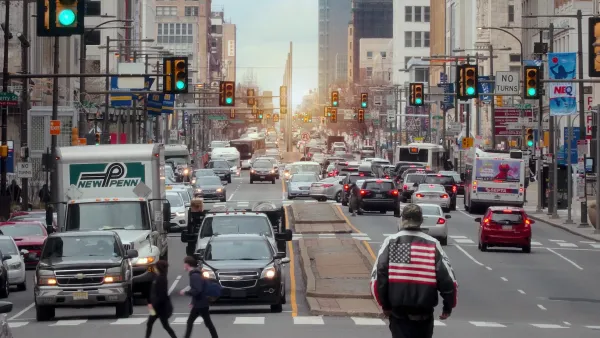
US workers spend nearly an hour a day commuting
High housing costs and return-to-office policies are forcing more American workers to live farther from work, pushing the average daily commute time to nearly an hour.
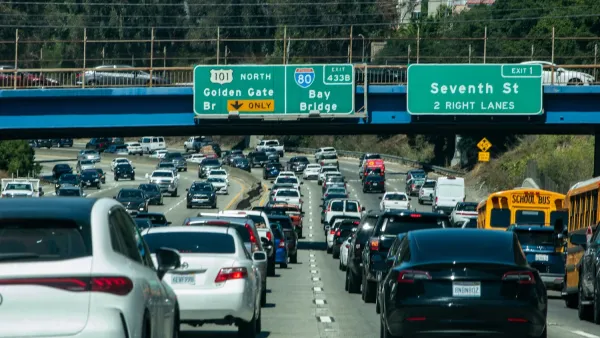
US Commuters Lost 8 Workdays to Traffic in 2024
As more employers call workers back to the office, commute times are growing — and costing drivers in time and money.
Why You Might Miss Your Commute–and How to Replicate its Benefits at Home
According to "boundary theory," a daily commute gives us time to do the emotional work of switching roles and establishing a separation between work and home life.

Planetizen Federal Action Tracker
A weekly monitor of how Trump’s orders and actions are impacting planners and planning in America.

The state-sanctioned urbicide of Austin
People don’t kill cities. Freeways do.

US to reduce Colorado River water deliveries to Mexico
A new Colorado Treaty amendment reduces Mexico’s Colorado River water allocation by 250,000 acre feet.

Nation's most wind-powered state turns to coal as data centers increase energy demand
For the first time in decades, Iowa has increased its generation of coal power.

NYC cools commuters with city's first rain garden above a bus stop
New York City officials say the plants in the rain garden can absorb 16 gallons of rainwater during heavy storms.

Brightline West’s future may rely on $6 billion federal loan
The company has until Nov. 2 to make a $400 million equity investment into its proposed high-speed rail line.

FREE Course: Walkable City 1: Why Walkability?
After describing his path towards focusing on walkability as the essence of good planning, Jeff Speck marches through his five principal reasons for making more walkable places.
Reinventing Malls: Planning Alchemy—Turning Gray Fields Into Gold
The course focuses on the opportunities and imperatives that shape reinvention of mall sites.

Eagle County Government
Harvard University Graduate School of Design
Nashville Planning Department
The Architects Foundation
University of Cincinnati Online
The Pocatello Development Authority
The Urban Renewal Agency of the City of Pocatello
Journal of the American Planning Association