As more employers call workers back to the office, commute times are growing — and costing drivers in time and money.


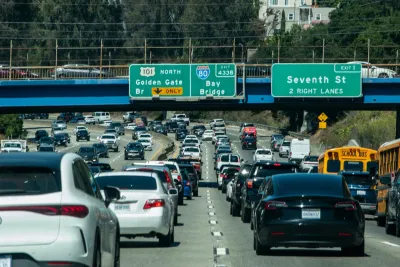
According to the Texas A&M Transportation Institute’s 2025 Urban Mobility Report, auto traffic cost the average U.S. driver 63 hours and increased congestion costs by 16 percent in 2024.
As Ryan Golden explains in Smart Cities Dive, contributing factors included an increased adoption of hybrid work schedules as more companies require workers to return to the office. “Sources who previously spoke to HR Dive viewed the economy’s larger return-to-office push as a potentially shortsighted move premised on employer convenience and the relative weakness of the talent market compared to that which characterized the immediate post-pandemic era.” Meanwhile, one study found that adopting remote work could save U.S. workers up to $183 million per day.
The report suggests that companies can adopt policies that incentivize workers to use alternate transportation modes and allow them to avoid traditional rush hours. “Local governments, meanwhile, can make more efficient use of monitoring technologies, improve road emergency response and diversify development patterns, among other actions.”
FULL STORY: Commuters lost nearly 8 work days in 2024 to record-high traffic levels, report finds


From 9-to-5 to Anytime: How Telecommuting Changes the Traffic Game
Not all cities have benefited equally from congestion relief brought on by shifting commuting patterns.
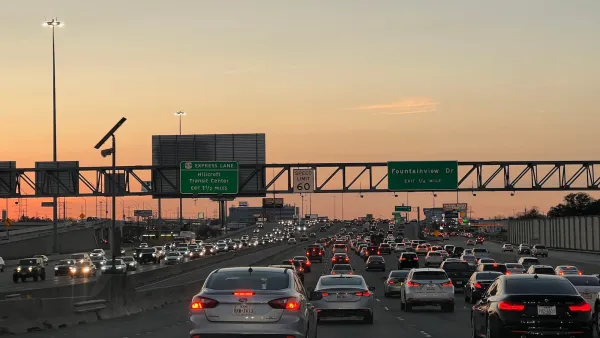
US Traffic Patterns are Shifting, but Car-centric Development Persists
Los Angeles, Honolulu, and San Francisco ranked among the nation’s most congested cities, while New York reduced traffic and increased transit speed and ridership thanks to its congestion pricing program.
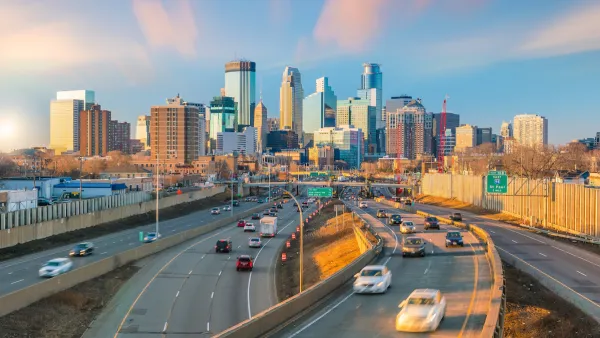
Twin Cities Commutes Faster Than Pre-Pandemic
Workers who have returned to in-person jobs are still experiencing less traffic congestion than in 2019.

The state-sanctioned urbicide of Austin
People don’t kill cities. Freeways do.

US to reduce Colorado River water deliveries to Mexico
A new Colorado Treaty amendment reduces Mexico’s Colorado River water allocation by 250,000 acre feet.

New Jersey’s second-largest city bans standalone data centers
Jersey City will continue to allow co-location facilities, such as those meant for research institutions that store their own data.

Amtrak not solely to blame for New Jersey commuter rail's unreliability, report finds
A new study from the Garden State Initiative found that NJ Transit’s budget grew 20% across a 4 year period, but reliability declined significantly over the same period.

EPA erases limits on planet-warming pollution from power plants
Under Monday’s plan, power plants would still have some limits on how much mercury, arsenic and other contaminants they can emit.

Phoenix announces new on-demand transit service, more frequent RAPID buses
Both new services will launch in October, and are part of Phoenix's Project Effective Access Solutions for Easing Congestion.

FREE Course: Walkable City 1: Why Walkability?
After describing his path towards focusing on walkability as the essence of good planning, Jeff Speck marches through his five principal reasons for making more walkable places.
Reinventing Malls: Planning Alchemy—Turning Gray Fields Into Gold
The course focuses on the opportunities and imperatives that shape reinvention of mall sites.

Eagle County Government
Harvard University Graduate School of Design
Nashville Planning Department
The Architects Foundation
University of Cincinnati Online
The Pocatello Development Authority
The Urban Renewal Agency of the City of Pocatello
Journal of the American Planning Association