A new UCLA report highlights strategies to strengthen Los Angeles’s water and power systems amid growing climate threats.


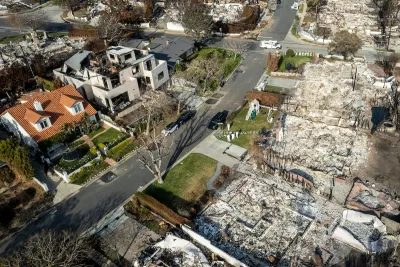
In the wake of Los Angeles’s devastating January firestorms, over 100 experts, utility leaders, and public officials gathered at a UCLA-led workshop to identify practical innovations that can strengthen the city’s water and power systems against intensifying climate threats. Commissioned by the Los Angeles Department of Water and Power (LADWP) and developed by the UCLA Luskin Center for Innovation with support from the Sustainable LA Grand Challenge, the June 2025 convening provided a rare opportunity for candid cross-sector dialogue about how to modernize aging infrastructure and reduce disaster risks.
The resulting report, Innovation Opportunities for a Resilient L.A., outlines four critical areas for advancing resilience: undergrounding power lines, reinforcing water distribution systems, expanding advanced metering infrastructure, and improving wildfire risk assessment. Each approach presents both promise and challenges—from the high costs and permitting needs of underground utilities to the potential of “smart hydrants” and real-time data to improve emergency response. Many of these ideas are already informing LADWP’s pilot projects and procurement efforts.
LADWP CEO Janisse Quiñones emphasized that the partnership with UCLA is helping to shape the next generation of utility resilience policies. Gregory Pierce, senior director of the Luskin Center, noted that these collaborative efforts are essential as climate impacts outpace traditional infrastructure planning. By integrating technological innovation with interagency coordination and community engagement, Los Angeles is setting a precedent for other fire-prone urban regions seeking to safeguard essential services and build a more sustainable future.
FULL STORY: Building resilient utilities: UCLA issues report on key water and power infrastructure needs

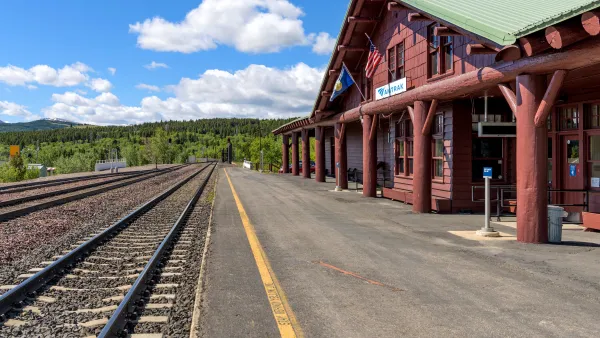
More Passenger Rail Coming to Montana
Planning is underway to restore a 45-year-defunct regional passenger rail line connecting southern Montana to Billings and Amtrak’s east-west Empire Builder line from Seattle to Chicago.

Elevating the ‘Small Stuff’ in Urban Design
Chuck Wolfe recaps arguments in favor of increased attention to incidentals — from benches to bollards — in urban development practices.
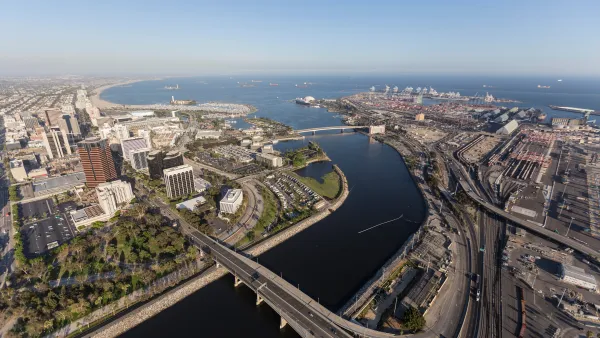
Los Angeles County Initiates Effort to Advance Equity in Infrastructure
L.A. County Public Works has launched an initiative to center equity in all of its processes, programming, and services as it plans, designs, builds, and maintains modern infrastructure that uplifts all communities of the county.

Planetizen Federal Action Tracker
A weekly monitor of how Trump’s orders and actions are impacting planners and planning in America.

The state-sanctioned urbicide of Austin
People don’t kill cities. Freeways do.

US to reduce Colorado River water deliveries to Mexico
A new Colorado Treaty amendment reduces Mexico’s Colorado River water allocation by 250,000 acre feet.

Amtrak not solely to blame for New Jersey commuter rail's unreliability, report finds
A new study from the Garden State initiative found that NJ Transit’s budget grew 20% across a 4 year period, but reliability declined significantly over the same period.

EPA erases limits on planet-warming pollution from power plants
Under Monday’s plan, power plants would still have some limits on how much mercury, arsenic and other contaminants they can emit.

Phoenix announces new on-demand transit service, more frequent RAPID buses
Both new services will launch in October, and are part of Phoenix's Project Effective Access Solutions for Easing Congestion.

FREE Course: Walkable City 1: Why Walkability?
After describing his path towards focusing on walkability as the essence of good planning, Jeff Speck marches through his five principal reasons for making more walkable places.
Reinventing Malls: Planning Alchemy—Turning Gray Fields Into Gold
The course focuses on the opportunities and imperatives that shape reinvention of mall sites.

Eagle County Government
Harvard University Graduate School of Design
Nashville Planning Department
The Architects Foundation
University of Cincinnati Online
The Pocatello Development Authority
The Urban Renewal Agency of the City of Pocatello
Journal of the American Planning Association