The transit agency, which faces a $322 million budget deficit, has pledged to preserve current routes and schedules, but is making other cuts across the board.


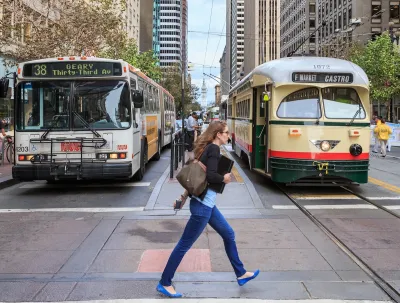
The San Francisco Municipal Transportation Agency (SFMTA) joins the ranks of transit systems forced to make severe cuts, reports Rachel Swan in the San Francisco Chronicle.
Bree Mawhorter, SFMTA’s CFO, “instructed all divisions to cut between 5% and 7% of their budgets, generating enough savings to shore up the transit system until voters decide whether to fund it long-term.”
While two measures — one regional and one local — could bring in more revenue if approved by voters, neither are guaranteed, Swan notes, adding that the money wouldn’t reach the agency until 2027.
The agency is scaling back budgets at all departments to avoid making service cuts, but Swan explains that the quality of service might degrade even if the agency is able to run the same number of buses and trains. “In the coming years, the agency might have limited ability to hire janitors, mechanics or maintenance workers. It may take longer to fix a broken sign or a dilapidated bus shelter, and crucial repairs could get kicked down the road.”
Read the full story: SFMTA to make cuts to all divisions as agency hits fiscal cliff

Opinion: San Francisco Needs a Well-Funded Transit System
Muni ridership is above pre-pandemic levels on some lines. Why is the agency still considering service cuts?

A San Francisco bus that serves thousands of students students is getting some upgrades
Students advocated for changes on the #29 bus, which was notorious for its lack of reliability.
How to Fund SF’s Muni Without Cutting Service
Three solutions for bridging the San Francisco transit agency’s budget gap without reducing service for transit-dependent riders.

Planetizen Federal Action Tracker
A weekly monitor of how Trump’s orders and actions are impacting planners and planning in America.

California plans to bury El Niño’s downpour
If the state plays its cards right, it may be able to store a billion acre-feet of El Niño’s water in aquifers.

Chicago breaks ground on $3 billion megadevelopment
The new neighborhood, titled Foundry Park, will one day host 3,700 residences.

California High-Speed Rail Authority CEO resigns after $600,000 scandal
Under Ian Choudri, the authority used taxpayer dollars to fund first class flights and trips to nightclubs.

Want to study the Missouri River? Soon, you may need unanimous approval from 10 states
Legislation would require 10 governors’ permission to study or build projects moving water outside the basin.

Desperate measures: Advocates weigh draining Lake Powell to fill Colorado River
Draining the reservoir could reduce evaporation losses by a couple hundred thousand acre-feet.

FREE Course: Walkable City 1: Why Walkability?
After describing his path towards focusing on walkability as the essence of good planning, Jeff Speck marches through his five principal reasons for making more walkable places.
Reinventing Malls: Planning Alchemy—Turning Gray Fields Into Gold
The course focuses on the opportunities and imperatives that shape reinvention of mall sites.

City of Rosemead
Rutgers University, Edward J. Bloustein School of Planning and Public Policy
One Hundred Miles
Hunter College, City University of New York (CUNY)
The Architects Foundation
University of Cincinnati Online
City of Cambridge
Montrose County
The Pocatello Development Authority