For individual cyclists and transportation planners, AI offers some useful tools for understanding bike riders’ behavior and assessing gaps in a city’s bike infrastructure.


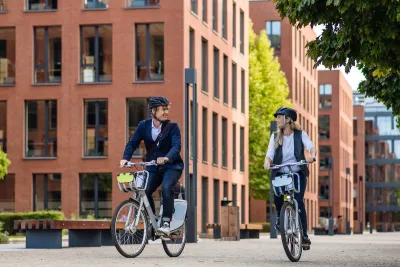
As artificial intelligence makes its way into urban planning, it is having some positive impacts on cycling, writes Ron Johnson in Momentum. “Far from Silicon Valley showboating, AI is embedding itself in traffic signals, bike-share systems, route planners, and even helmets—making urban cycling smarter, safer, and more responsive to real-world conditions.”
Johnson lists several ways that AI is making cycling safer and more comfortable, including intelligent route guidance, enhanced safety features, and a personalized riding experience. On a more systemic level, AI can help cities harness data to better understand cycling patterns, improve bike share systems, and improve traffic management and signal timing.
AI can’t do everything, Johnson warns, especially when it comes to ensuring equity and inclusion. “In cities like Minneapolis and Portland, planners are beginning to blend AI insights with community engagement. They’re mapping not just where people ride, but why—learning that some avoid “efficient” routes due to safety concerns no algorithm could detect.”
For Johnson, “The real future of AI in urban cycling isn’t about killer apps or high-tech bikes—it’s about ensuring that planning reflects how people truly move through their cities.”
FULL STORY: Smarter Streets, Safer Rides: How AI Is Quietly Transforming Urban Cycling

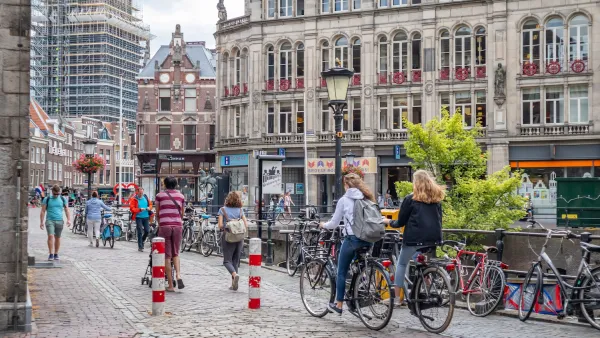
2025's 30 Most Bike-friendly Cities
Copenhagenize has released its list of top cities for cyclists. Spoiler alert: the United States doesn’t make the list.

The Rippling Effects of Bike-to-Work Subsidies
A European movement to incentivize people to commute by bicycle is changing travel patterns and making mobility more sustainable.
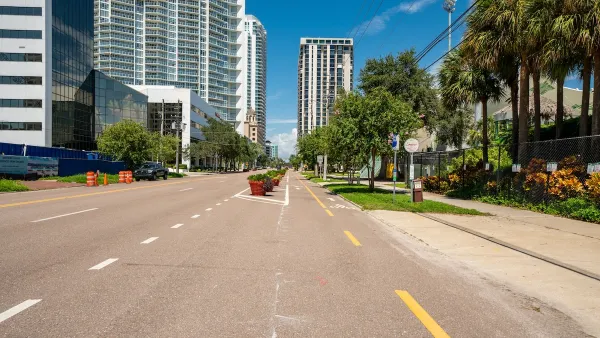
St. Petersburg’s Bike Infrastructure Efforts Pay Off
New bike infrastructure is encouraging more people to take to the streets on two wheels, but advocates say safety challenges remain.

The state-sanctioned urbicide of Austin
People don’t kill cities. Freeways do.

US to reduce Colorado River water deliveries to Mexico
A new Colorado Treaty amendment reduces Mexico’s Colorado River water allocation by 250,000 acre feet.

New Jersey’s second-largest city bans standalone data centers
Jersey City will continue to allow co-location facilities, such as those meant for research institutions that store their own data.

Amtrak not solely to blame for New Jersey commuter rail's unreliability, report finds
A new study from the Garden State Initiative found that NJ Transit’s budget grew 20% across a 4 year period, but reliability declined significantly over the same period.

EPA erases limits on planet-warming pollution from power plants
Under Monday’s plan, power plants would still have some limits on how much mercury, arsenic and other contaminants they can emit.

Phoenix announces new on-demand transit service, more frequent RAPID buses
Both new services will launch in October, and are part of Phoenix's Project Effective Access Solutions for Easing Congestion.

FREE Course: Walkable City 1: Why Walkability?
After describing his path towards focusing on walkability as the essence of good planning, Jeff Speck marches through his five principal reasons for making more walkable places.
Reinventing Malls: Planning Alchemy—Turning Gray Fields Into Gold
The course focuses on the opportunities and imperatives that shape reinvention of mall sites.

Eagle County Government
Harvard University Graduate School of Design
Nashville Planning Department
The Architects Foundation
University of Cincinnati Online
The Pocatello Development Authority
The Urban Renewal Agency of the City of Pocatello
Journal of the American Planning Association