New research shows that roads that are perceived as boring and ugly are more dangerous to people outside of cars.


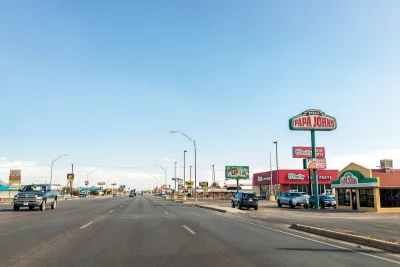
Roads that are perceived as boring and depressing have higher volumes of non-motorist injuries, according to new research, indicating that road design is a crucial factor in traffic safety.
As Kea Wilson explains in Streetsblog USA, “Researchers at the University of Connecticut recently analyzed the emotional reactions of more than 81,000 volunteers to a trove of Google Street View images from 56 cities around the world — and found that certain recurring perceptions correlated tightly with how many car crashes involving vulnerable road users actually happened where those photos were taken.”
The study’s results show that the emotions conveyed by a road actually matter — and that transportation planners should take them seriously. While the researchers say more analysis is needed, “One simple theory is that our emotional perceptions often directly influence our behavior on the road, like bored drivers reaching for their cell phones behind the wheel, or would-be pedestrians avoiding walking down depressing, run-down roads – leaving those with no choice but to make the trek to fend for themselves without safety in numbers.”
FULL STORY: Study: Boring Roads End Up With More Injuries For People Outside Cars

Reforms Are Coming to American Road Design
The federal manual governing road design is getting an update. Will it encourage real progress toward road safety?
Washington Focuses Road Safety Efforts on Individuals, Neglecting Design
Legislative efforts to reduce traffic deaths could move the needle toward Vision Zero, but state leaders failed to commit infrastructure funds to making structural improvements.
Why a Complete Streets Makeover Went Awry in Philadelphia
The city pulled the plug on a proposed street redesign after community groups criticized the public engagement process for not listening to all local voices.

The state-sanctioned urbicide of Austin
People don’t kill cities. Freeways do.

US to reduce Colorado River water deliveries to Mexico
A new Colorado Treaty amendment reduces Mexico’s Colorado River water allocation by 250,000 acre feet.

New Jersey’s second-largest city bans standalone data centers
Jersey City will continue to allow co-location facilities, such as those meant for research institutions that store their own data.

Amtrak not solely to blame for New Jersey commuter rail's unreliability, report finds
A new study from the Garden State Initiative found that NJ Transit’s budget grew 20% across a 4 year period, but reliability declined significantly over the same period.

EPA erases limits on planet-warming pollution from power plants
Under Monday’s plan, power plants would still have some limits on how much mercury, arsenic and other contaminants they can emit.

Phoenix announces new on-demand transit service, more frequent RAPID buses
Both new services will launch in October, and are part of Phoenix's Project Effective Access Solutions for Easing Congestion.

FREE Course: Walkable City 1: Why Walkability?
After describing his path towards focusing on walkability as the essence of good planning, Jeff Speck marches through his five principal reasons for making more walkable places.
Reinventing Malls: Planning Alchemy—Turning Gray Fields Into Gold
The course focuses on the opportunities and imperatives that shape reinvention of mall sites.

Eagle County Government
Harvard University Graduate School of Design
Nashville Planning Department
The Architects Foundation
University of Cincinnati Online
The Pocatello Development Authority
The Urban Renewal Agency of the City of Pocatello
Journal of the American Planning Association