Thanks to a construction boom, the city is no longer the most expensive housing market in Texas.


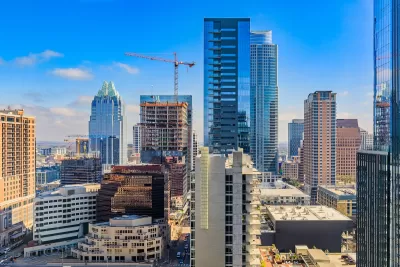
Rent prices in Austin, Texas have declined for a 19th straight month amidst a national housing crisis, reports Joshua Fetcher in Governing. “Surrounding suburbs like Round Rock, Pflugerville and Georgetown, which saw rents grow by double-digit percentages amid the region’s pandemic boom, also have seen declining rents.”
Experts attribute the drop in housing costs to a “massive apartment building boom” that brought tens of thousands of new housing units to the metro area. However, “It’s unclear how long the downward trend in Austin rents will last. While nearly 17,000 apartments are under construction, according to MRI data, builders have pulled back on new projects amid the glut.”
Skyrocketing costs during the pandemic led to a shift in policy, enabling zoning reform that allowed for more construction. However, rents remain roughly 17 percent above pre-pandemic levels, and almost half of the region’s renters spend more than 30 percent of their income on housing.
Landlords are also filing evictions at a higher rate than before the pandemic, and the number of unhoused people in Austin grew in 2024.
FULL STORY: After Skyrocketing, Rents in Austin Have Dropped 19 Straight Months

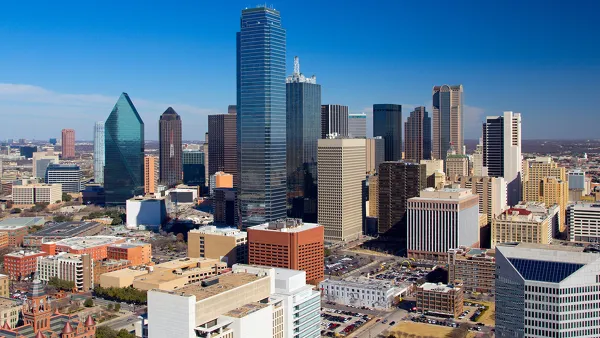
Vacant Lot Development Could Bring 100,000 New Housing Units to Dallas
Building on the roughly 76 million square feet of vacant land already zoned for multifamily housing could create badly needed rental housing units and slow the growth of rent prices.
Renters Expected To Fare Better Next Year
After years of rising housing costs, renters will see some relief in 2023 as supply rises and more tenant households stay put.
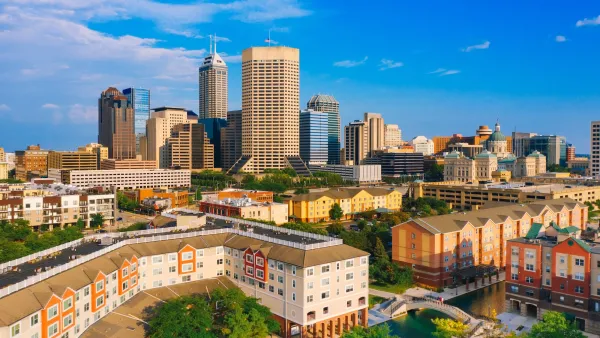
Indianapolis rents grew by 30% since 2020
The metro area has a shortage of roughly 137,000 affordable homes for the lowest-income households.

The state-sanctioned urbicide of Austin
People don’t kill cities. Freeways do.

US to reduce Colorado River water deliveries to Mexico
A new Colorado Treaty amendment reduces Mexico’s Colorado River water allocation by 250,000 acre feet.

New Jersey’s second-largest city bans standalone data centers
Jersey City will continue to allow co-location facilities, such as those meant for research institutions that store their own data.

Amtrak not solely to blame for New Jersey commuter rail's unreliability, report finds
A new study from the Garden State Initiative found that NJ Transit’s budget grew 20% across a 4 year period, but reliability declined significantly over the same period.

EPA erases limits on planet-warming pollution from power plants
Under Monday’s plan, power plants would still have some limits on how much mercury, arsenic and other contaminants they can emit.

Phoenix announces new on-demand transit service, more frequent RAPID buses
Both new services will launch in October, and are part of Phoenix's Project Effective Access Solutions for Easing Congestion.

FREE Course: Walkable City 1: Why Walkability?
After describing his path towards focusing on walkability as the essence of good planning, Jeff Speck marches through his five principal reasons for making more walkable places.
Reinventing Malls: Planning Alchemy—Turning Gray Fields Into Gold
The course focuses on the opportunities and imperatives that shape reinvention of mall sites.

Eagle County Government
Harvard University Graduate School of Design
Nashville Planning Department
The Architects Foundation
University of Cincinnati Online
The Pocatello Development Authority
The Urban Renewal Agency of the City of Pocatello
Journal of the American Planning Association