Cities are hiring grazing sheep to keep vegetation in check in sensitive sites and uneven terrain.


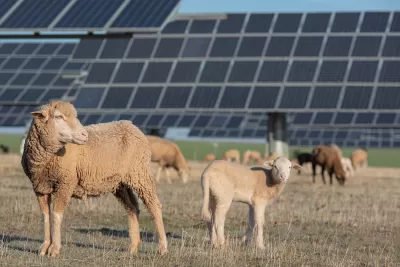
More cities are using sheep to trim vegetation, replacing lawnmowers with a whimsical and eco-friendly option, reports Kristin M. Hall for the Associated Press
Urban communities around the country are discovering the benefits of using livestock for prescribed grazing to manage invasive species, reduce fire risk, protect sensitive sites, and access difficult terrain.
In Nashville, a group dubbed the “Chew Crew” has been maintaining landscaping using sheep at a Civil War-era historic site since 2017. Today, sheep grave roughly 150 acres of city property, including in the Nashville City Cemetery. Chew Crew’s owner says the sheep are easier to manage than goats, which are more likely to climb and escape.
But sheep aren’t a silver bullet solution. They need to move regularly to prevent predator attacks and provide a varied diet, and herds of sheep can spread invasive seeds. Santa Barbara conducts environmental surveys before hiring sheep herds for grazing to ensure they won’t have a negative impact on local bird habitats and nesting sites.
Read the full story: Cities are using sheep to graze in urban landscapes and people love it
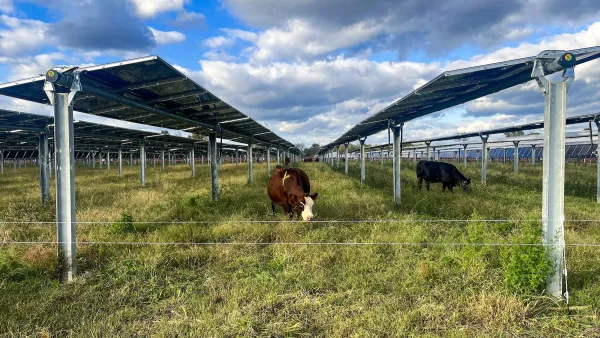
Cows at Tennessee's 'Silicon Ranch' graze under solar panels
The project aims to prove that agriculture and solar energy production can work in tandem.
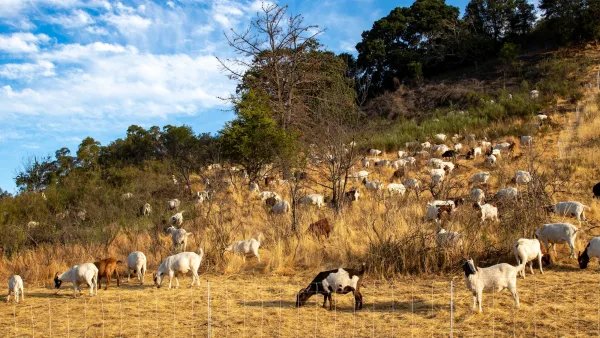
LA is Using 500 Goats to Clear Vegetation on Olympic Practice Fields
Grazing as a wildfire prevention tool is one of the most eco-friendly ways to clear dry brush and remove invasive plants.
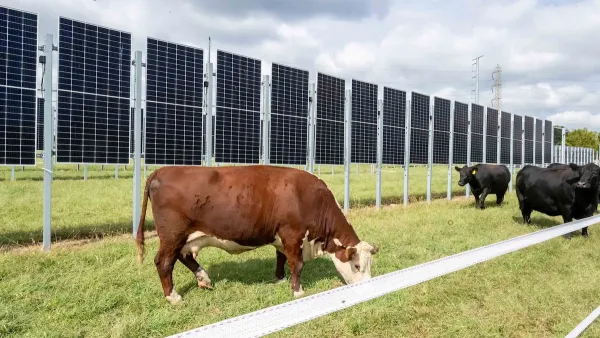
New Jersey Agrivoltaic Project Combines Solar Energy With Farming
A Rutgers University-New Brunswick demonstration farm will evaluate solar array designs to understand how they can best support grazing and agriculture on the same site.

Planetizen Federal Action Tracker
A weekly monitor of how Trump’s orders and actions are impacting planners and planning in America.

Eastern Nebraska is running out of electricity
Data centers and electrification are straining eastern Nebraska’s grid, throttling economic development.

Study reveals best places in the U.S. for cycling, walking
New research from Streetlight Data examines bicycle and pedestrian miles per capita in the 100 largest U.S. cities by population.

Illinois considers spending $1 billion in taxpayer money on data center
A quantum computing campus and data center are currently under construction in Chicago.

As development costs rise, Boston moves to lessen affordable housing requirements
The Boston Zoning Commission and the City Council still need to approve Boston Mayor Michelle Wu’s proposed changes

Washington state charge fee to drivers with fuel-efficient cars
Revenue from the fee will go towards supporting the state’s highways.

FREE Course: Walkable City 1: Why Walkability?
After describing his path towards focusing on walkability as the essence of good planning, Jeff Speck marches through his five principal reasons for making more walkable places.
Reinventing Malls: Planning Alchemy—Turning Gray Fields Into Gold
The course focuses on the opportunities and imperatives that shape reinvention of mall sites.

City of Charlotte
City of Rosemead
Rutgers University, Edward J. Bloustein School of Planning and Public Policy
University of Michigan School for Environment and Sustainability (SEAS)
Hunter College, City University of New York (CUNY)
The Architects Foundation
City of Cambridge
The Pocatello Development Authority
The Urban Renewal Agency of the City of Pocatello