Klamath County, Oregon, has converted an old motel and RV park into a sober-supportive housing complex for justice-involved persons — the first of its kind in the state.


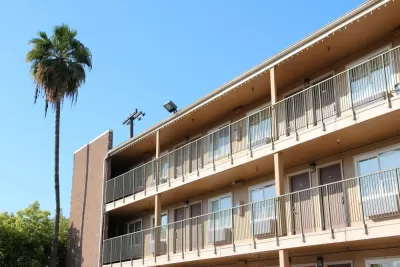
People who have spent time in jails, youth correctional facilities, or prisons often face steep challenges in obtaining stable housing stemming from their records, lack of credit history, and challenges finding steady employment. As a result, they often end up homeless and caught in what the Urban Institute calls the “homelessness-carcearal cycle,” rotating in and out of jails and emergency public services like shelters, emergency rooms, and detox facilities. A new sober-supportive housing facility for justice-involved persons on community supervision in Klamath County, Oregon, seeks to break that cycle, reports Zak Keeny for local media outlet Herald and News.
With $1.7 million from Oregon’s Project Turnkey grant program, Klamath County retrofitted an old motel and RV park into Project Homefront, the first sober-supportive housing of its kind in Oregon. “Since 2021, beyond merely buying the property, Klamath County Community Corrections worked with many local contractors to morph the motel into 29 sober-supportive transitional housing units with new roofing and flooring, more secured dooring and windows and are currently retrofitting an old recreational building located behind the units for use as a restorative justice center,” Keeny writes.
The goal of the project is to provide an affordable housing option and structured foundation for successful reintegration into the community, correctional supervisor Crystal Wheat told Herald and News. Project Homefront provides affordable rents ranging from $450 to $600 a month, with access to on-site laundry. An additional 10 tiny homes will be added later this fall.
“Aside from housing, Project Homefront offers in-house treatment services by certified mental health professionals four days a week that are gender-specific and evidence-based. Project Homefront provides victim family support, cognitive therapy, alcohol and drug therapy and offers education and employment assistance. A Klamath County Community Corrections officer is on-site five days a week,” reports Keeny.
FULL STORY: Klamath County creates first sober-supportive housing in state for justice-involved persons

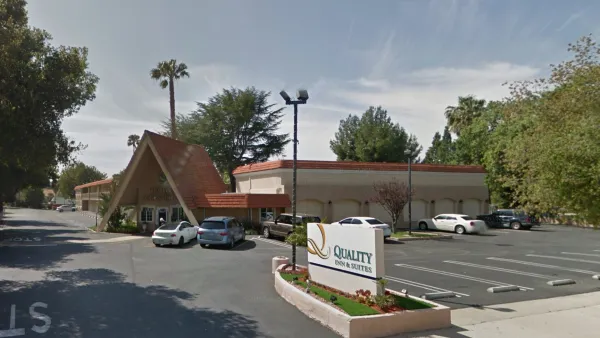
California's hotel-to-housing program put 13,500 people into homes
A CalMatters analysis evaluates the success of the state's pandemic-era homeless housing program.
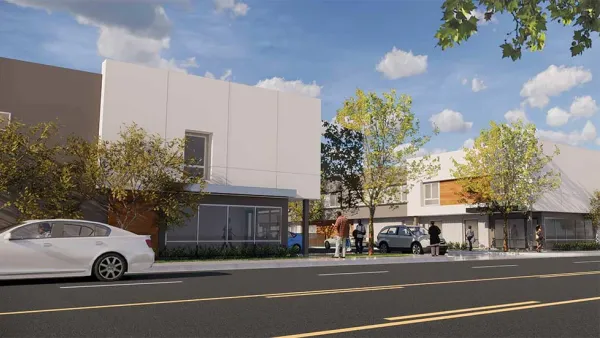
Orange County Motel Converted to Supportive Housing
The renovated building offers 57 housing units and supportive services to people formerly experiencing homelessness.

Chattanooga Plans to Convert Hotel to Supportive Housing
At a recent meeting, the city’s mayor urged the city council to support the effort to repurpose a derelict hotel into a permanent supportive housing complex.

Planetizen Federal Action Tracker
A weekly monitor of how Trump’s orders and actions are impacting planners and planning in America.

The state-sanctioned urbicide of Austin
People don’t kill cities. Freeways do.

US to reduce Colorado River water deliveries to Mexico
A new Colorado Treaty amendment reduces Mexico’s Colorado River water allocation by 250,000 acre feet.

5 New England states march closer to 800 megawatt wind energy project
Securing federal approval for the project may be complicated under the Trump administration, which has historically been hostile towards domestic wind power.

Baltimore to break ground on $50 million Transit Priority Project
The project will bring faster bus trips, safer streets and better bike connections to Baltimore.

Airbnb launches $250 million 'last-dollar financing' housing accelerator, makes first investment in Austin
The company will put $6.4 million towards affordable housing development in Texas’ capital.

FREE Course: Walkable City 1: Why Walkability?
After describing his path towards focusing on walkability as the essence of good planning, Jeff Speck marches through his five principal reasons for making more walkable places.
Reinventing Malls: Planning Alchemy—Turning Gray Fields Into Gold
The course focuses on the opportunities and imperatives that shape reinvention of mall sites.

Eagle County Government
Harvard University Graduate School of Design
Nashville Planning Department
The Architects Foundation
University of Cincinnati Online
The Pocatello Development Authority
The Urban Renewal Agency of the City of Pocatello
Journal of the American Planning Association