The Los Angeles County Department of Parks and Recreation is hosting over 60 public meetings in September to connect with the public and gather input to inform decision-making and resource allocation.


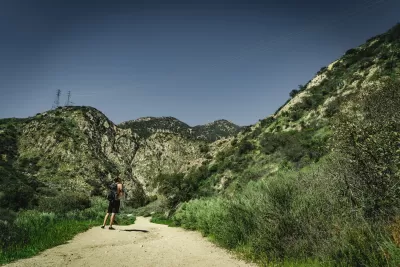
Throughout the month of September, the Los Angeles County Department of Parks and Recreation (DPR) will hold community meetings at 67 parks and nature centers across the county. These meetings offer the public the opportunity to meet park staff and hear about the programs, projects, and events at parks and nature centers. Community members will also be able to share suggestions and priorities for their local park and nature center. The input gathered will help shape DPR's budget for the new fiscal year.
Last year, DPR released its Strategic Plan, which was created to guide the agency's direction, decision-making, and growth from 2023 to 2028. The Plan sets forth a course of action for both DPR's internal improvements and external work across L.A. County. It also establishes benchmarks to track progress and ensure that DPR is meeting the stated goals. The Plan was developed with extensive public and staff engagement and based on an anti-racism, diversity, and inclusion-focused framework.
DPR is committed to prioritizing funding and staffing for programming and park access initiatives that redress social, racial, gender-based, and environmental injustice in L.A. County, especially in the most vulnerable communities. As part of the Strategic Plan, DPR is making efforts to strengthen communication and engagement with the communities it serves. Hosting annual public meetings is a key part of this commitment and reflects progress being made to implement the Plan. For dates and locations of meetings, please visit the source link.
Read the full story: LET'S TALK! BE A VOICE FOR YOUR LOCAL PARK

Delivering on the Promise of Parks
In LA County, even amid budget challenges, new parks are opening, targeted investments are being made in underserved communities, and long-term plans are guiding progress — demonstrating a sustained commitment to parks as essential infrastructure.
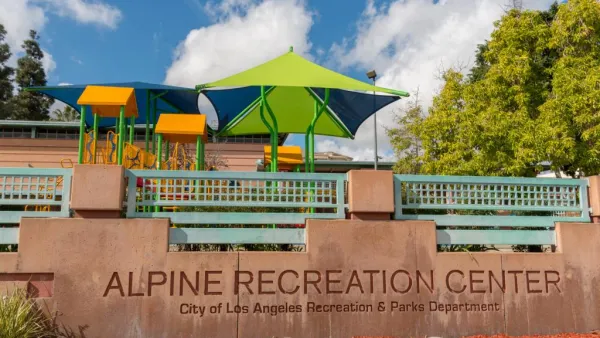
More Than a Park: A Safe Haven for Generations in LA’s Chinatown
Alpine Recreation Center serves as a vital cultural and community hub in Los Angeles' Chinatown, offering a safe, welcoming space for generations of Chinese American residents to gather, connect, and thrive amidst rapid urban change.
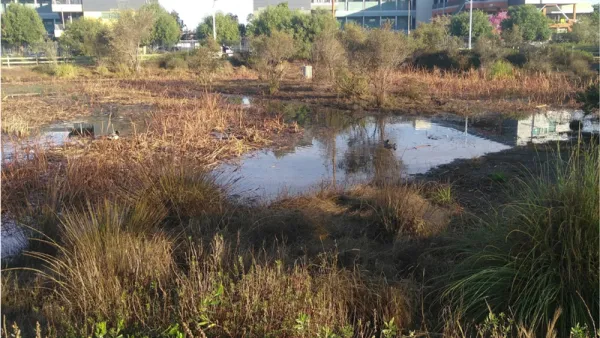
How South LA Green Spaces Power Community Health and Hope
Green spaces like South L.A. Wetlands Park are helping South Los Angeles residents promote healthy lifestyles, build community, and advocate for improvements that reflect local needs in historically underserved neighborhoods.

Planetizen Federal Action Tracker
A weekly monitor of how Trump’s orders and actions are impacting planners and planning in America.

California plans to bury El Niño’s downpour
If the state plays its cards right, it may be able to store a billion acre-feet of El Niño’s water in aquifers.

Desperate measures: Advocates weigh draining Lake Powell to fill Colorado River
Draining the reservoir could reduce evaporation losses by a couple hundred thousand acre-feet.

Mamdani’s pied-à-terre tax survives legal challenge
A panel of judges found that the plaintiffs failed to demonstrate injury as a result of New York City's implementation of the tax.

Eastern Nebraska is running out of electricity
Data centers and electrification are straining eastern Nebraska’s grid, throttling economic development.

Seattle passes record-breaking transit services expansion
Proposition 1 will double the city’s transit tax to add 95,000 more bus trips and preserve 180,000 bus trips annually.

FREE Course: Walkable City 1: Why Walkability?
After describing his path towards focusing on walkability as the essence of good planning, Jeff Speck marches through his five principal reasons for making more walkable places.
Reinventing Malls: Planning Alchemy—Turning Gray Fields Into Gold
The course focuses on the opportunities and imperatives that shape reinvention of mall sites.

City of Rosemead
Rutgers University, Edward J. Bloustein School of Planning and Public Policy
One Hundred Miles
University of Michigan School for Environment and Sustainability (SEAS)
Hunter College, City University of New York (CUNY)
The Architects Foundation
City of Cambridge
Montrose County
The Pocatello Development Authority