The L.A. County Youth Climate Commission empowers young voices to influence sustainable policies, prioritizing environmental justice and addressing top issues like cleaner air, green spaces, and green buildings.


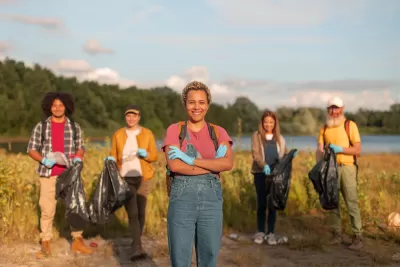
The Los Angeles County Youth Climate Commission (YCC) is a pioneering initiative that empowers young people to actively participate in shaping climate policy, ensuring their concerns and ideas are integrated into governmental decision-making. Formed in June 2023, the YCC is the first of its kind in the nation, providing a platform for youth to influence policies that will impact their future. The commission’s work centers on identifying climate priorities among young people in the county and advocating for policies that address these concerns.
A core focus of the YCC is promoting environmental justice by ensuring that the voices of young people from diverse backgrounds are represented in climate discussions. The YCC recognizes that marginalized communities in L.A. County are disproportionately affected by pollution and climate impacts. The YCC's efforts are informed by the Youth Climate Priorities Report, completed in April 2024, which gathered over 1,300 responses from young people across the county. The report highlights cleaner air, green spaces, and green buildings as the top climate priorities for youth, reflecting their immediate concerns about air quality, environmental health, and sustainable development.
In addition to advocating for these priorities, the YCC is actively involved in reviewing and supporting relevant legislation, advising county departments on policy development, and organizing district coalitions to address local concerns. By engaging in these activities, the YCC not only amplifies the voices of young people but also drives meaningful climate action at the local level. The commission’s work serves as a model for youth engagement in climate policy, inspiring similar initiatives in other regions and demonstrating the critical role of youth leadership in building a sustainable future.
Read the full story: Elevating Youth Voices for a Sustainable Future
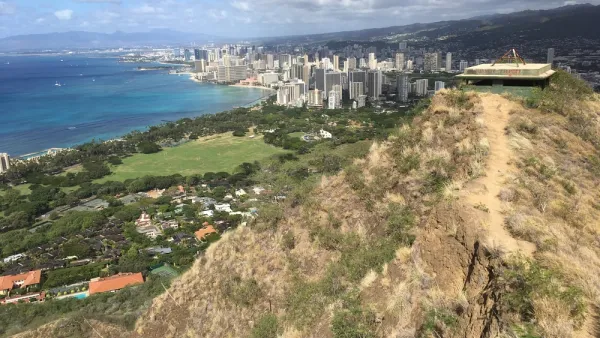
Fighting for Their Future: Hawai’i Kids Sue State Over Greenhouse Gas Emissions
A group of Hawai’ian youth is suing the state’s Department of Transportation, claiming that Hawai’i’s transportation system contributes to climate change and the destruction of homes and cultural traditions.
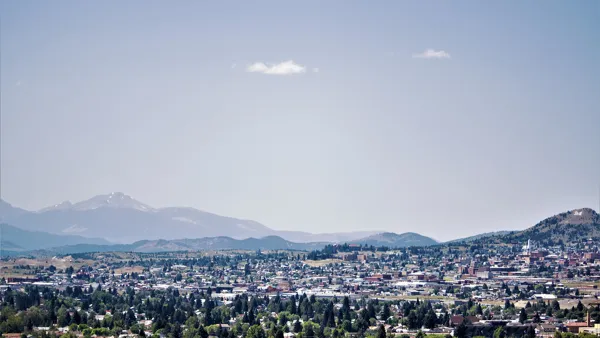
The Kids Are Alright: Montana Youth Lead Climate Trial Effort
A group of teens is taking on the state of Montana, claiming that the state's continued dependence on fossil fuels infringes on their constitutional rights.
Meet the Youth Plaintiffs Suing for Climate Change Action
A federal magistrate judge recently allowed a group of 21 youth plaintiffs to proceed with a lawsuit charging the federal government with neglecting their constitutional rights by failing to act on climate change.

Planetizen Federal Action Tracker
A weekly monitor of how Trump’s orders and actions are impacting planners and planning in America.

California plans to bury El Niño’s downpour
If the state plays its cards right, it may be able to store a billion acre-feet of El Niño’s water in aquifers.

Desperate measures: Advocates weigh draining Lake Powell to fill Colorado River
Draining the reservoir could reduce evaporation losses by a couple hundred thousand acre-feet.

Mamdani’s pied-à-terre tax survives legal challenge
A panel of judges found that the plaintiffs failed to demonstrate injury as a result of New York City's implementation of the tax.

Eastern Nebraska is running out of electricity
Data centers and electrification are straining eastern Nebraska’s grid, throttling economic development.

Seattle passes record-breaking transit services expansion
Proposition 1 will double the city’s transit tax to add 95,000 more bus trips and preserve 180,000 bus trips annually.

FREE Course: Walkable City 1: Why Walkability?
After describing his path towards focusing on walkability as the essence of good planning, Jeff Speck marches through his five principal reasons for making more walkable places.
Reinventing Malls: Planning Alchemy—Turning Gray Fields Into Gold
The course focuses on the opportunities and imperatives that shape reinvention of mall sites.

City of Rosemead
Rutgers University, Edward J. Bloustein School of Planning and Public Policy
One Hundred Miles
University of Michigan School for Environment and Sustainability (SEAS)
Hunter College, City University of New York (CUNY)
The Architects Foundation
City of Cambridge
Montrose County
The Pocatello Development Authority