A study of three Los Angeles neighborhoods revealed that ‘cleanups’ of encampments don’t result in fewer people on the streets.


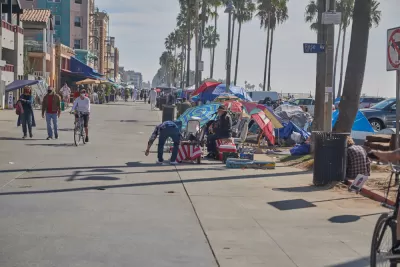
A new study from the Rand Corporation highlights the futility of ‘cleanups’ at homeless encampments, revealing that the sweeps have no impact on the number of unhoused people on the streets.
As Doug Smith explains in Governing, the study sent teams of researchers to three locations in Los Angeles where the city conducted cleanups. Within two months, the number of people living in those areas had returned to previous levels. “One unintended consequence of multiple camp removals in Venice was that the number of people living without any shelter, not even tents, doubled to nearly half the street population.”
Other in-depth studies of the homeless population reveal that many residents face physical and mental health and addiction issues, underscoring a need for targeted outreach. “Overall, 45 percent of the people interviewed in the three neighborhoods said they had chronic physical health conditions and 56 percent said they had chronic mental health conditions.”
Read the full story: Homeless Camp Cleanups Aren’t a Permanent Solution

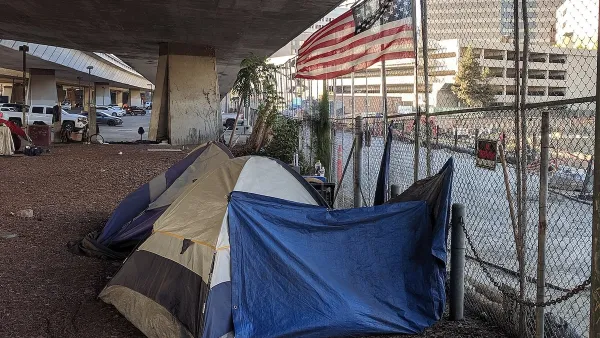
San Jose Mayor Takes Dual Approach to Unsheltered Homeless Population
In a commentary published in The Mercury News, Mayor Matt Mahan describes a shelter and law enforcement approach to ending targeted homeless encampments within Northern California's largest city.
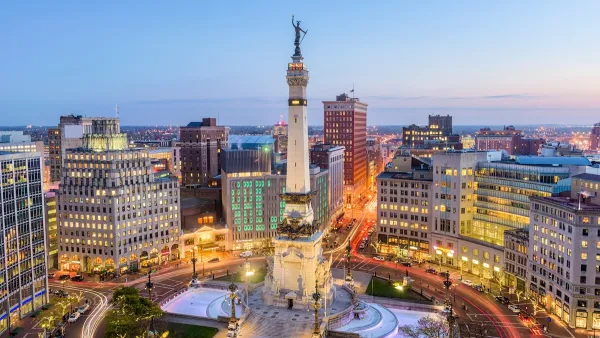
Indianapolis Falls Short of 2018 Goal to End Long-Term Homelessness
The city’s progress in building supportive housing units has not kept up with the rising numbers of residents experiencing homelessness.
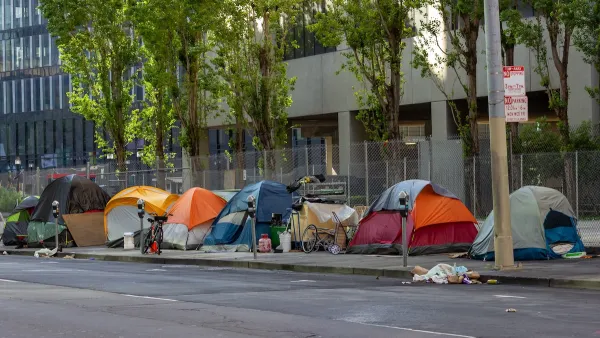
San Francisco Scrambles to Build Shelters Faster
Mayor Breed directed city officials to double its shelter expansion goal.

Planetizen Federal Action Tracker
A weekly monitor of how Trump’s orders and actions are impacting planners and planning in America.

Amtrak, CN end decades-long dispute with eight-year agreement
The new operating agreement establishes an updated framework for the companies to work together, including processes to resolve disputes.

Judges permit Denver to divert 77,000 acre feet from the Colorado River for reservoir expansion
Overuse and climate change have caused the Colorado River’s water levels to plummet.

Boston has spent millions making the Green Line more accessible — and there’s no end in sight
While the city has invested millions into expanding and adding platforms to the Green Line to make it more accessible, new train cars set to arrive next year will be too tall for disabled passengers to board without raising the current platforms.

Idaho may see an 18% drop in federal surface transit funding — the largest estimated cut in the US
Transit systems in rural communities are much more reliant on federal funding to provide their services.

How ‘post-disaster gentrification’ alters neighborhoods after natural calamities
After hurricanes, fires or other calamities, the original residents of a community are often replaced by younger, wealthier residents.

FREE Course: Walkable City 1: Why Walkability?
After describing his path towards focusing on walkability as the essence of good planning, Jeff Speck marches through his five principal reasons for making more walkable places.
Reinventing Malls: Planning Alchemy—Turning Gray Fields Into Gold
The course focuses on the opportunities and imperatives that shape reinvention of mall sites.

City of Wisconsin Rapids
Harvard University Graduate School of Design
KFH Group Inc.
The Architects Foundation
University of Cincinnati Online
The Pocatello Development Authority
The Urban Renewal Agency of the City of Pocatello