Located in San Dimas, the center rehabilitates and releases injured birds of prey like owls, hawks, and falcons, aiming to restore ecological balance and support biodiversity.


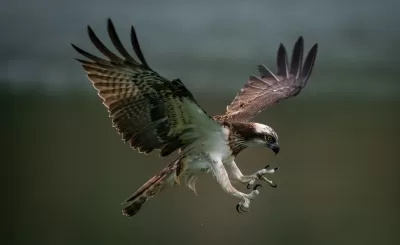
The Los Angeles County Department of Parks and Recreation (DPR) has established the county's first-ever Raptor Rescue Center at the San Dimas Canyon Nature Center, aimed at rehabilitating and releasing injured birds of prey such as owls, hawks, and falcons. The center's objective is to care for over 200 raptors annually, providing medical attention and rehabilitation to ensure these birds can return to the wild. Since its inception, the center has taken in 70 raptors and successfully released 30 back into their natural habitats.
The program was initiated after the nonprofit Wild Wings, which had operated the rescue since 1987, ceased operations. With a $200,000 contribution from Supervisor Kathryn Barger, DPR is continuing the rescue efforts with trained staff and volunteers. The rescue center operates under permits from the California Department of Fish and Wildlife and the U.S. Department of Fish and Wildlife, and collaborates with L.A. County Animal Care and Control to determine the releasability of the birds. Those that cannot be released are cared for as ambassadors for educational purposes.
The center emphasizes the importance of maintaining the wild nature of the raptors. Measures include not naming the birds, limiting human interaction, and using camouflage suits when in close proximity. With the overarching goal of restoring ecological balance and supporting biodiversity, the center also aims to mitigate the impacts of climate change and habitat loss, which have increased the number of raptor injuries from vehicle strikes and other hazards.
Read the full story: Injured falcons, hawks and owls get help with new LA County ‘raptor rescue’
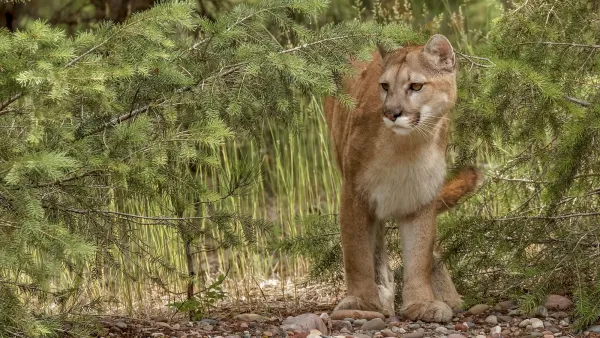
Study: Mountain lions reduce roadway deer collisions by 67%
Scientists in Washington state found a little-studied benefit to the presence of mountain lion populations near roadways.

Beavers and bobcats populate a 210-acre 'secret garden' in Las Vegas
The Clark County Wetlands Park is home to over 300 species of birds and 70 species of mammals.
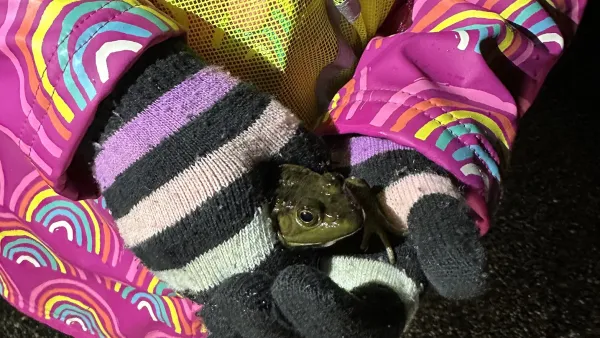
Once a year, Maine roads become highways for amphibians
The 'Big Night' brings out volunteers to help frogs, salamanders, and other migrating amphibians cross roads to reach their breeding grounds.

Planetizen Federal Action Tracker
A weekly monitor of how Trump’s orders and actions are impacting planners and planning in America.

California plans to bury El Niño’s downpour
If the state plays its cards right, it may be able to store a billion acre-feet of El Niño’s water in aquifers.

Desperate measures: Advocates weigh draining Lake Powell to fill Colorado River
Draining the reservoir could reduce evaporation losses by a couple hundred thousand acre-feet.

Chicago voters approve permanent festival grounds, penalty for vacant property owners
Currently, major summer and fall festivals take over public parks for weeks at a time, drawing criticism from nearby residents

NYC votes to cut outdoor dining red tape, speed up permitting
New York City also voted to allow the Department of Transportation to begin work on urgent projects before notifying elected officials.

California appears to reject Prop. 45
The proposition would have expanded the projects that qualify for a streamlined environmental review, effectively paring down the California Environmental Quality Act.

FREE Course: Walkable City 1: Why Walkability?
After describing his path towards focusing on walkability as the essence of good planning, Jeff Speck marches through his five principal reasons for making more walkable places.
Reinventing Malls: Planning Alchemy—Turning Gray Fields Into Gold
The course focuses on the opportunities and imperatives that shape reinvention of mall sites.

City of Rosemead
Rutgers University, Edward J. Bloustein School of Planning and Public Policy
One Hundred Miles
Hunter College, City University of New York (CUNY)
The Architects Foundation
University of Cincinnati Online
City of Cambridge
Montrose County
The Pocatello Development Authority