Experts say Hurricane Beryl, which landed as a category 1, revealed that the city’s infrastructure may not successfully withstand stronger storms.


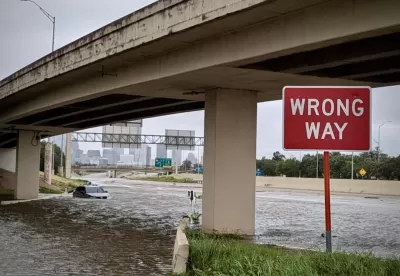
Hurricane Beryl, which hit Houston last week, could be a ‘warning shot’ for more intense and unpredictable storm seasons, writes Dylan Baddour for Inside Climate News.
Beryl struck Houston as a category 1 storm, still causing damages and power outages for millions of residents. “For Matt Lanza, a meteorologist and managing editor of Space City Weather, it raised a disturbing prospect: what if the mild hurricane hitting Texas had been stronger?” According to Lanza, “This week’s experience suggests the city is ill-prepared to handle such a disaster.”
The region is taking actions to bolster its defenses against future storms. “Offshore, federal authorities are advancing plans to build an enormous, $57 billion system of barriers and gates, which has been called the largest civil engineering project in U.S. history and is expected to take 20 years to construct.” Meanwhile, the city of Houston is widening bayous and offering buyouts to homeowners in flood-prone areas.
Making Houston less vulnerable is a major undertaking, “backtracking, to some extent, on decades of booming development driven by the hubris of the energy age,” Baddour writes. “The transformation would entail making space for the water, pulling back from the edges of the bayous to create a giant network of wide greenways through the metro area.”
Read the full story: Hurricane Beryl Was a Warning Shot for Houston

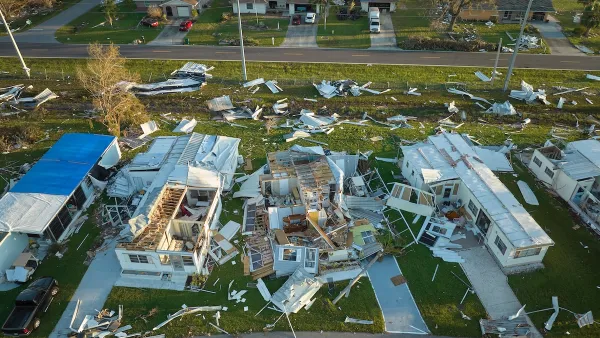
Florida Home Insurers Disproportionately Dropping Low-Income Households
Non-renewal rates are highest in inland counties, not the coastal areas most immediately vulnerable to storms.
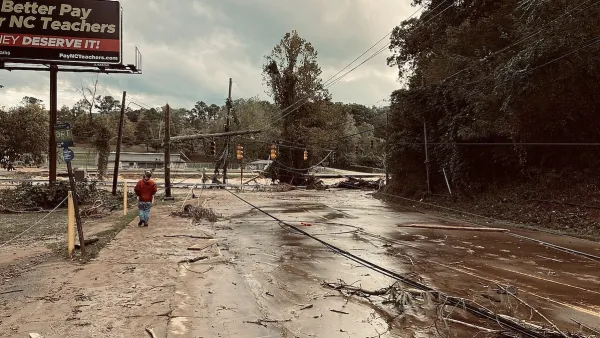
‘Climate Havens’ Not Safe From Hurricane Helene’s Destruction
Parts of North Carolina previously considered immune to the impact of hurricanes experienced historic flooding in the aftermath of the storm.
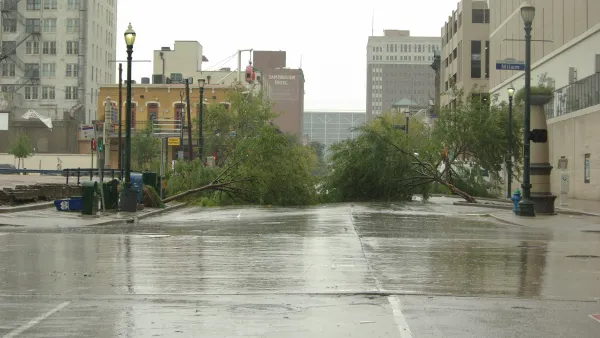
Houston’s ‘Ike Dike’ Won’t Adequately Protect the City
The largest project ever undertaken by the Army Corps of Engineers may not be enough to protect Houston-area communities from flooding during the most severe hurricanes, according to the Corps’ own analysis.

Planetizen Federal Action Tracker
A weekly monitor of how Trump’s orders and actions are impacting planners and planning in America.

The state-sanctioned urbicide of Austin
People don’t kill cities. Freeways do.

Colorado’s Largest Data Center Could Rise Next to Homes — Without a Public Hearing
The proposed campus would consume 11 times the power of Denver International Airport; as it has across the country, opposition mounts.

Nation's most wind-powered state turns to coal as data centers increase energy demand
For the first time in decades, Iowa has increased its generation of coal power.

NYC cools commuters with city's first rain garden above a bus stop
New York City officials say the plants in the rain garden can absorb 16 gallons of rainwater during heavy storms.

Brightline West’s future may rely on $6 billion federal loan
The company has until Nov. 2 to make a $400 million equity investment into its proposed high-speed rail line.

FREE Course: Walkable City 1: Why Walkability?
After describing his path towards focusing on walkability as the essence of good planning, Jeff Speck marches through his five principal reasons for making more walkable places.
Reinventing Malls: Planning Alchemy—Turning Gray Fields Into Gold
The course focuses on the opportunities and imperatives that shape reinvention of mall sites.


Greater Baltimore Committee
Eagle County Government
Harvard University Graduate School of Design
The Architects Foundation
University of Cincinnati Online
The Pocatello Development Authority
The Urban Renewal Agency of the City of Pocatello
Journal of the American Planning Association